This wasn’t my first visit, so instead of ticking off the usual sights, I spent the day with family, my son-in-law’s father, Bert, and his partner Jane, who kindly became my personal tour guides.
And honestly? That made all the difference.
Arriving in Belfast
We sailed overnight from Dublin and woke up docked in Belfast, with shuttle buses already lined up to take passengers into the city.
But I had a much easier plan. Bert had arranged clearance to collect me directly from the port. No queues, no buses, just straight into the day ahead.
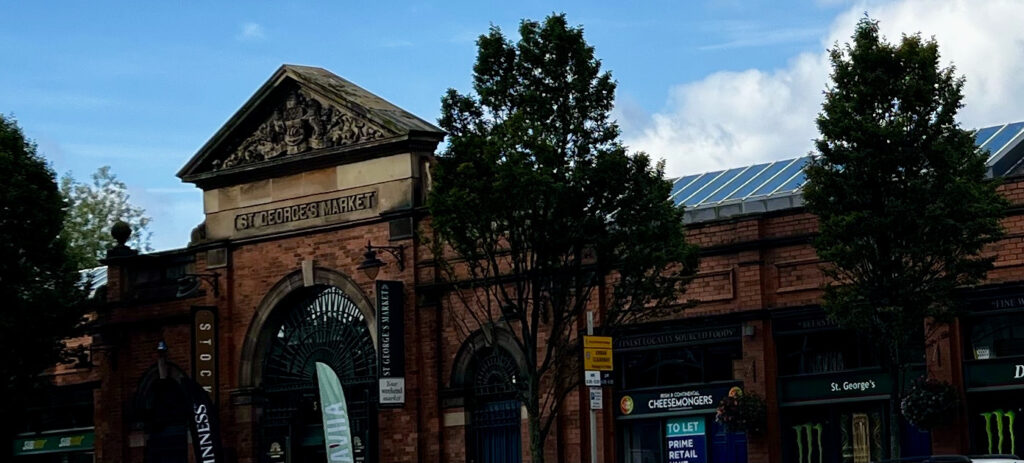
St George’s Market & A Belfast Bap
Our first stop was St George’s Market — lively, colourful, and full of character.
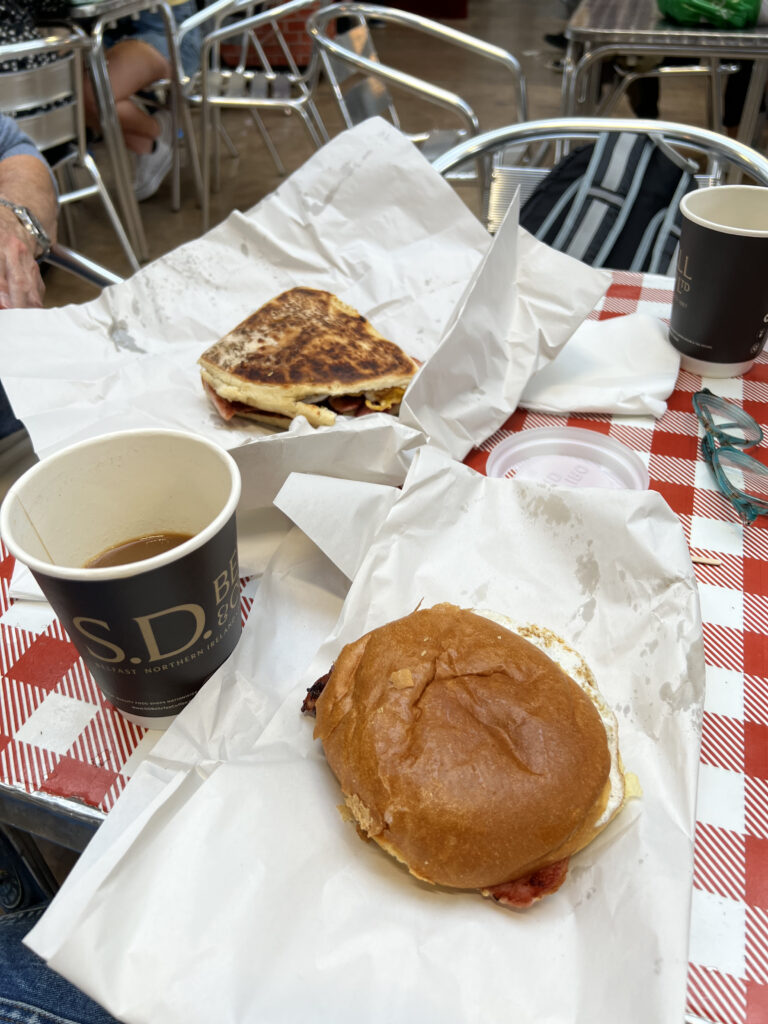
There was everything from local crafts to fresh produce, but the highlight for me was trying a Belfast bap, highly recommended by Bert.
Let’s just say, it did not disappoint. Simple, hearty, and exactly what you want to start the day.
St George's Market, Belfast.
Belfast bap
Exploring the City
We wandered through the city at a relaxed pace, stopping at places that weren’t necessarily on the typical tourist route.
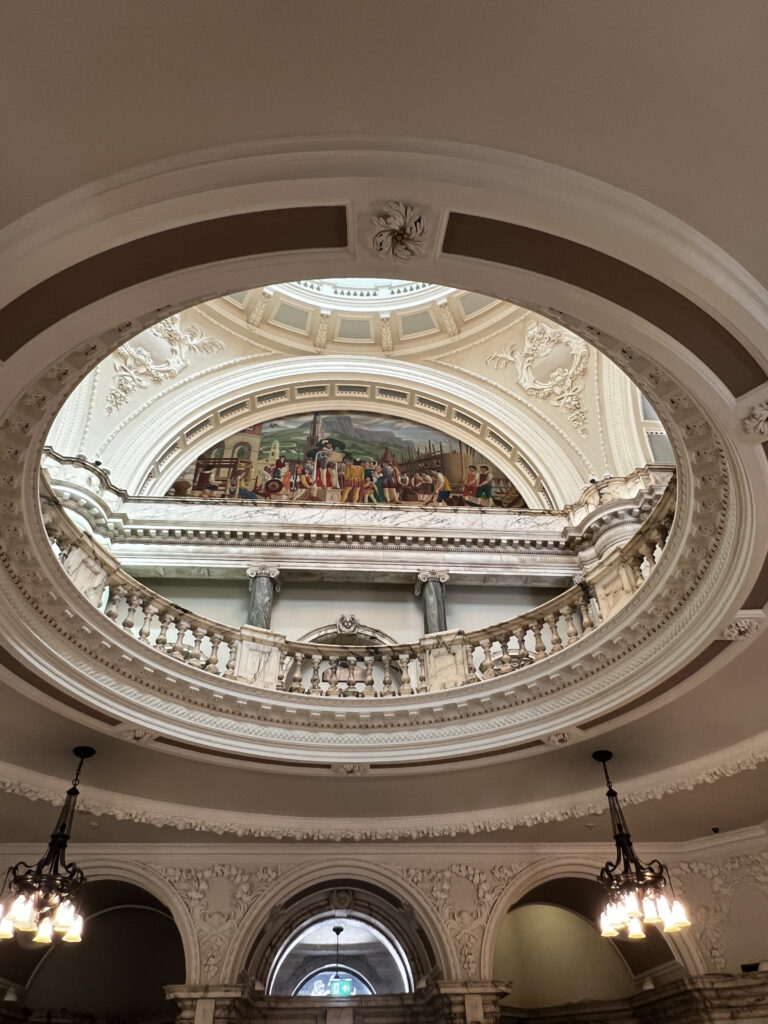
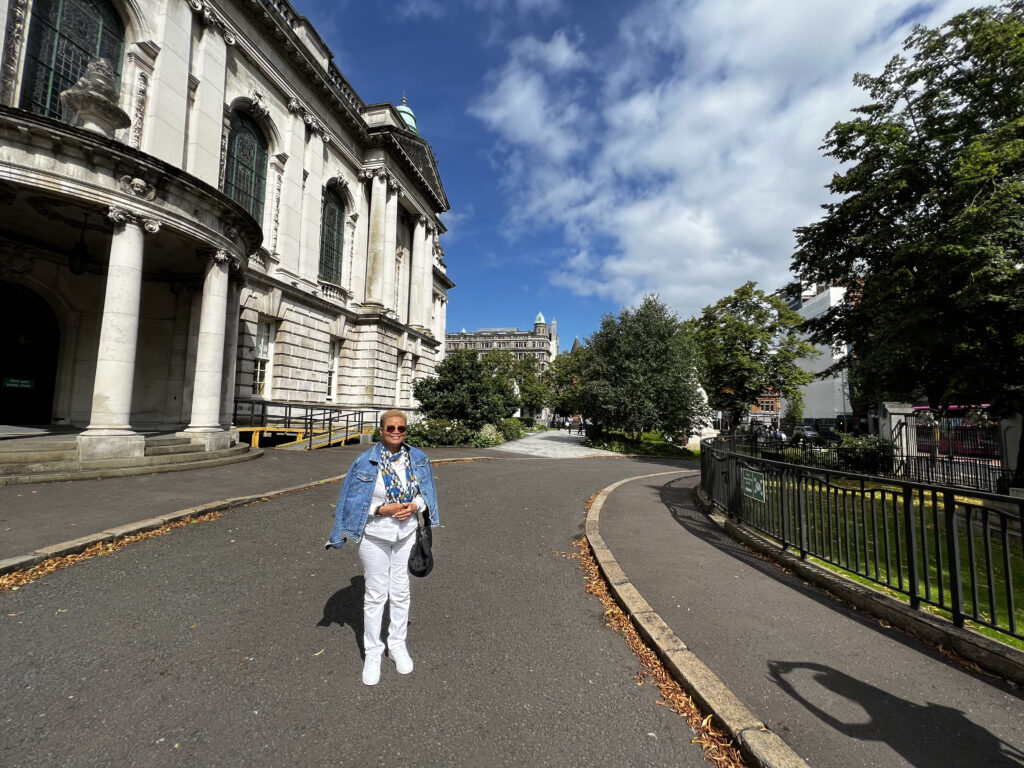
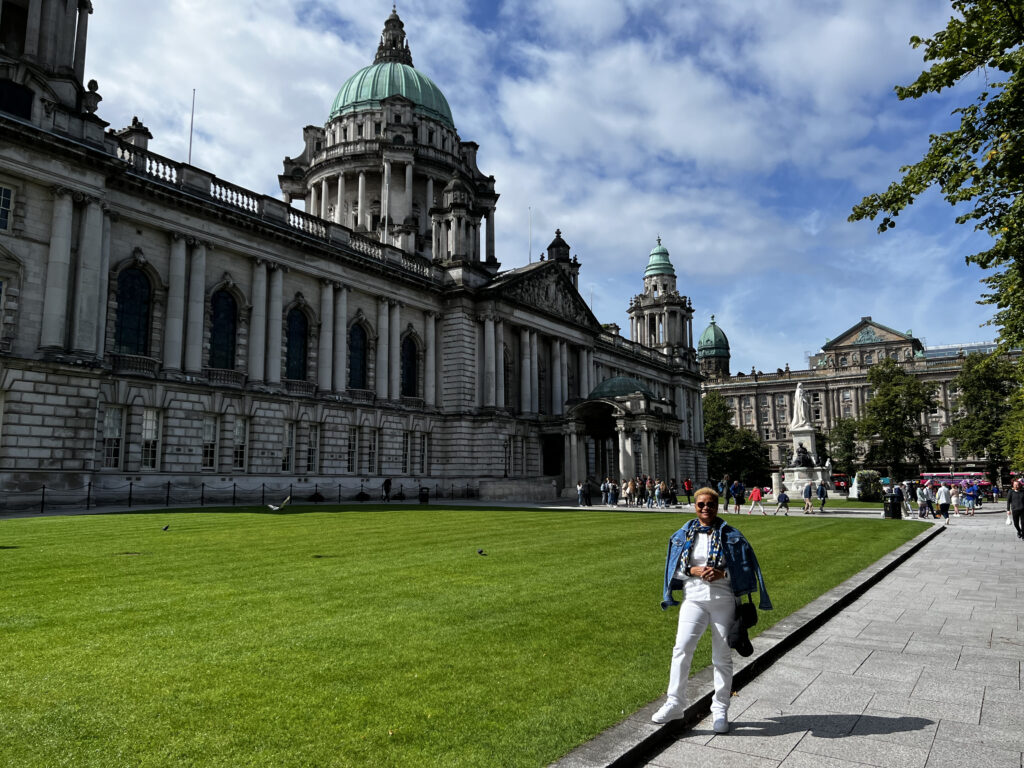
Belfast City Hall was as impressive as ever. The grand interior, the beautiful dome, and the sense of history all around you. But what I enjoyed most was simply taking it in, rather than rushing through.
The dome in the Grand Foyer in Belfast City Hall. It is magnificent - this photo doesn't do it justice!
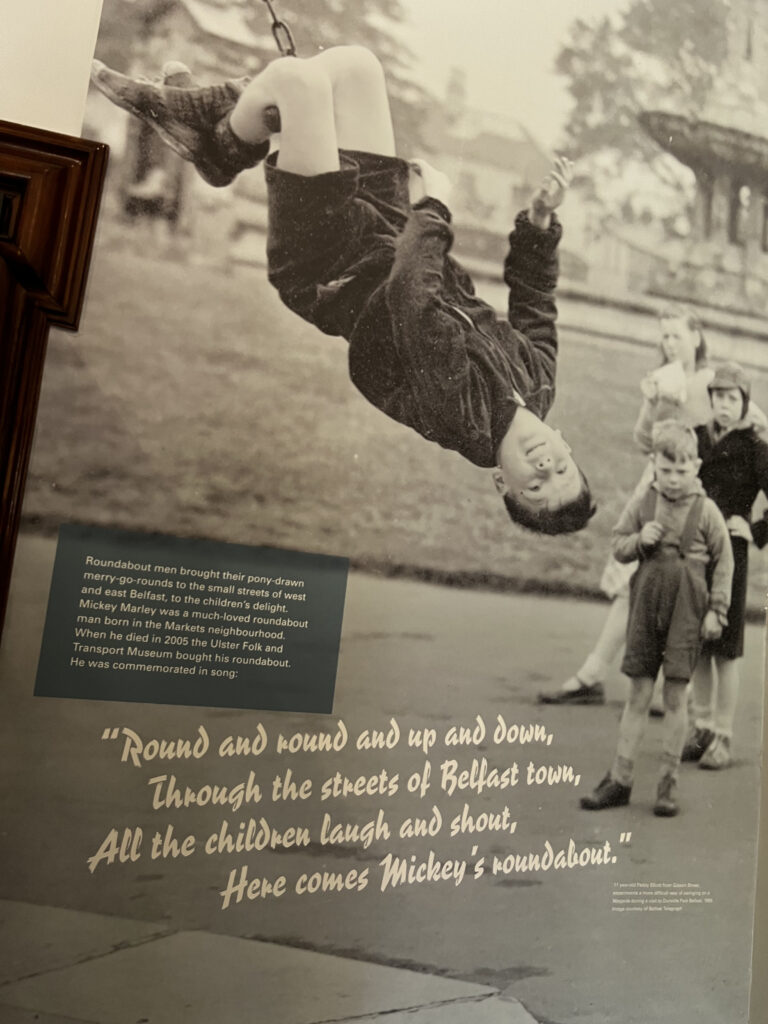
I liked this photo as it captured the life many years ago - it is on display in the City Hall's exhibition.
Conversations That Stay With You
One of the most memorable parts of the day wasn’t a landmark, it was a conversation.
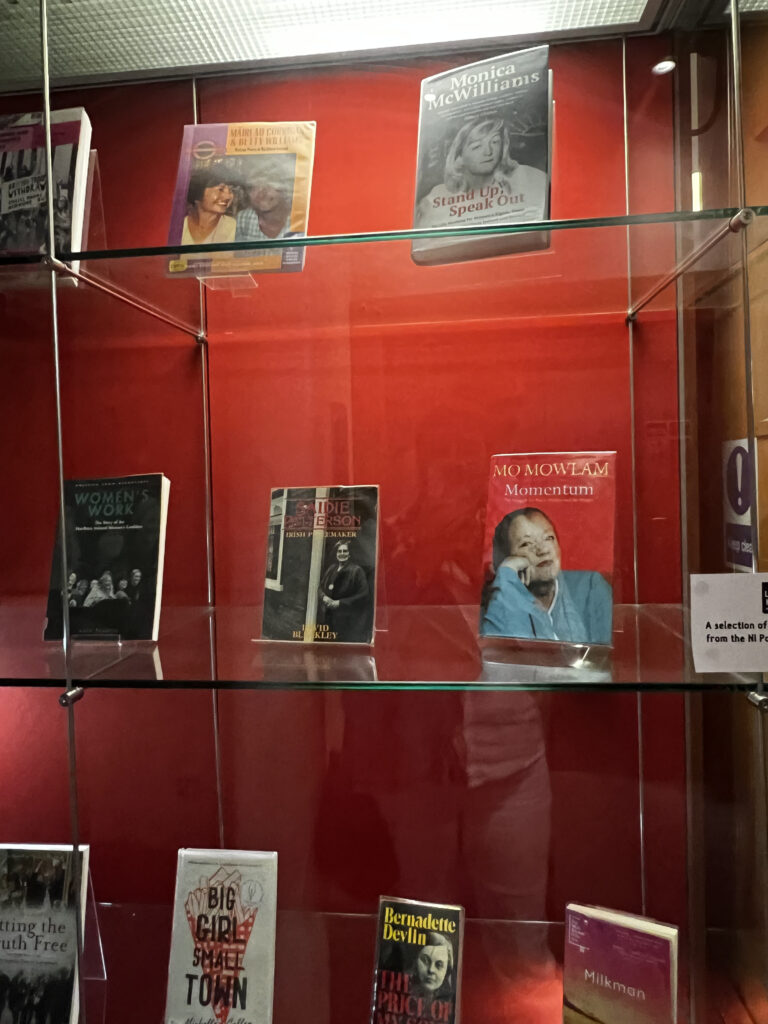
Over coffee and lunch, Jane shared her experience of being involved in the Northern Ireland Women’s Coalition during the time of the Good Friday Agreement. Hearing about that period first-hand gave me a completely different perspective on the city and its history. It was fascinating and something you don’t get from guidebooks.
Belfast’s Quirky Side
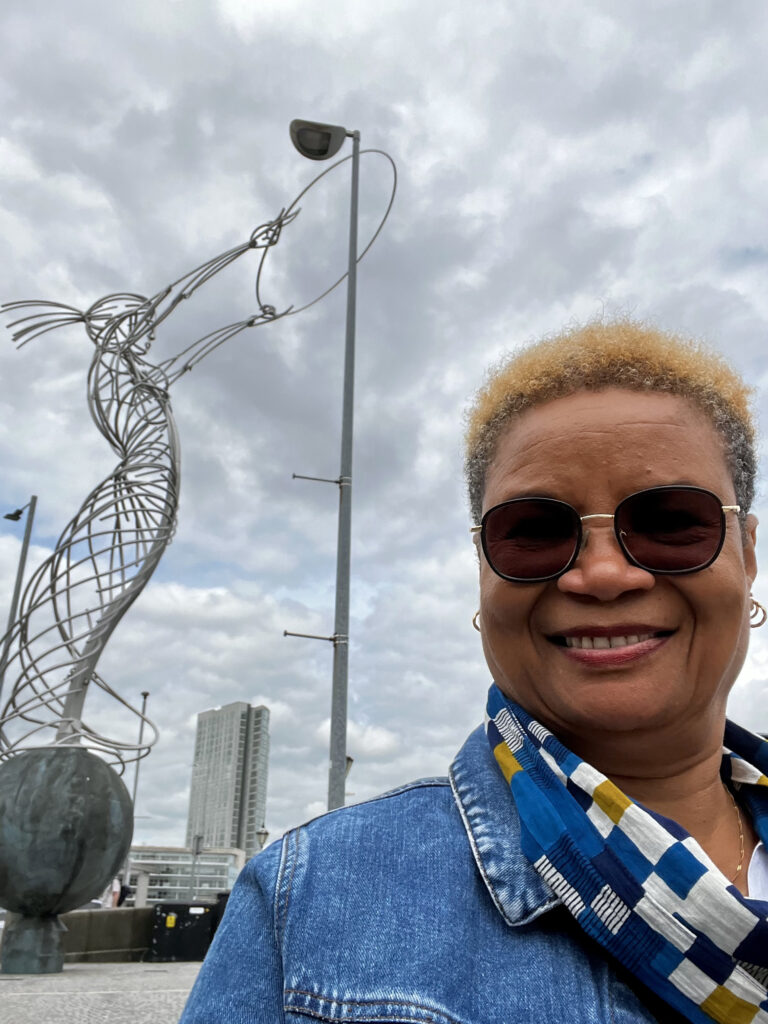
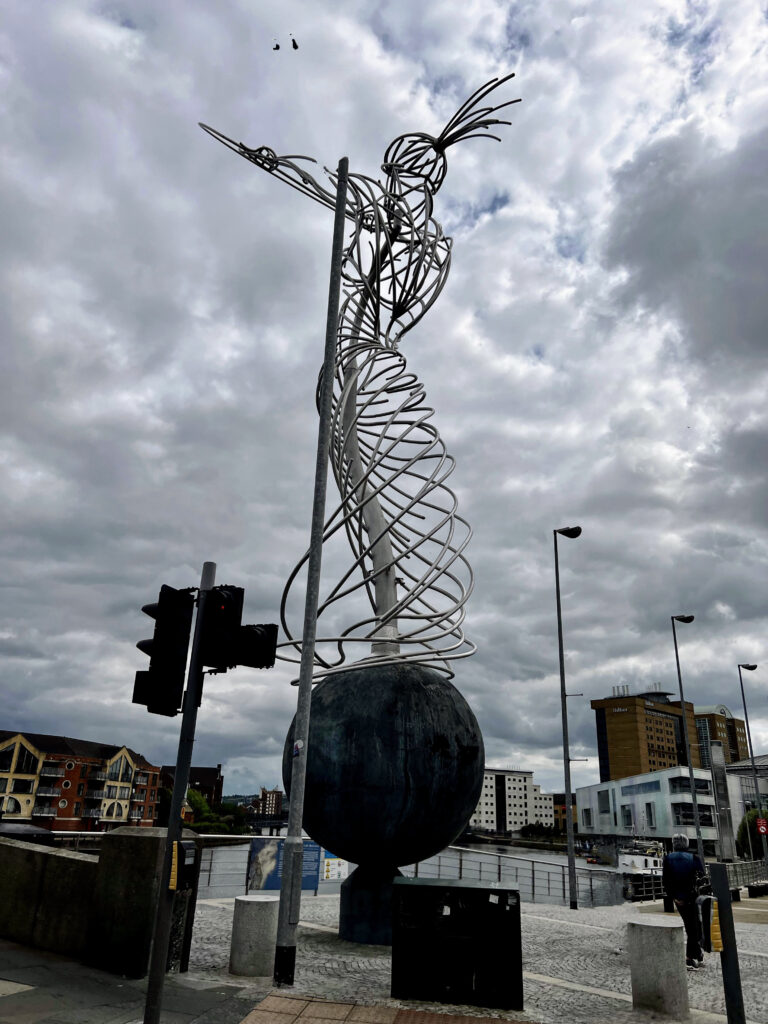
Belfast also surprised me with its mix of modern art and industrial history. I was particularly intrigued by a sculpture I came across, a striking female figure with arms raised, symbolising hope and renewal. Apparently, it doesn’t actually have a name which I found quite surprising! It is known locally as the “Lady with no name.”
Mollywozhere selfie with the "Lady with no name" in Thanksgiving Square in Belfast.
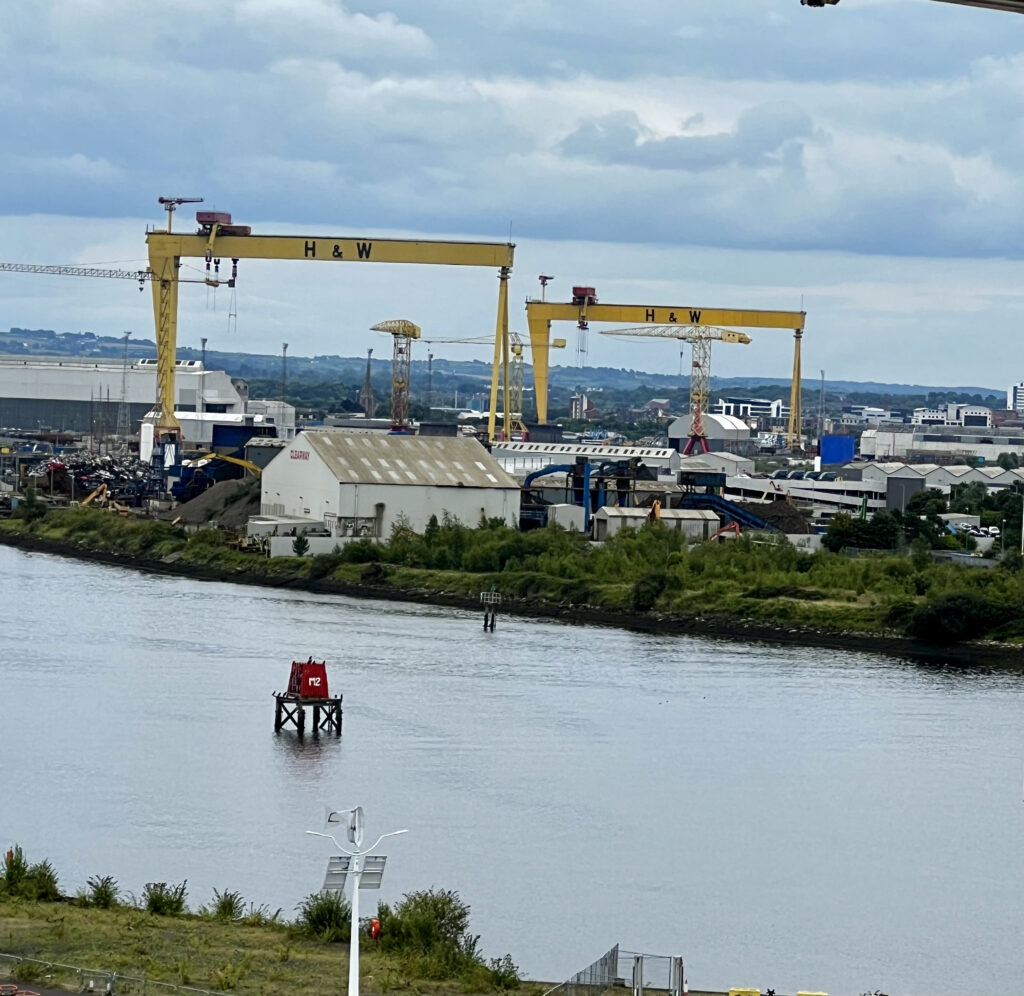
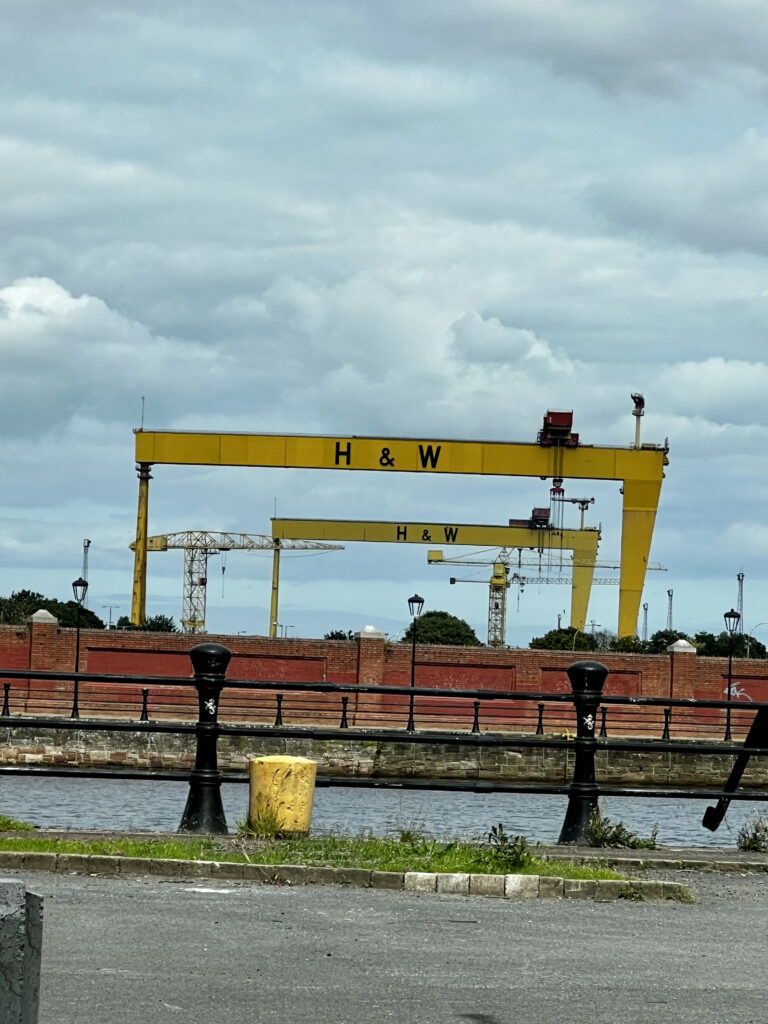
And then there were the famous shipyard cranes — Samson and Goliath — towering over the city. They have iconic symbols of Belfast’s shipbuilding history.
The cranes were built in the early 20th century, and for many years, they were used to construct some of the world’s most famous ships, including the Titanic. Today, the cranes are no longer in use, but they remain a beloved part of Belfast’s cultural heritage. The two cranes are situated in the Harland and Wolff shipyard, which is still in operation today.
Despite their age, Solomon and Goliath remain a popular tourist attraction in Belfast, and are even illuminated at night to create a stunning visual spectacle. They are a testament to the city’s industrial past, and serve as a reminder of the incredible feats of engineering that were accomplished in the days of shipbuilding.
I was fascinated by these cranes – they can be spotted from almost anywhere in Belfast City, including from the ship.
Samson & Goliath cranes, Belfast.
The Big Fish
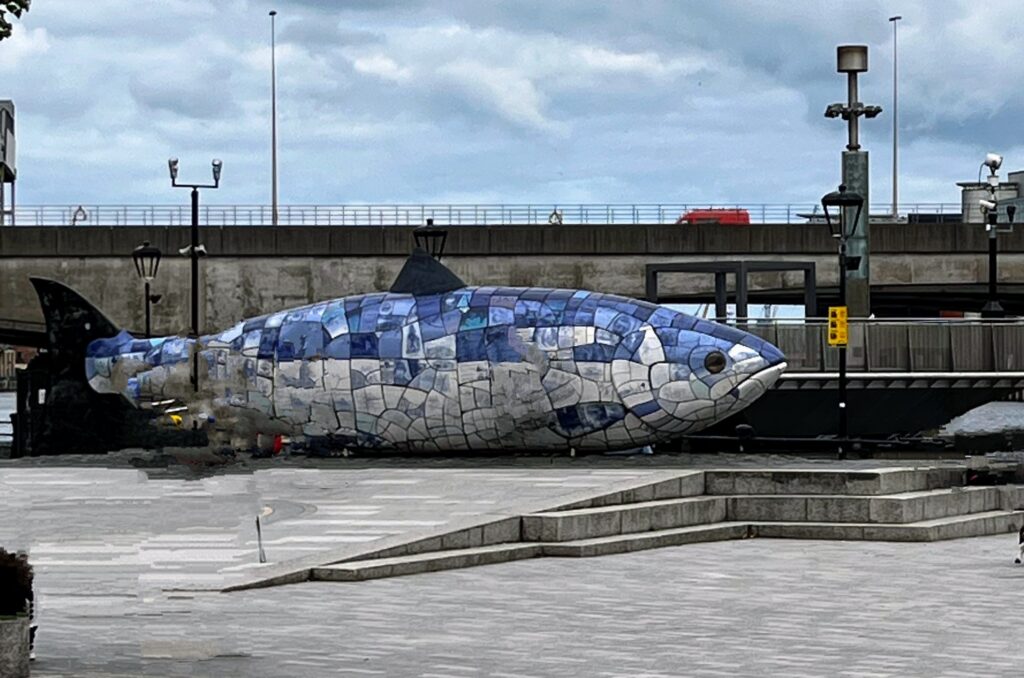
The Big Fish is located in Donegall Quay, overlooking the River Lagan. It was created by John Kindness in 1998. The sculpture features a larger-than-life-sized salmon representing the acquisition of knowledge and wisdom.
The Salmon of Knowledge has become a popular landmark and tourist attraction, symbolizing the city’s connection to Irish culture and mythology.
A City Worth Returning To
Even though I’d been to Belfast before, this visit felt completely different. Seeing the city through the eyes of locals and hearing their stories gave me a deeper appreciation for it.
There’s still so much more to explore. Next time, I’ll make sure I try that famous Guinness that I didn’t have time to drink on this shore visit.
My visit to Rio de Janeiro took me from Copacabana Beach and the colourful Selarón Steps to famous landmarks, football fever and unexpected connections with…
A quieter companion to Petra, Little Petra offers fascinating Nabataean history, ingenious ancient engineering and beautiful sandstone carvings—just don’t expect it to rival its famous…