For me, Peru is much more than Machu Picchu, although seeing one of the Seven Wonders of the World was the main reason I wanted to visit.
Peru is a land of contrasts and dramatic scenery. During my journey, I experienced the soaring peaks of the Andes Mountains, the magnificent Colca Canyon, Lake Titicaca high in the Andes and the very different lifestyle of the upscale Miraflores district of Lima. I stayed with a local family on an island in Lake Titicaca, travelled through some of the driest desert landscapes I had ever seen and discovered an oasis surrounded by enormous sand dunes.
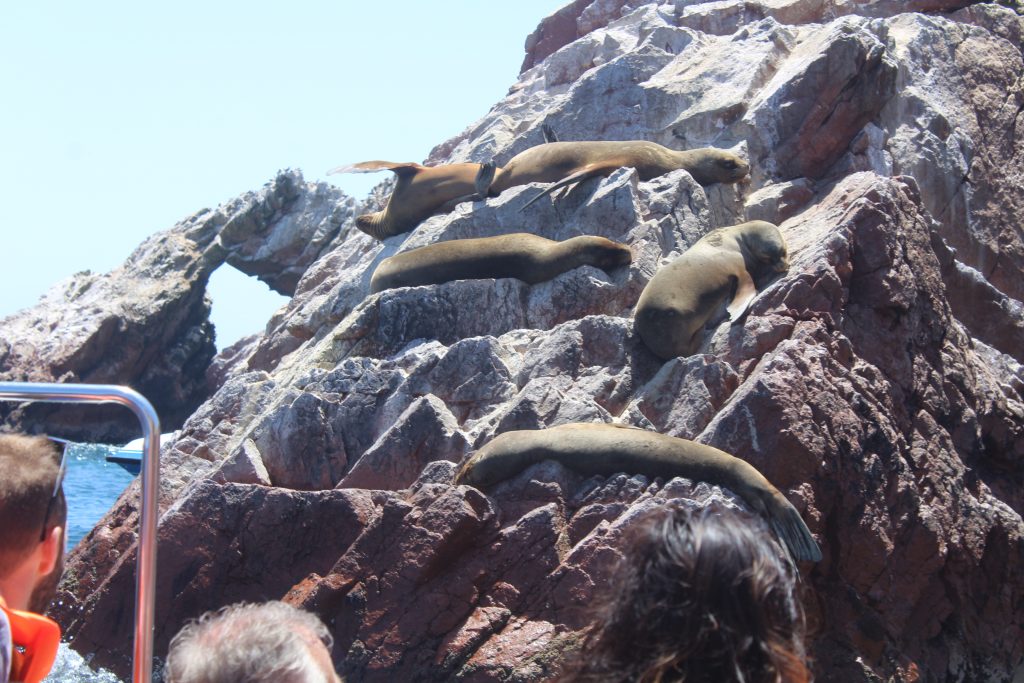
There was also plenty of wildlife. I watched thousands of seabirds around the Ballestas Islands and saw sea lions basking lazily on the rocks. Later in the journey, I watched majestic condors soaring above Colca Canyon.
Then there were the experiences I had particularly looked forward to: flying over the mysterious Nasca Lines and, of course, visiting Machu Picchu.
Travelling through a country like Peru required careful organisation of hotels, transfers, internal flights, sightseeing and transportation from one place to another. For this particular journey, I was very happy to leave much of that organisation to an organised tour company.
My journey started with a long flight from London to Lima. We travelled south along the coast, stopping at various places along the way, before turning inland and climbing through the Andes. Our journey eventually took us through Abancay, Ollantaytambo and Cusco, then on to Machu Picchu. We later travelled south to Lake Titicaca and Puno before climbing through the Andes again towards Colca Canyon and Arequipa. From Arequipa, I flew back to Lima before returning to the UK.
One of the challenges of travelling through Peru was adapting to the considerable changes in altitude. Our guide constantly reminded us to keep hydrated and suggested drinking tea made with coca leaves, which is commonly consumed in Peru.
It was a wonderful journey and one I enjoyed immensely. Peru offered an extraordinary mixture of culture, history and spectacular landscapes, but some of my favourite memories came from the unexpected places and experiences along the way.
Sailing to the Ballestas Islands
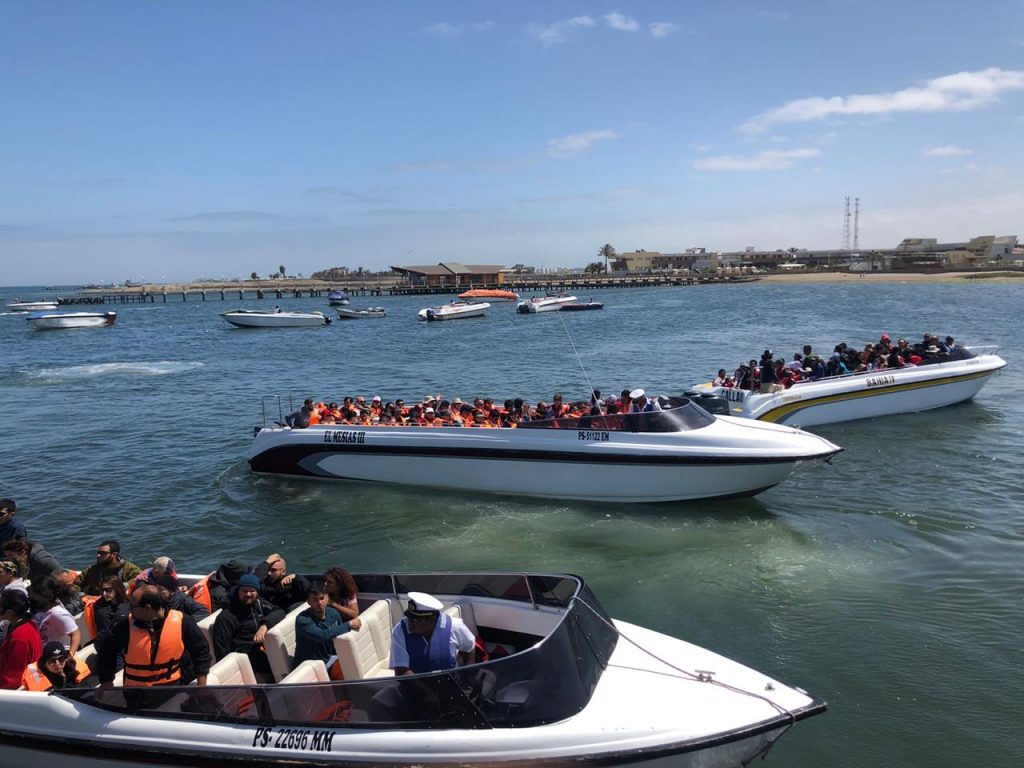
Open top motorised boats on the sight seeing tours around Ballestas Islands.
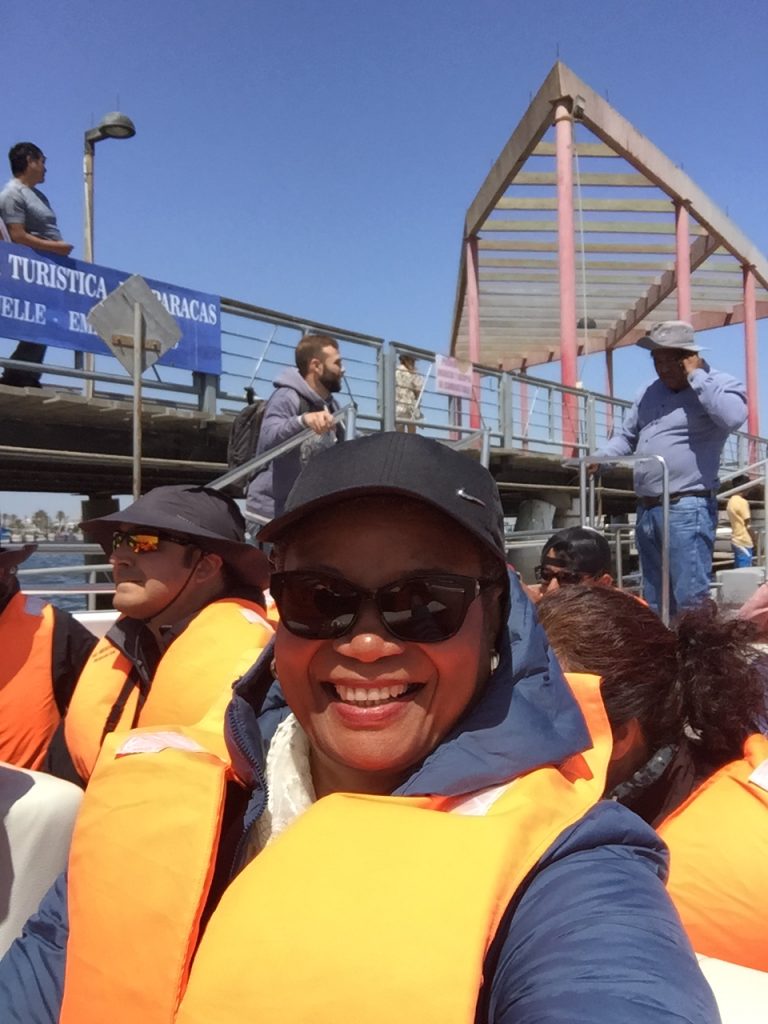
Mollywozhere photo, naturally, getting ready to sail to the islands.
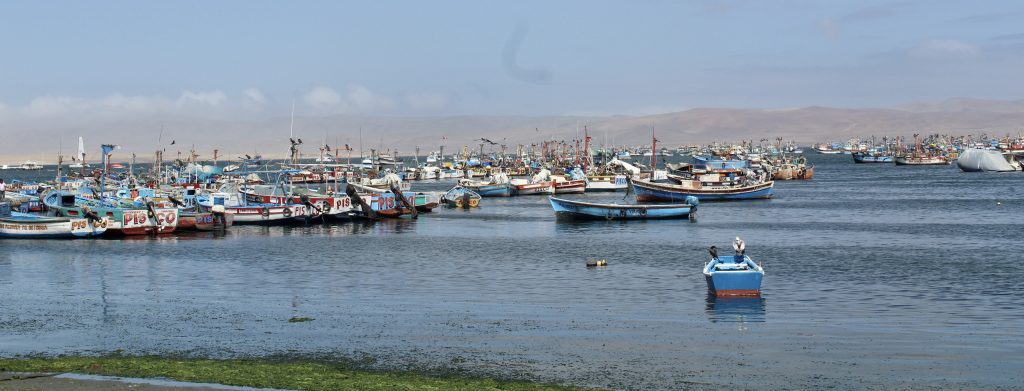
The Ballestas Islands are a small group of rocky islands off the southern coast of Peru, close to the town of Paracas. The islands can only be visited by boat and are home to an extraordinary number of seabirds and marine animals.
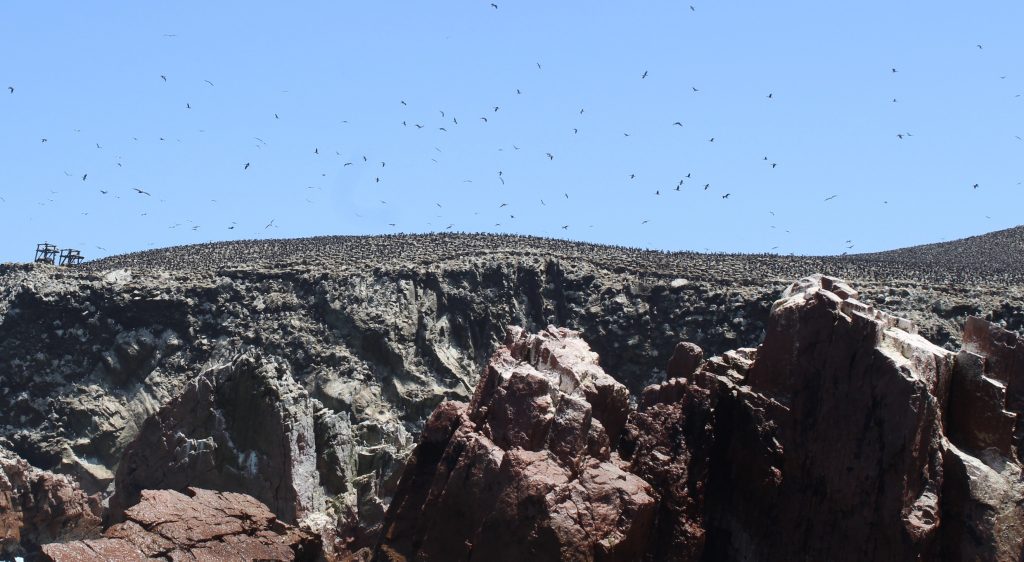
There is something exhilarating about seeing thousands of birds and marine animals in their natural habitat. I remember looking at the enormous numbers of birds covering the rocks and thinking about those wonderful David Attenborough wildlife programmes. There is a sense of freedom and happiness that comes from simply sitting back and watching animals going about their lives in their natural surroundings.
Thousands of birds perched on the rock formations, including the Peruvian booby, with its distinctive white head and neck and brown body.
Peruvian Booby birds
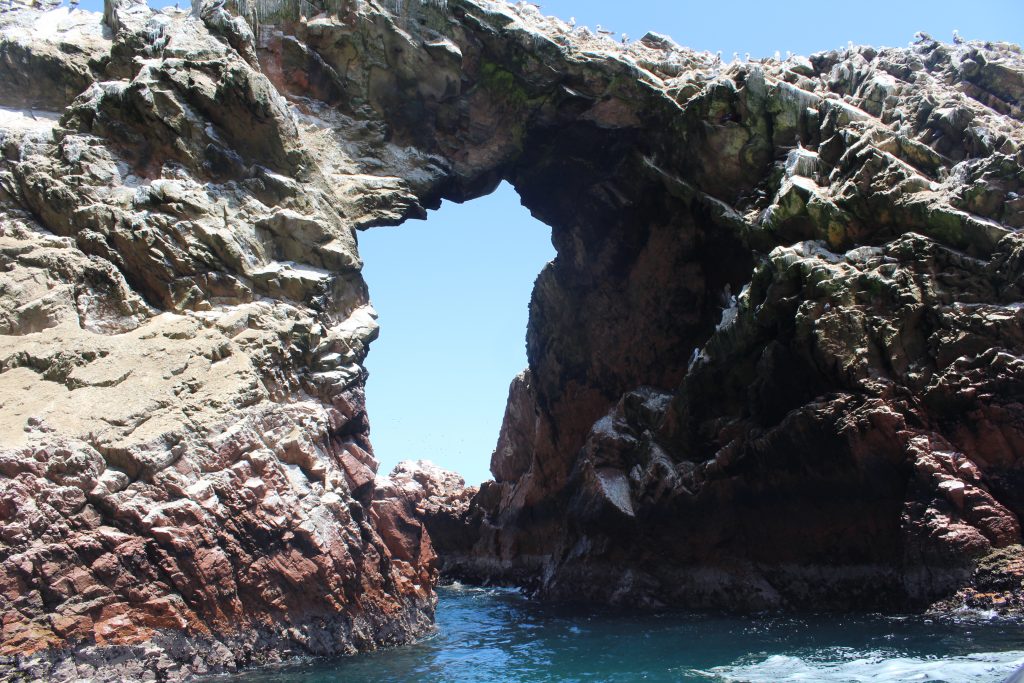
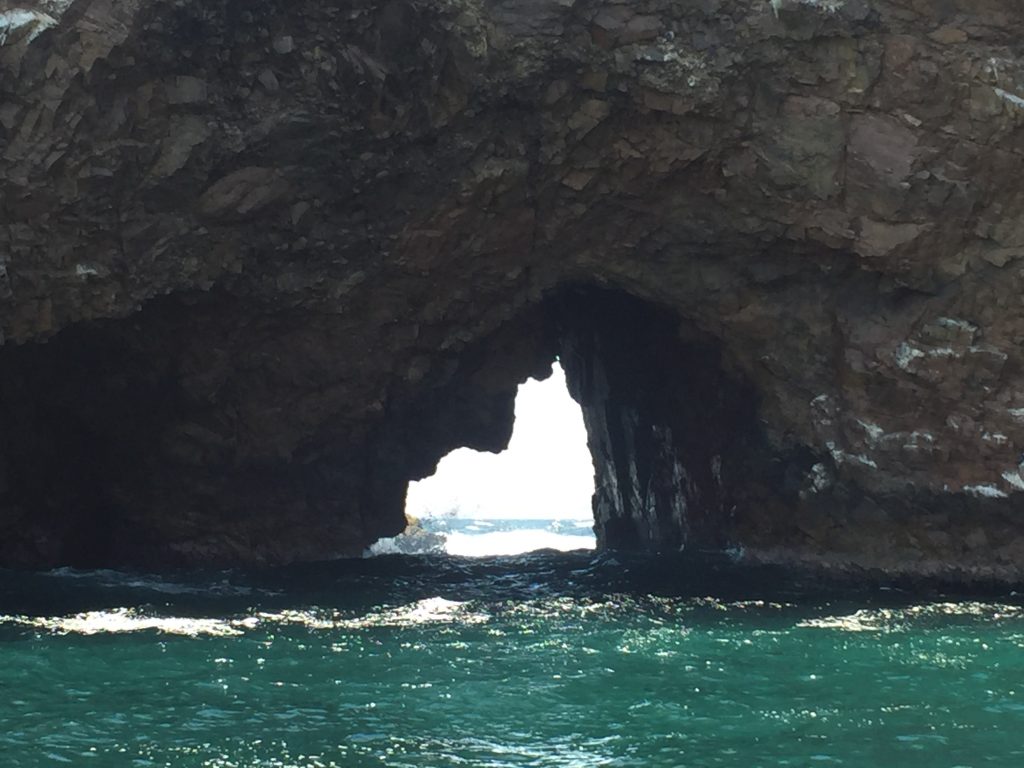
The interesting rock formations provide a natural habitat for the birds and marine life.
Our guide explained the importance of guano — seabird droppings — which has been collected from islands along the Peruvian coast and used as a valuable natural fertiliser for centuries. Access to the islands is carefully controlled to protect this important wildlife habitat.
As our boat sailed around the islands, our guide pointed out one particular rock formation and asked what we thought it looked like. He told us that local people believed they could see the face of Jesus in the rock. Naturally, we all stared at it trying to find the outline of the face.
Can you see it?
The journey back to the port was rather more exciting than I would have liked. The weather suddenly changed and the skipper tried to get us back to shore as quickly as possible. The open boat bounced over the water and some of us got very wet. Despite wearing a life jacket, I was still uncomfortable, particularly because I cannot swim. It was one of the bumpiest boat rides I had ever experienced and I was very relieved when we reached dry land. I don’t think I would have been volunteering to do that boat trip again anytime soon!
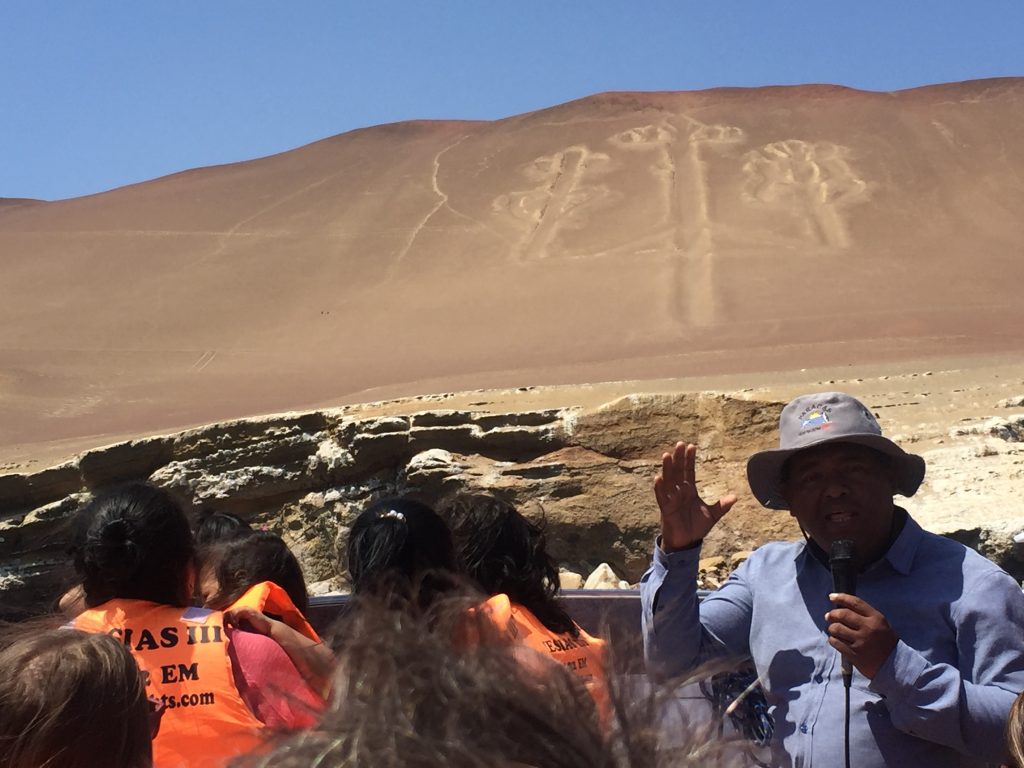
On our boat journey to the Ballestas Islands, we also saw the famous Paracas Candelabra, an enormous prehistoric geoglyph etched into the sandy hillside overlooking the sea. Our boat stopped long enough for us to take photographs before continuing towards the islands.
If wildlife, particularly birdwatching, is your thing, the Ballestas Islands are certainly worth considering as part of a visit to this area of Peru.
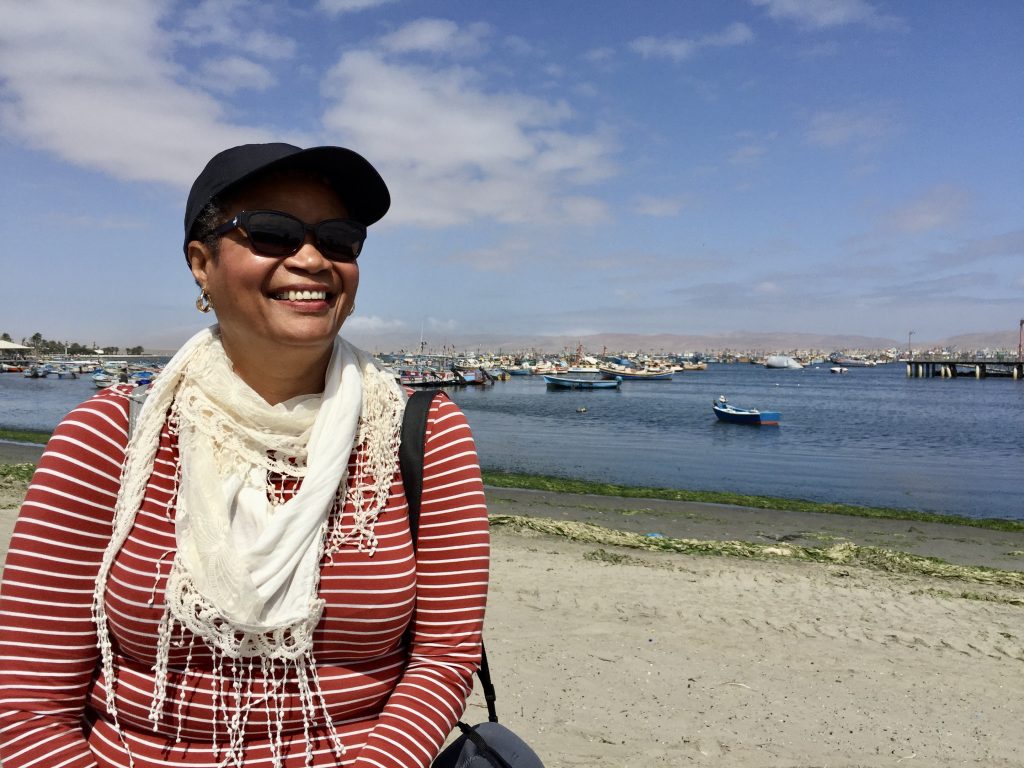
This is me smiling when we got back safely - very relieved!
On the boat ride to the Ballestas Islands, you will see the famous pre- Inca Paracas Candelabra, a giant figure of about a metre and half deep etched into the sandy hillside. Candelabra means strong wind. The boat stopped for us to take pictures before continuing on the cruise round the islands.
On our boat journey to the Ballestas Islands, we also saw the famous Paracas Candelabra, an enormous prehistoric geoglyph etched into the sandy hillside overlooking the sea. Our boat stopped long enough for us to take photographs before continuing towards the islands.
If wildlife, particularly birdwatching, is your thing, the Ballestas Islands are certainly worth considering as part of a visit to this area of Peru.
Nasca Lines — archaeological mysteries
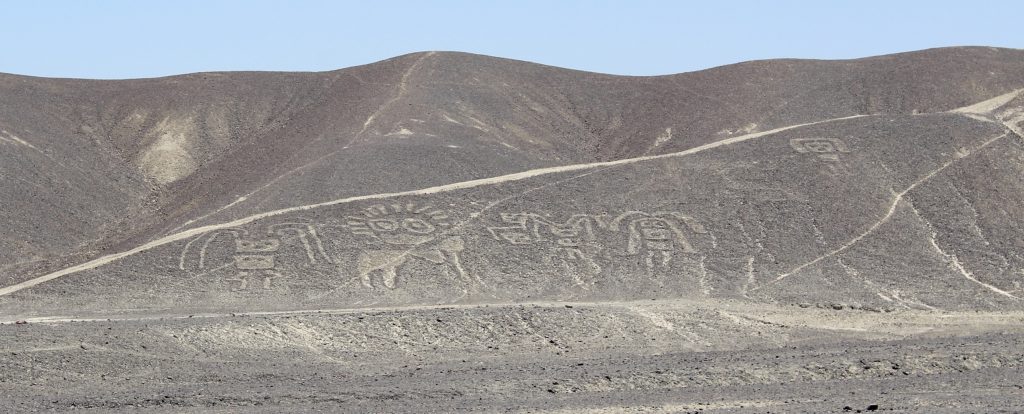
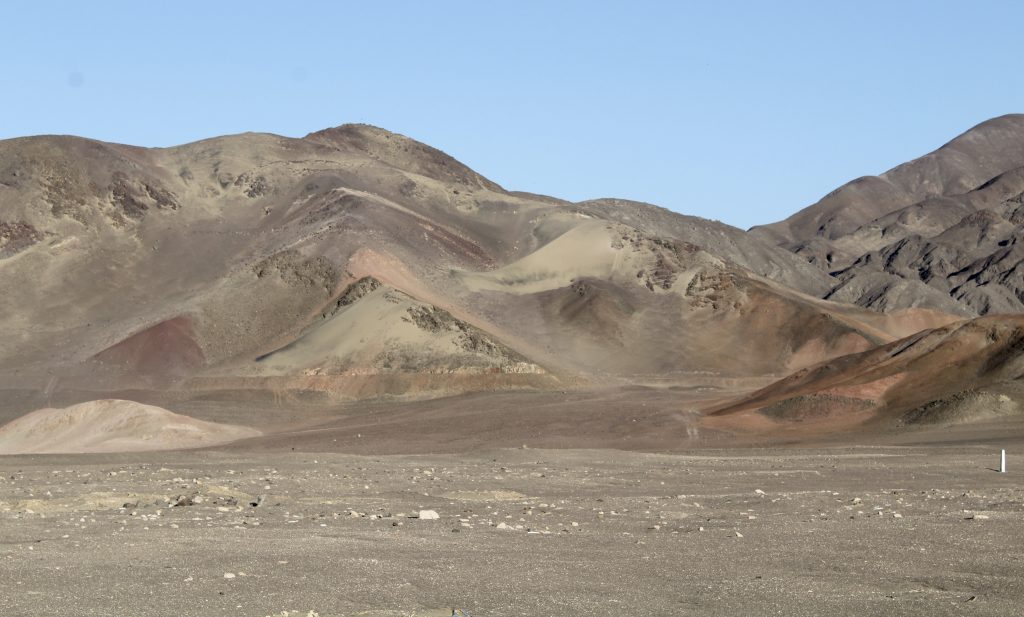
Spectacular landscape - this photo doesn't really do it justice!
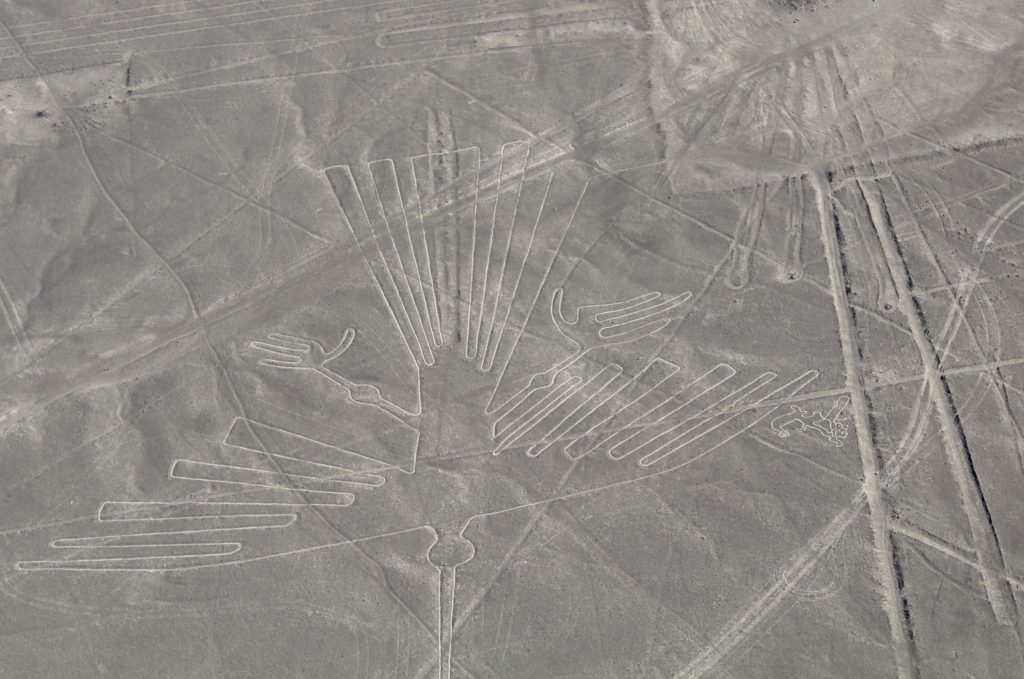
The Nasca Lines are one of the great archaeological mysteries of the world. Spread across the desert are enormous geoglyphs depicting animals, plants and geometric shapes. They were created over many centuries by removing the darker surface stones to expose the lighter ground beneath. Despite years of research, questions about exactly why they were created remain, which makes seeing them even more fascinating.
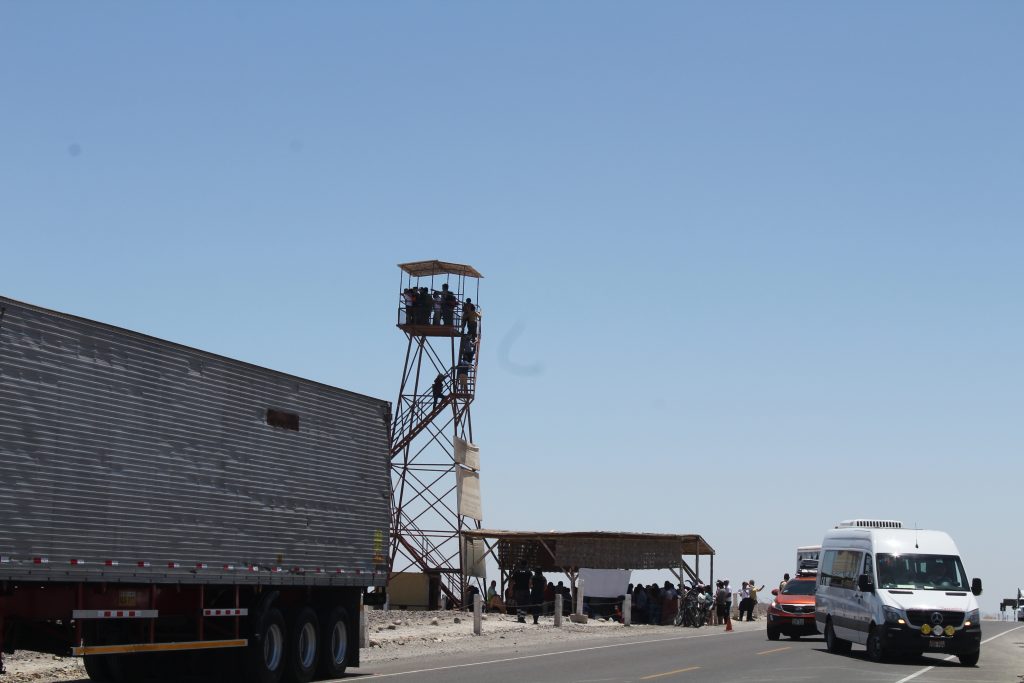
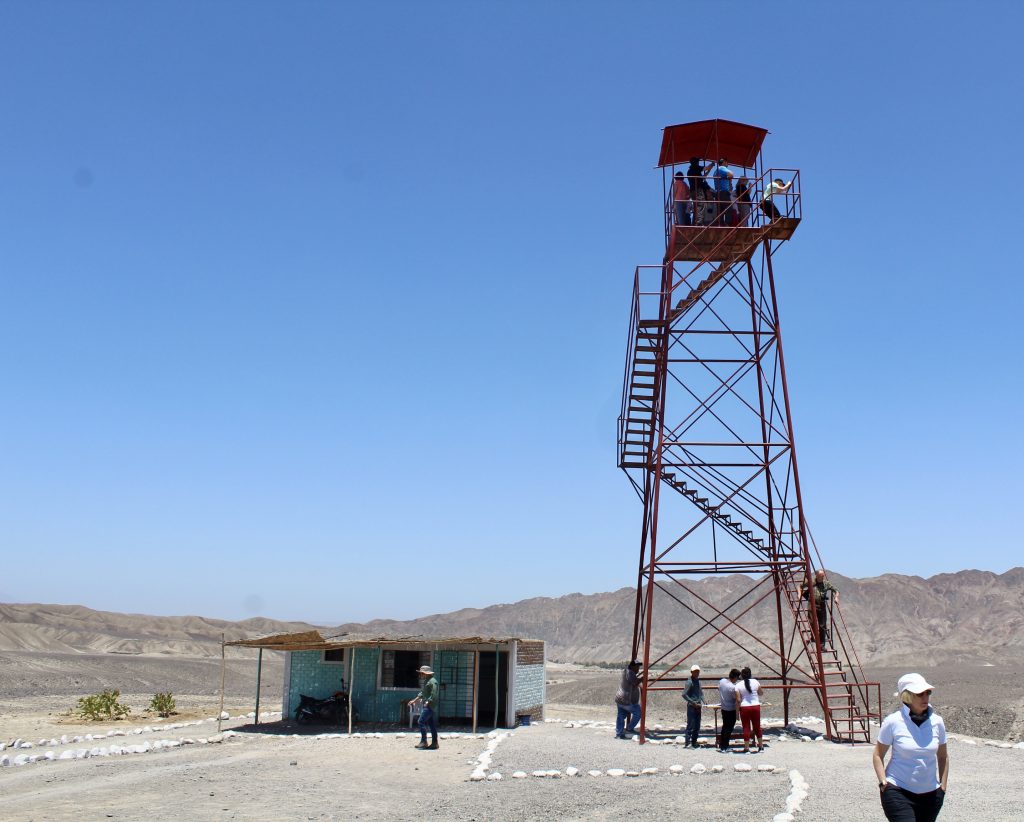
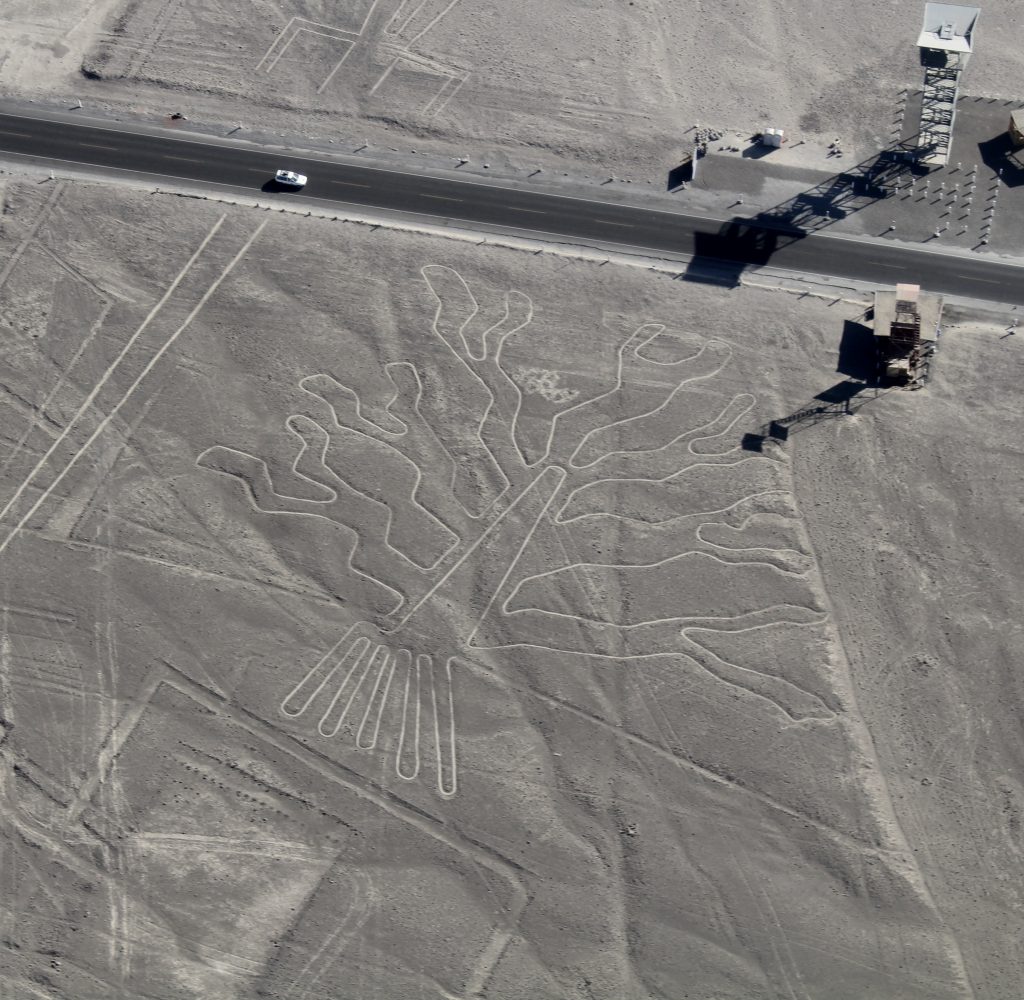
On our way to the Nasca Lines, we stopped at a roadside viewing platform. My fellow travellers could not wait to climb to the top with our guide, but when I got closer, the structure looked rather flimsy to me and there seemed to be an awful lot of people climbing it. I decided to stay firmly at the bottom! Nobody could persuade me to climb those four flights of stairs.
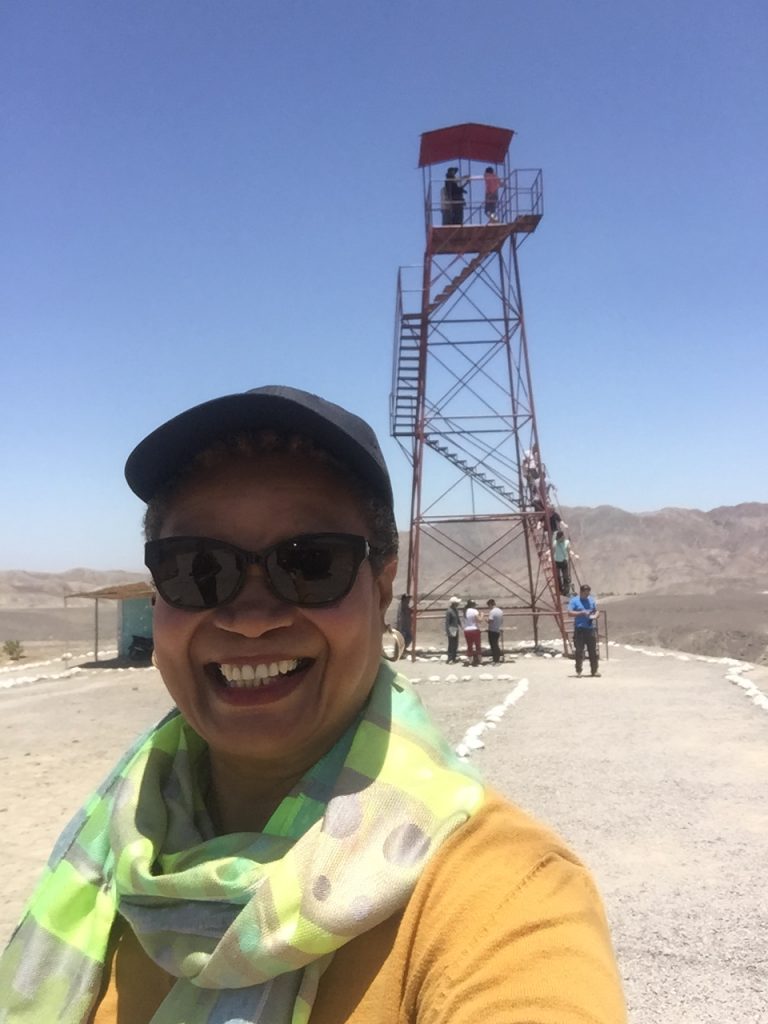
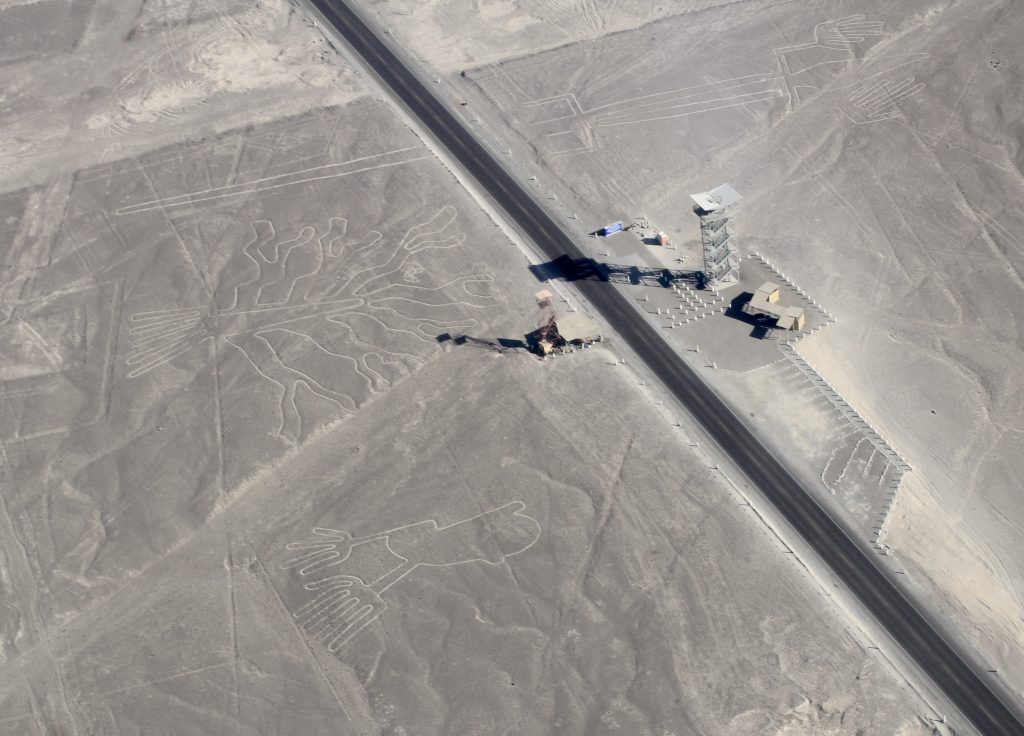
A short distance away, on the other side of the busy road, was a second viewing platform. As this was a popular tourist stop, there were officials helping visitors cross the road. Once I had assessed the stability of this second platform and satisfied myself that it looked safe, I joined my fellow travellers and climbed to the top.
I know. The first one wasn’t good enough for me, but the second one passed my personal safety inspection!
The main road through the desert near the Nasca Lines.
One of the roadside viewing platforms.
The dry desert conditions have helped preserve the Nasca Lines for centuries. Standing on the viewing platform gave us our first opportunity to see some of the figures, but I was particularly looking forward to seeing them from the air.
Viewing platform
Mollywozhere photo, naturally.
Drawing seen from the viewing platform.
Flying over the Nasca Lines
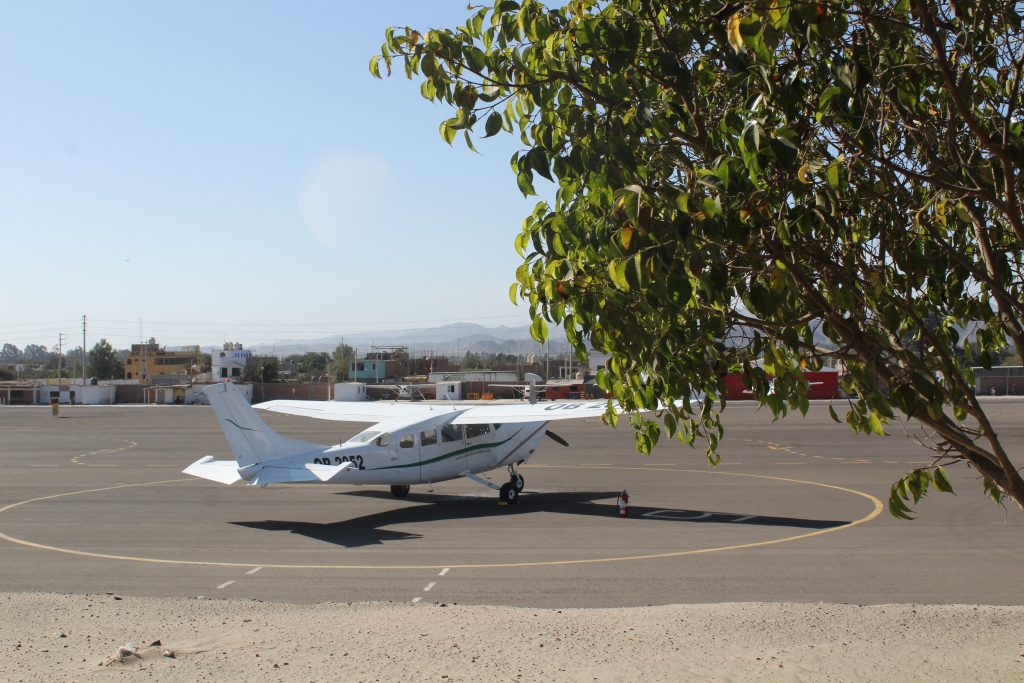
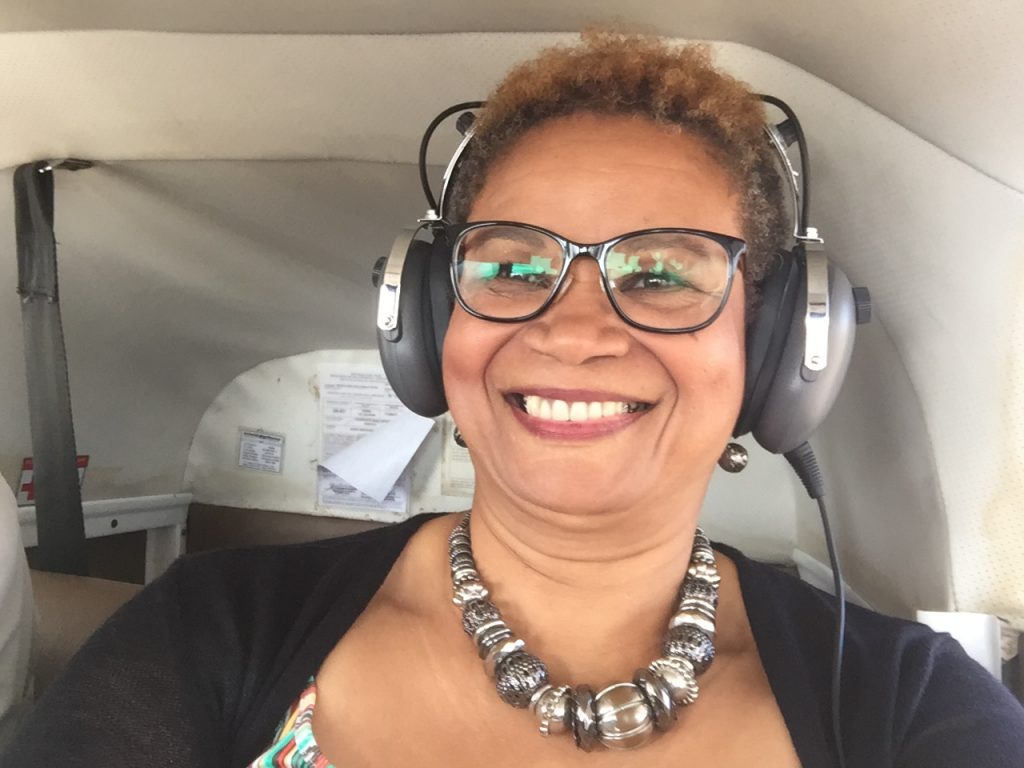
A scenic flight is one of the best ways to appreciate the enormous scale of the Nasca Lines, and I was lucky enough to share a tiny two-seater passenger aircraft with someone from my group. Some of my fellow travellers flew in slightly larger four- or six-seater planes.
The pilot and co-pilot looked very young to me, but they were experienced and both the take-off and landing were perfect, so I needn’t have worried. I had been in a small aircraft before and knew roughly what to expect. My son had been a pilot — an expensive hobby, I might add and had once flown us from the UK to Le Touquet in France for a spot of lunch and a dip in the sea. That had been a thrilling experience, so getting into a tiny aircraft was not completely new to me.
Once we were in the air, our pilot pointed out the different figures and circled around so that we could see them from different angles and take photographs.
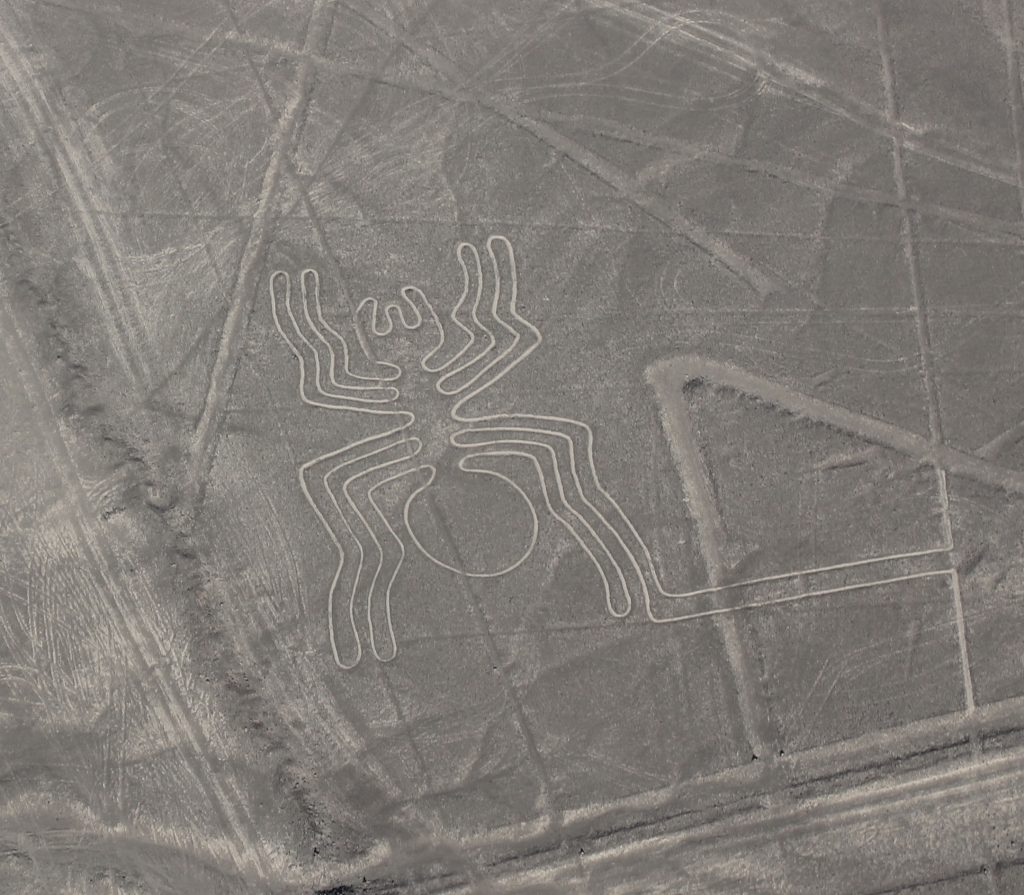
My favourite was the Spider. It was a remarkably clear and detailed representation, and looking down at it I couldn’t help wondering how people had managed to create such enormous and intricate designs in the desert so many centuries ago.
Nasca Lines — the Spider viewed from the air.
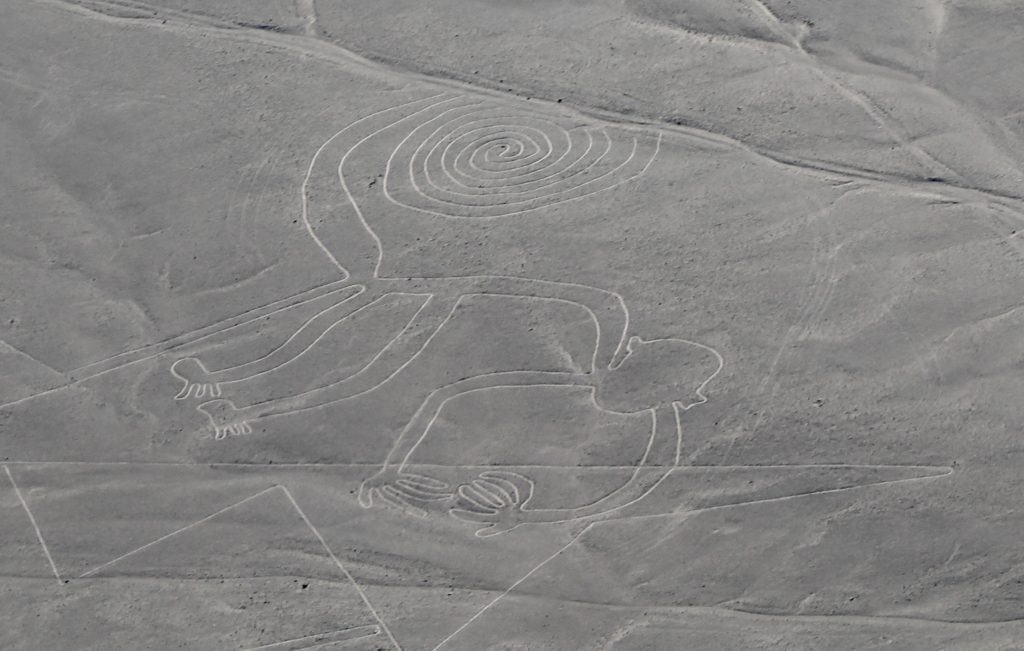
Nasca Lines — the Monkey viewed from the air.
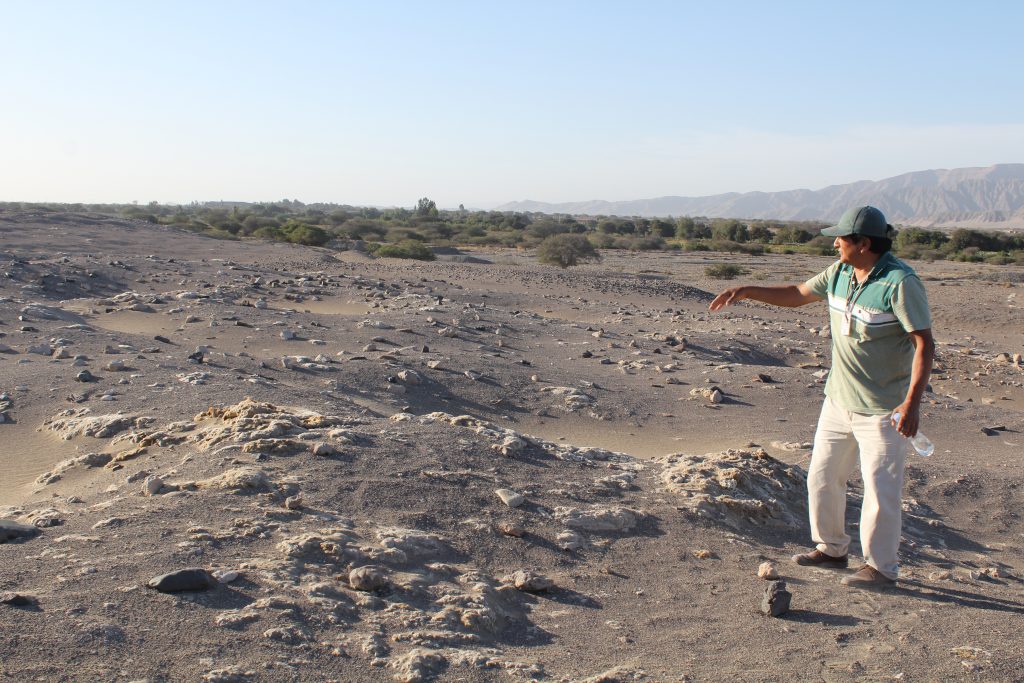
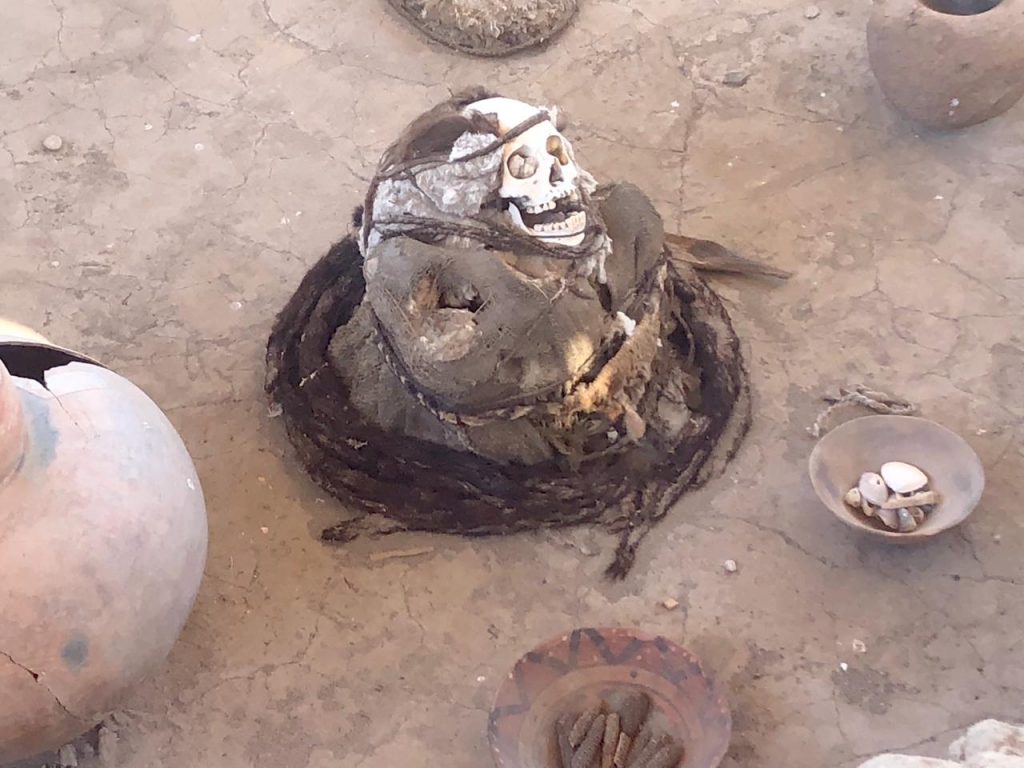
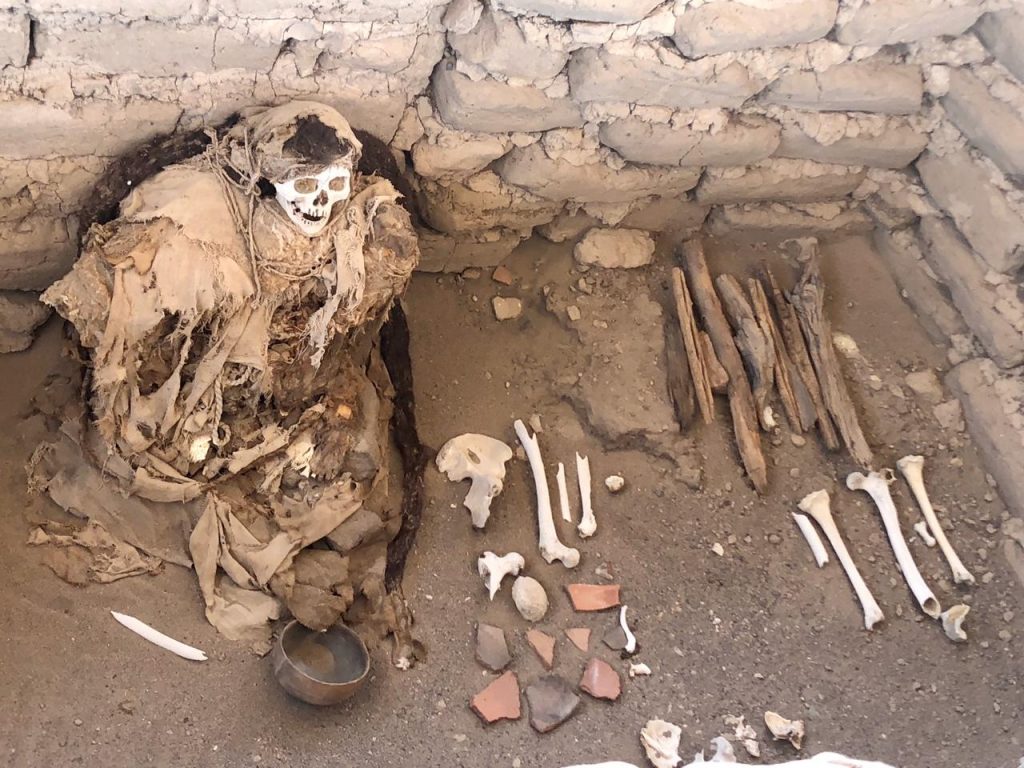
Chauchilla Cemetery
We had been warned that because of the size of the aircraft and changing weather conditions, our scenic flight over the Nasca Lines might not take place. Unfortunately, the weather was unsuitable on the day we were due to fly, so an alternative sightseeing trip was arranged while we hoped for better weather the following day.
That was how I ended up visiting Chauchilla Cemetery, one of the most unusual sightseeing experiences I had ever had.
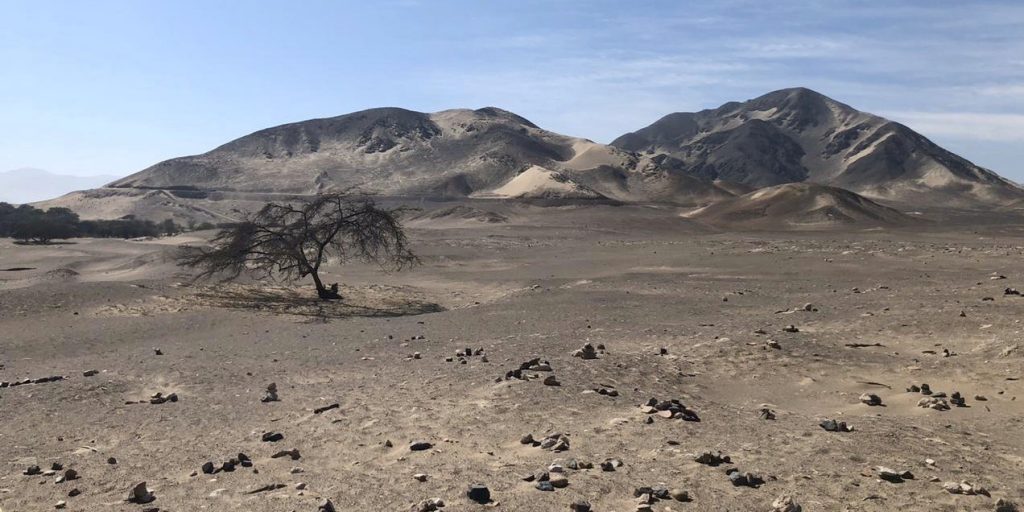
The cemetery lies in the desert and contains pre-Hispanic human remains and archaeological artefacts. It was extremely hot when we visited and we were accompanied by an older local guide who was very experienced and knowledgeable. As some of you already know, I am a keen advocate of using local guides. They often know the history and stories of an area in a way that brings a place to life.
One of the things that particularly interested me was the long braided hair that could still be seen on some of the human remains. I found it astonishing that it had survived for so long. The burial practices were equally fascinating and our guide explained some of the beliefs surrounding death and the afterlife.
It certainly wasn’t an excursion I had expected to make when I woke up that morning, but I was glad we had the opportunity to visit. Fortunately, the weather improved and we were able to take our flight over the Nasca Lines the following day.
The mystery of Puquios
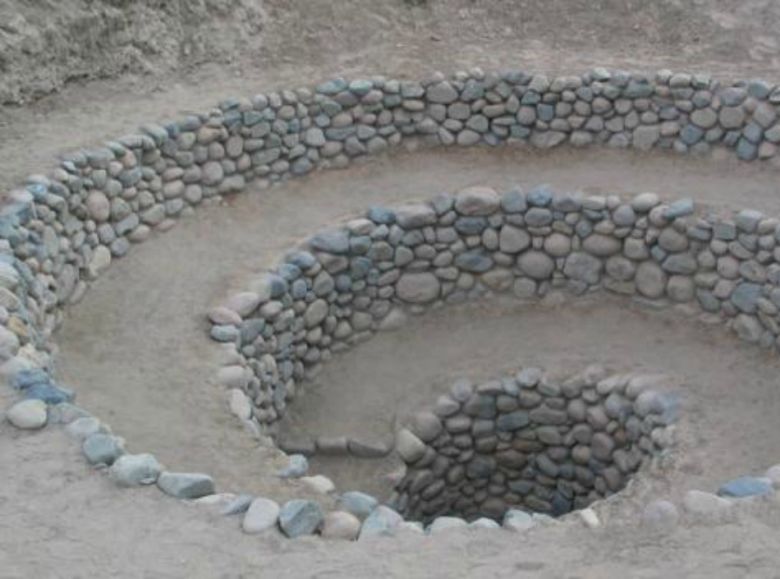
Ab5602/Wikimedia/Public Domain
Another fascinating stop in the Nasca area was the puquios. I couldn’t help wondering how people had managed to farm and survive in such an extremely dry desert landscape. The answer lay beneath the ground.
The ancient Nasca developed an ingenious system of underground aqueducts that tapped into groundwater and carried it to areas where it was needed. What fascinated me most were the distinctive spiral-shaped access points leading down towards some of the underground channels. Even more remarkably, parts of this ancient water-management system are still in use today.
Our local guide was very proud of this achievement and I found the whole subject fascinating. Looking at the dry landscape around us, it was difficult to imagine how people had developed such an effective way of finding and managing water so long ago.
It was another reminder of how much knowledge and ingenuity existed in ancient civilisations.
Huacachina - an oasis in the middle of the desert
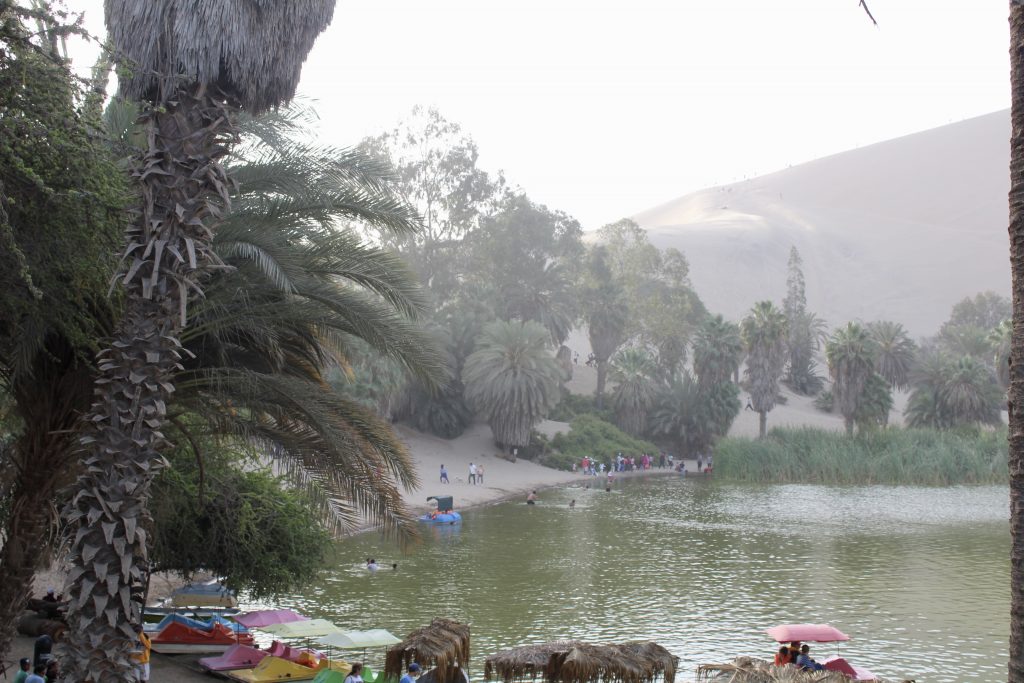
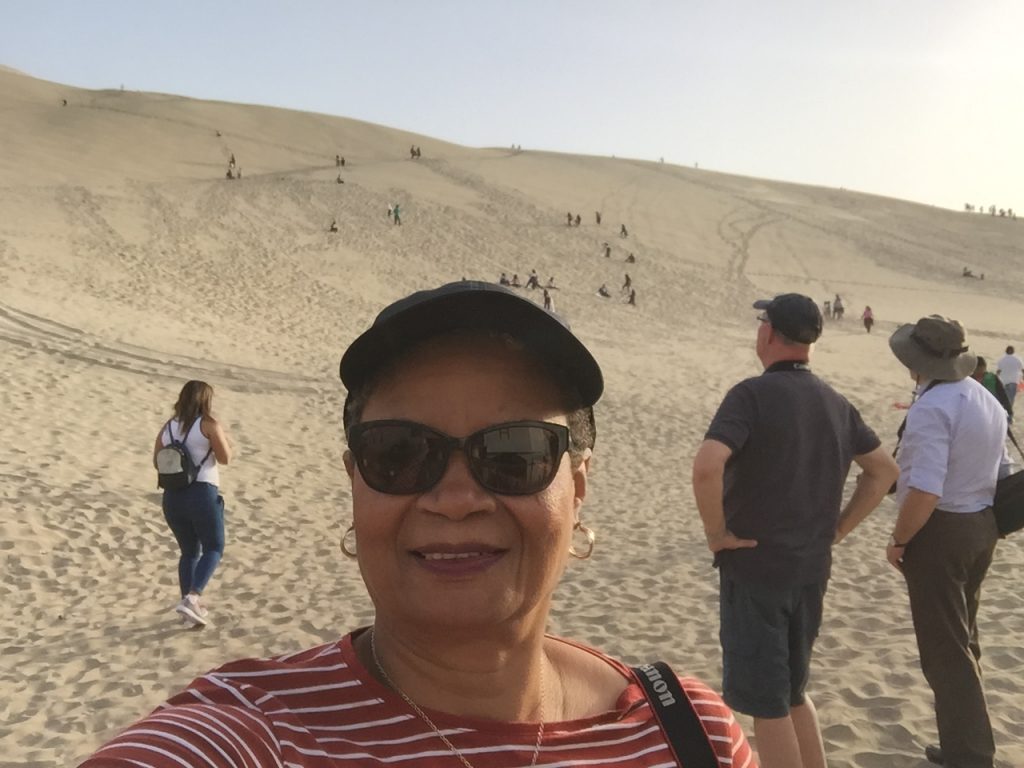
Visiting Huacachina was a huge surprise. Here was a small settlement built around a lagoon in the middle of the desert, surrounded by towering sand dunes and palm trees. After miles of dry desert landscape, it was quite extraordinary to see.
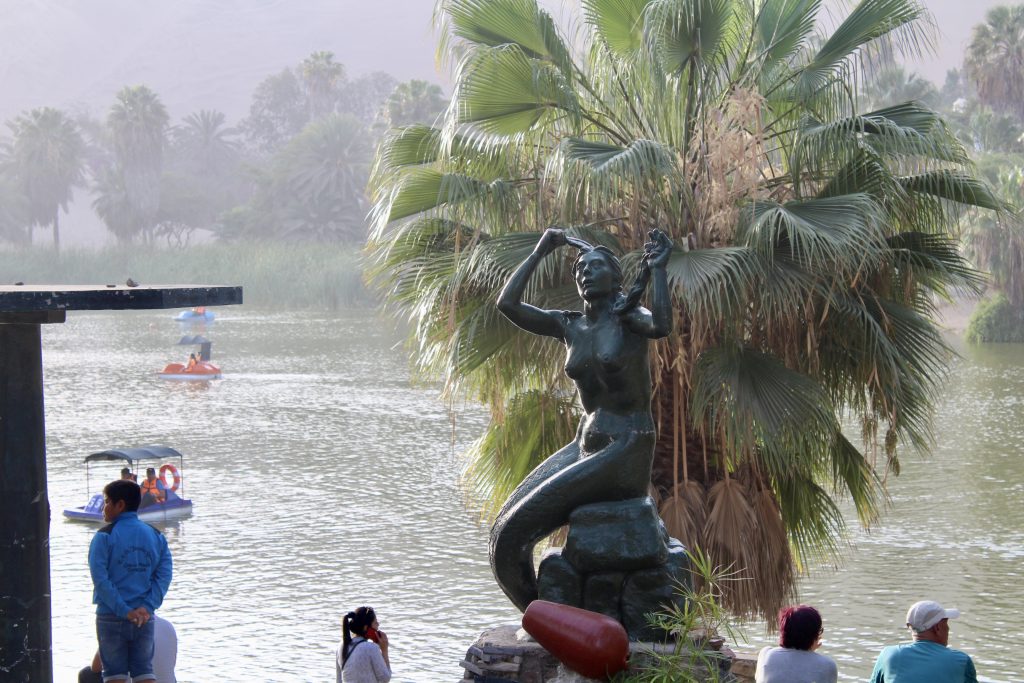
There is a local legend about the lagoon involving a beautiful maiden, often depicted as a mermaid, and naturally there was a mermaid statue to photograph.
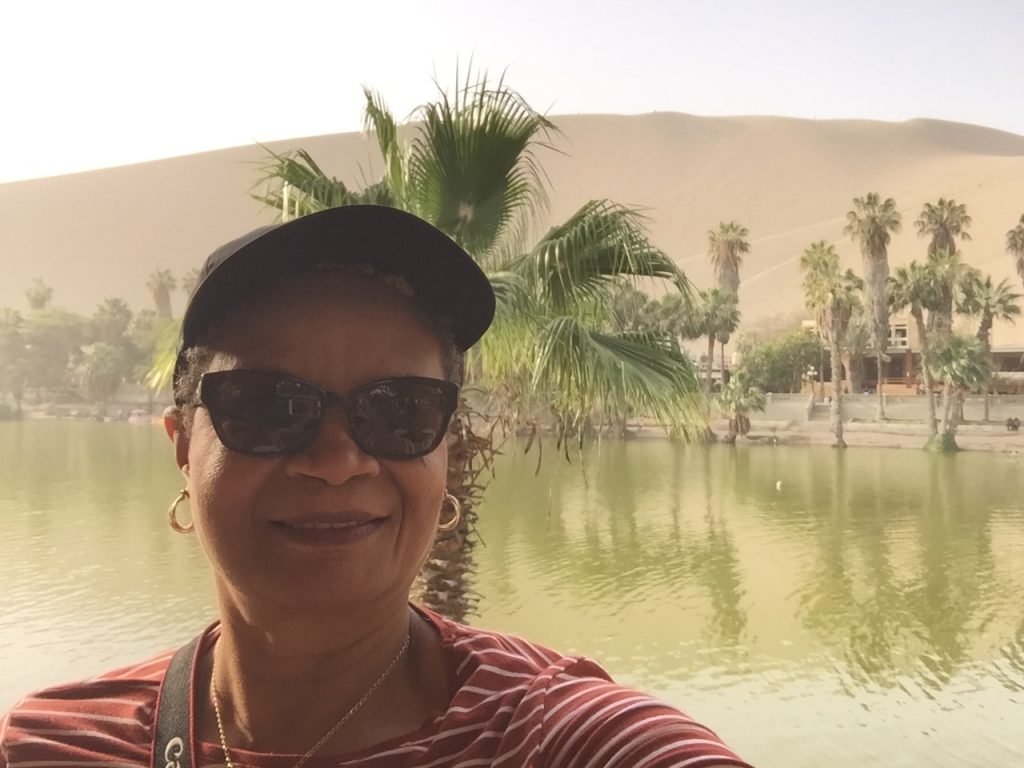
Me standing in front of the oasis and sand dunes.
The mermaid associated with the local legend of Huacachina
Huacachina has become a popular tourist stop with shops, restaurants and plenty going on around the lagoon. I enjoyed walking around, sitting beneath the palm trees and simply people-watching. It was also clearly somewhere local people enjoyed visiting and relaxing.
Sandboarding was very popular, but I must admit that I wasn’t tempted. I figured that coming down the sand dunes was probably the fun and easy part. Having to climb back up those enormous dunes was another matter entirely. I decided it was much better to watch other people doing it!
We stayed in what I thought was a rather unusual hotel because it appeared to have been built almost amongst the sand dunes, or at least surrounded by them. I tried not to imagine a sand slide in the middle of the night and wondered briefly whether staying somewhere surrounded by that much sand was such a good idea.
Needless to say, nothing happened and I survived the night perfectly well.
A few glasses of Pisco Sour helped a great deal!!
Looking back on my journey through Peru
Machu Picchu may have been the main reason I travelled to Peru, but looking back, I am very glad that I saw so much more of the country.
The Ballestas Islands, the Nasca Lines, Chauchilla Cemetery and the ingenious puquios were completely different experiences, while Huacachina was one of those places I simply hadn’t expected to find in the middle of a desert. And this was only part of the journey. There were still the Andes, Lake Titicaca, Colca Canyon, Cusco and many other experiences along the way.
Travelling through Peru was an adventure from beginning to end. It gave me a much greater appreciation of the country’s landscapes, ancient cultures and history, and also produced some wonderful memories.
And then there was the place that had brought me all the way to Peru in the first place — Machu Picchu.
Have you visited Peru? Did you travel beyond Machu Picchu, and was there somewhere that completely surprised you?
I’d love to hear about your experiences in the comments below.
Let’s Stay Connected!
Never miss a single story. Sign up for my newsletter, and let’s find out where the next adventure takes us. Inspiring you to experience the world, one journey at a time.




Amazing experience. I am never tired to read your blog. I have never known there’s so much to see in peru.Thanks for sharing.
And there is more – watch out for part 2 coming out soon. I am glad you enjoyed reading my blog.