Bali’s Sacred Temples: The Spiritual Heart of Bali
14 July 2026
I have travelled extensively and seen some of the world’s greatest monuments, but Bali offers something truly unique. On this island, spirituality isn’t confined to history books or quiet Sundays. It is alive, unfolding in real-time all around you.
Through exploring its striking architecture, witnessing its ancient dances, and experiencing the holy energy of its festival season, I learned a profound truth: you can understand a country’s soul entirely through its religion, art, music, and architecture.
Here is what I discovered when I stepped into the spiritual heart of Bali.
The Mystique of Balinese Hindu Architecture
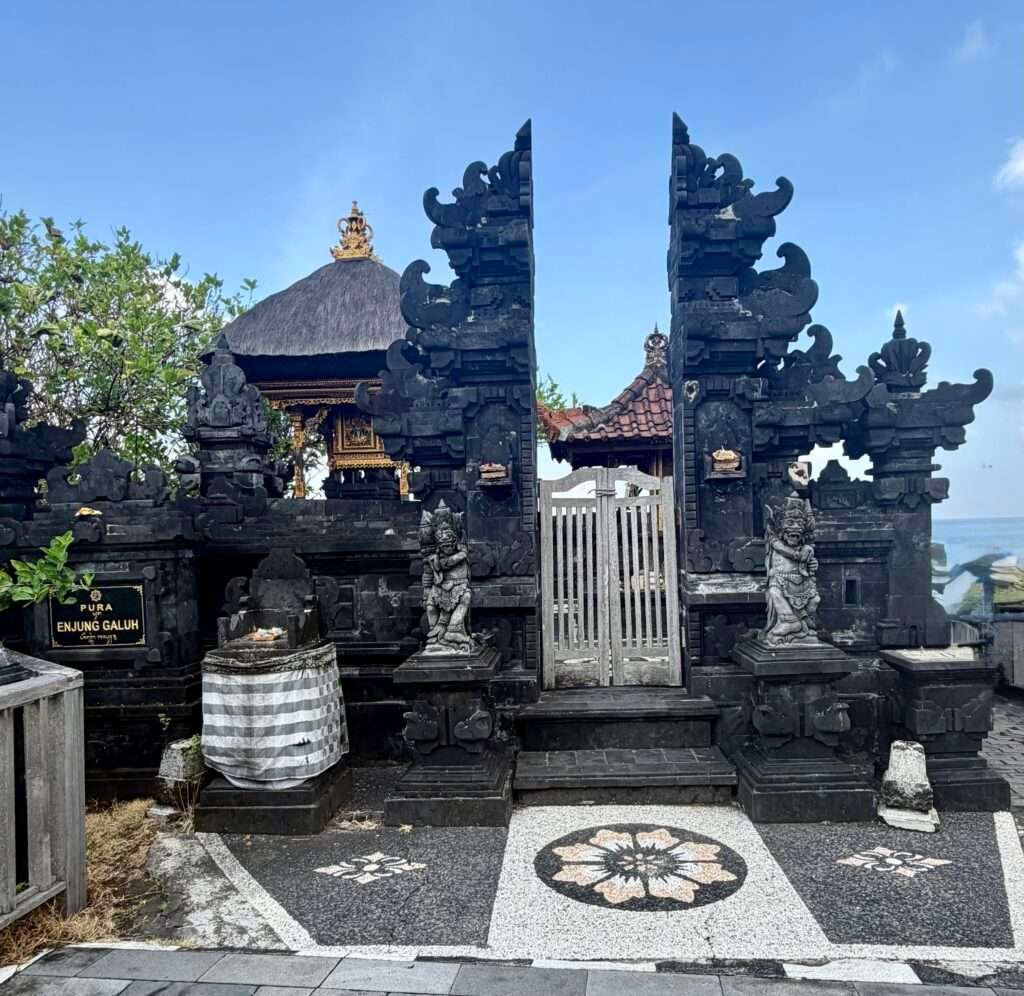
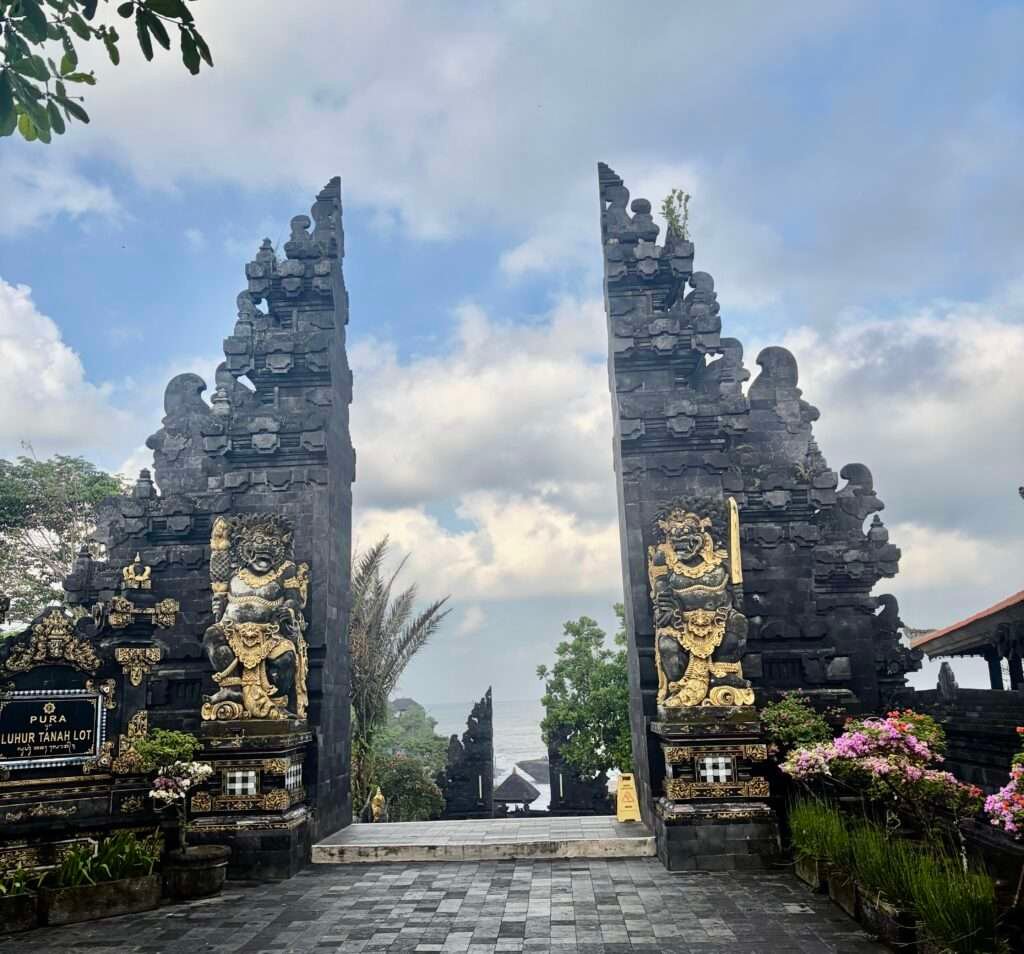
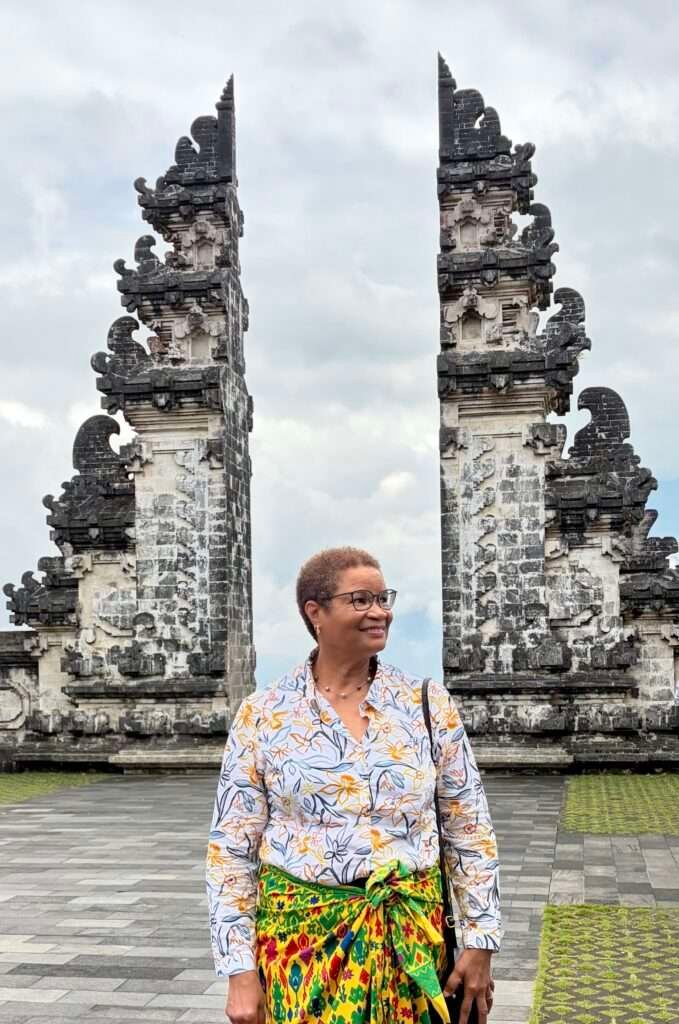
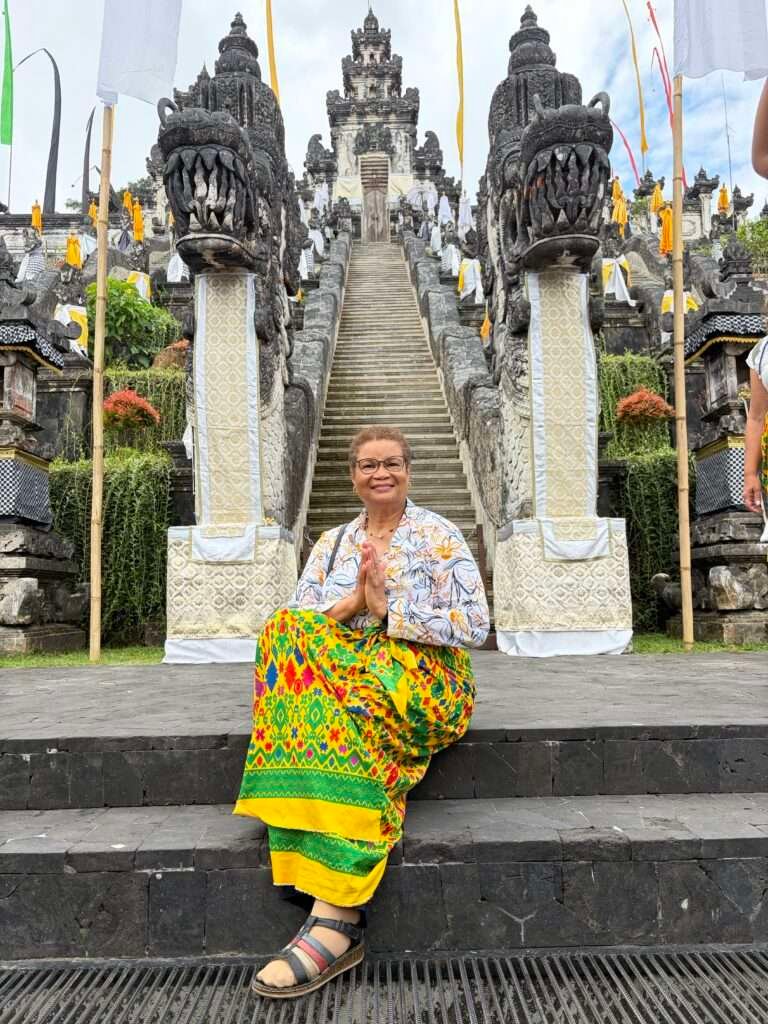
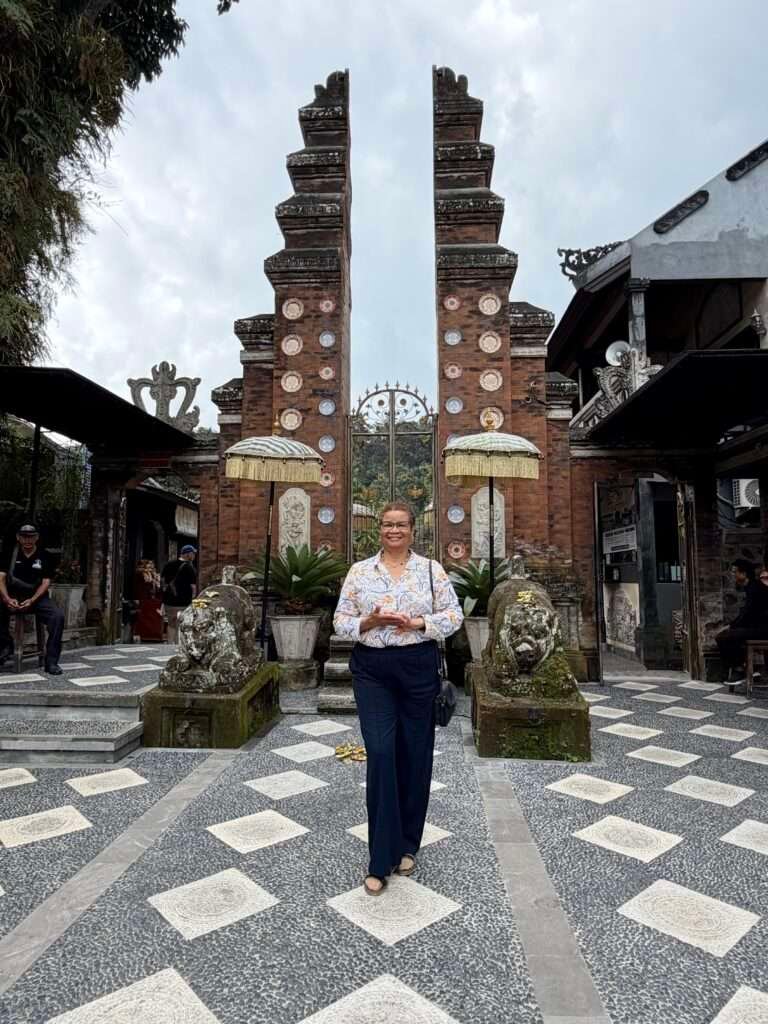
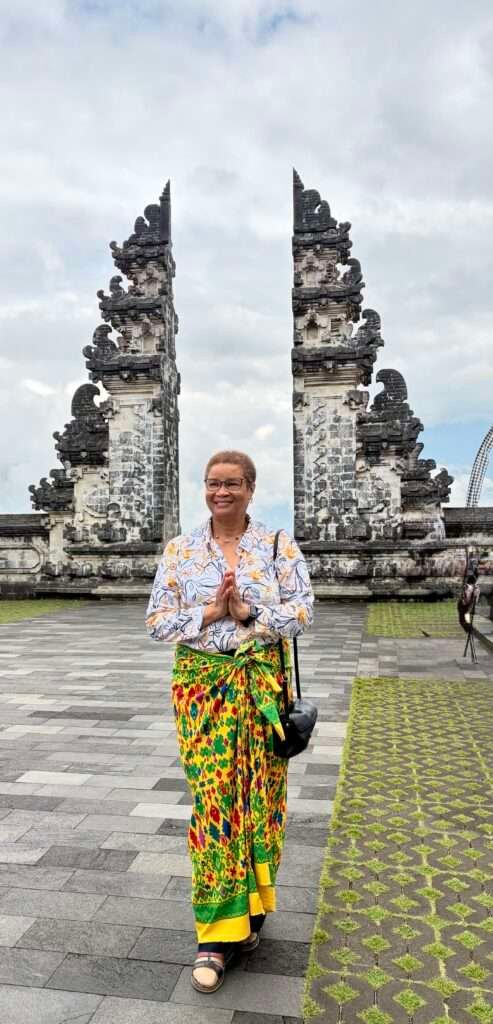
The moment you begin moving around the island, the temples (Pura) and majestic split gates (Candi Bentar) command your attention. They are prominent, powerful, and absolutely impossible to miss.
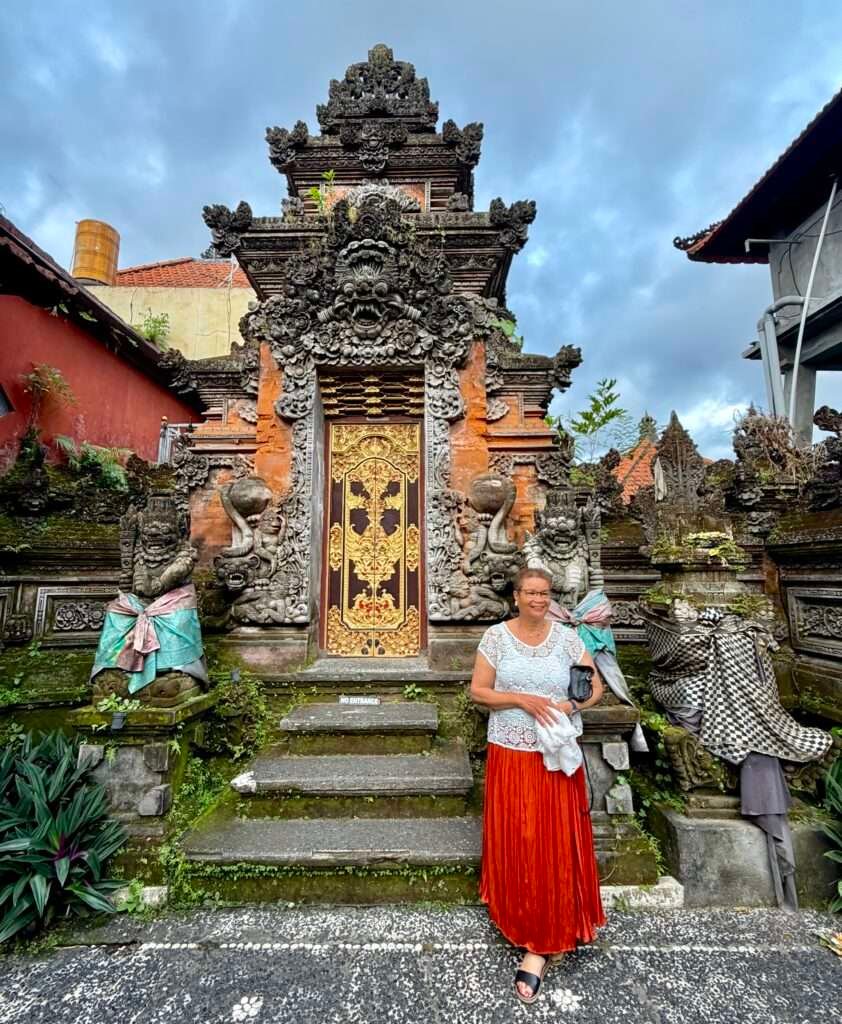
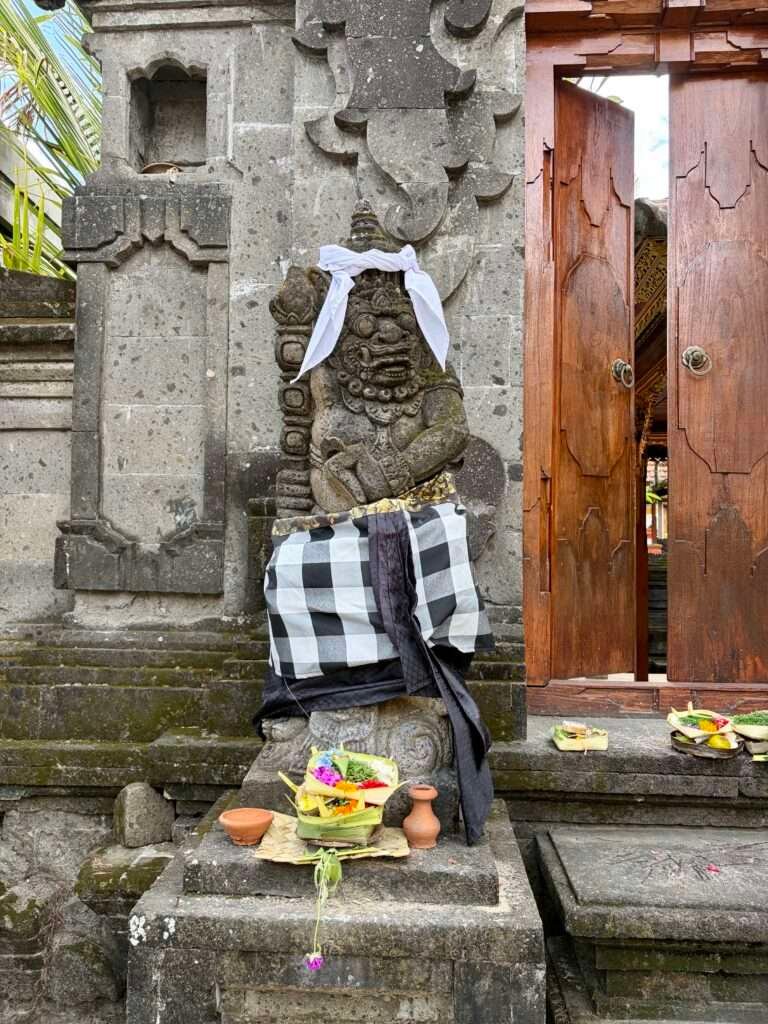
Unlike anything I had seen in Western or traditional Indian architecture, Balinese temples are carved from dark volcanic sand and black stone. The carvings are incredibly intricate, showcasing shapes, styles, and patterns that can look somewhat fierce—and even a little scary—to an outsider! I admittedly wasn’t inclined to stare at some of the more intimidating statues for too long.
Many of these dark stone figures are draped in Kain Poleng—a distinctive black-and-white checkered cloth. I learned that this pattern holds deep traditional significance, symbolising the essential balance of the universe: good and evil, light and dark, joy and sorrow. It is a visual reminder that both sides are necessary for harmony.
Standing Before the Icons: Tanah Lot and Ulun Danu Beratan
While every home compound features its own beautiful exterior shrine, two historic temples completely took my breath away.
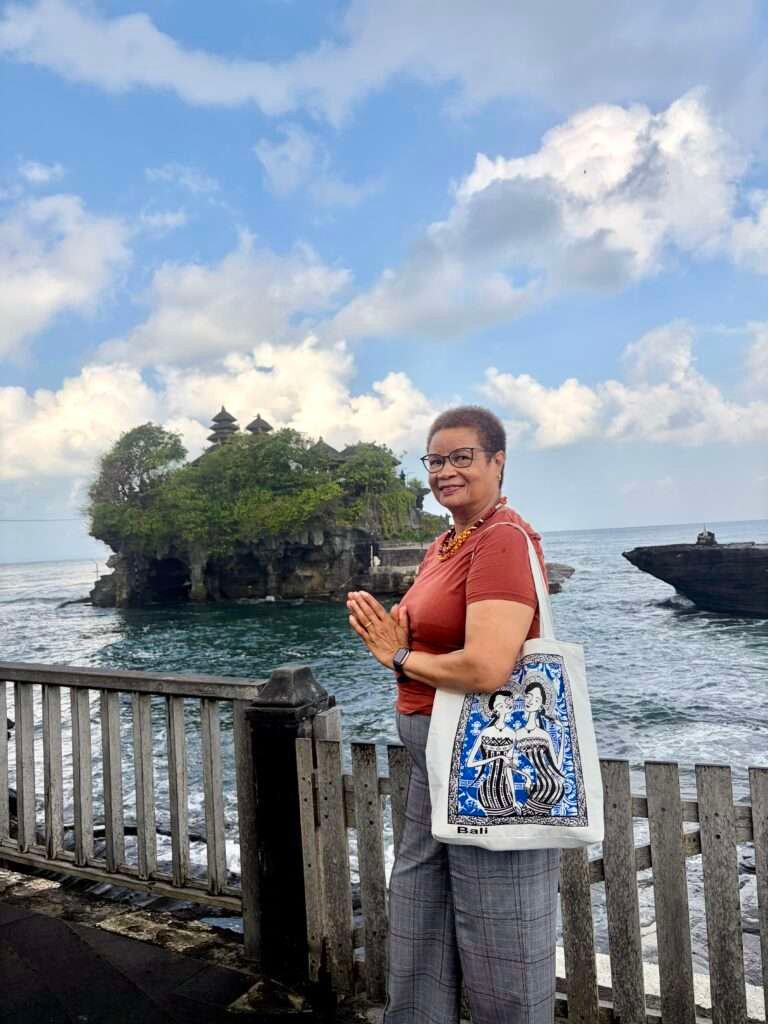
First was Tanah Lot, a sacred temple perched spectacularly on a rocky wave-swept rock formation just off the coast. It is a legendary site, and watching the sea crash against its ancient foundations is deeply moving. While there, I stood in quiet fascination watching a local woman carefully prepare and place her Canang Sario fferings along the temple grounds—a moment of pure devotion amidst the moving crowds.
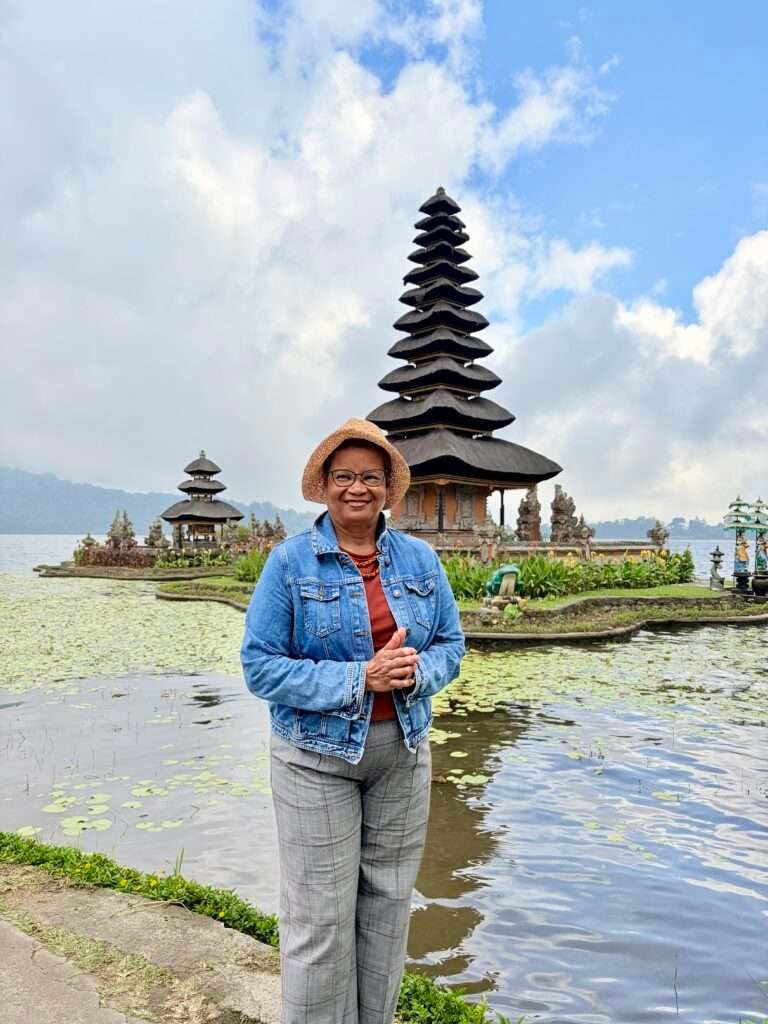
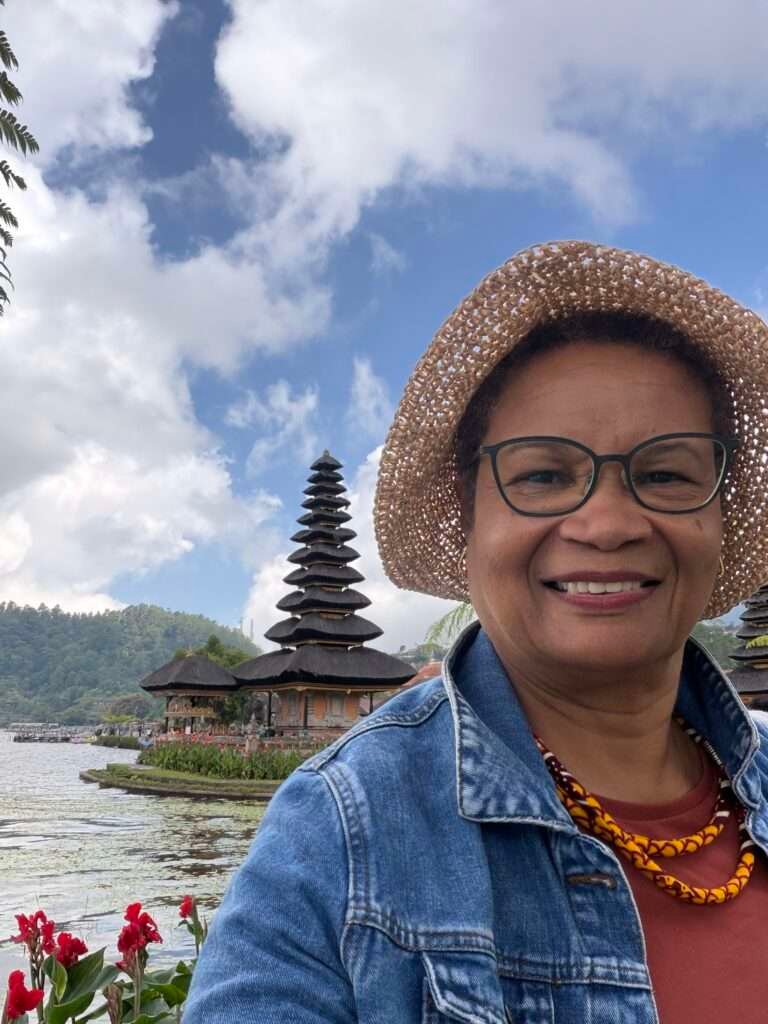
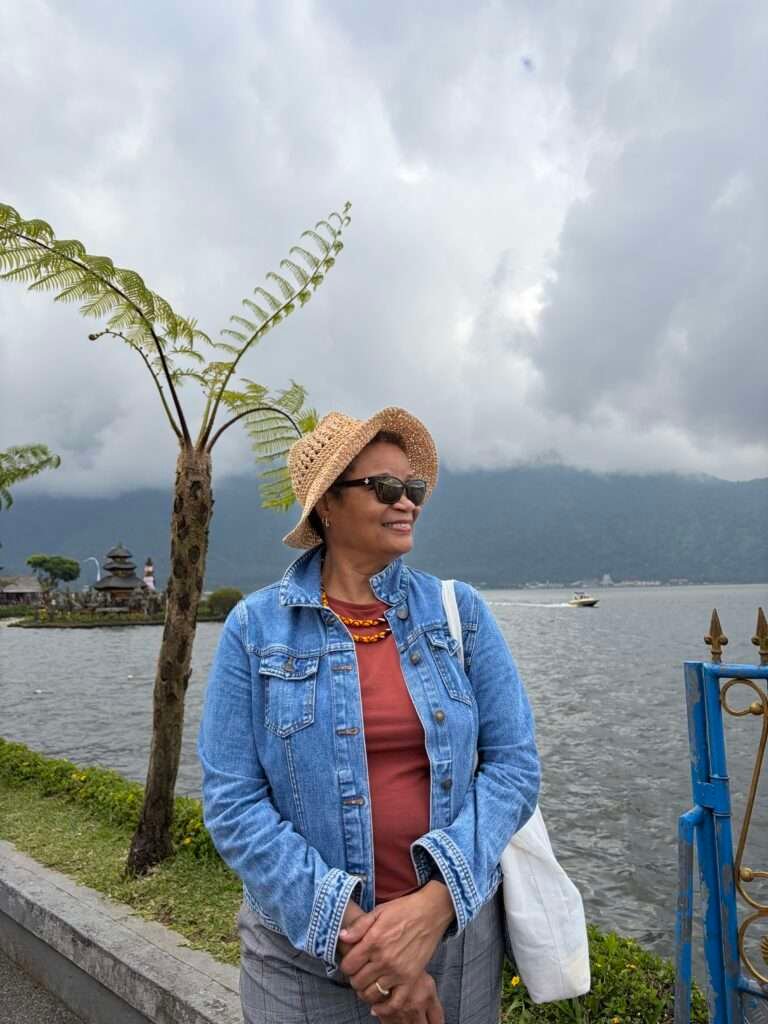
Next was Pura Ulun Danu Beratan, the famous water temple located high in the mountains. Seeing the smooth, tiered shrines appearing to float peacefully on the surface of Lake Beratan, framed by misty highlands, felt entirely otherworldly. If a friend asked me what not to miss in Bali, these two sacred sites would be at the absolute top of my list.
The Colossus of Bali: Garuda Wisnu Kencana (GWK)
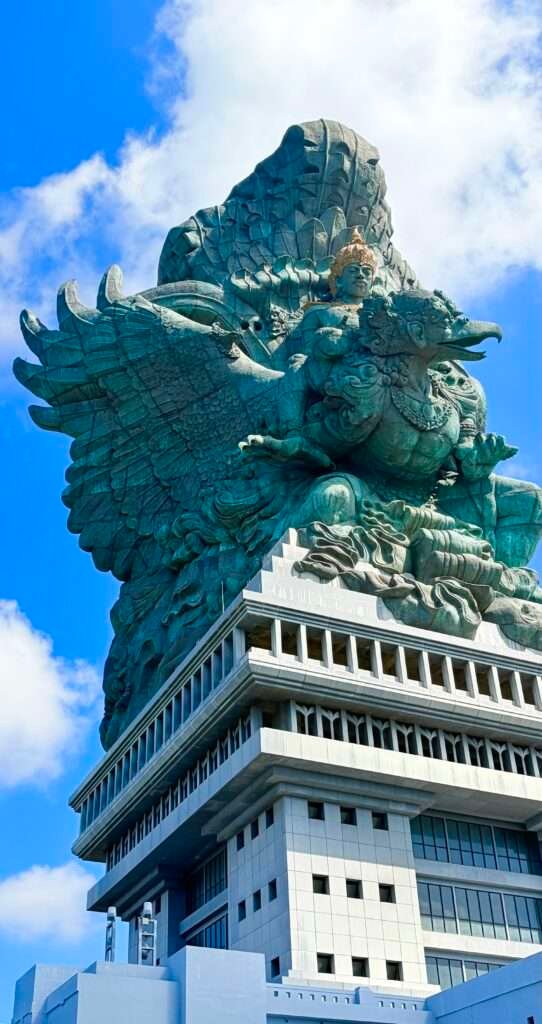
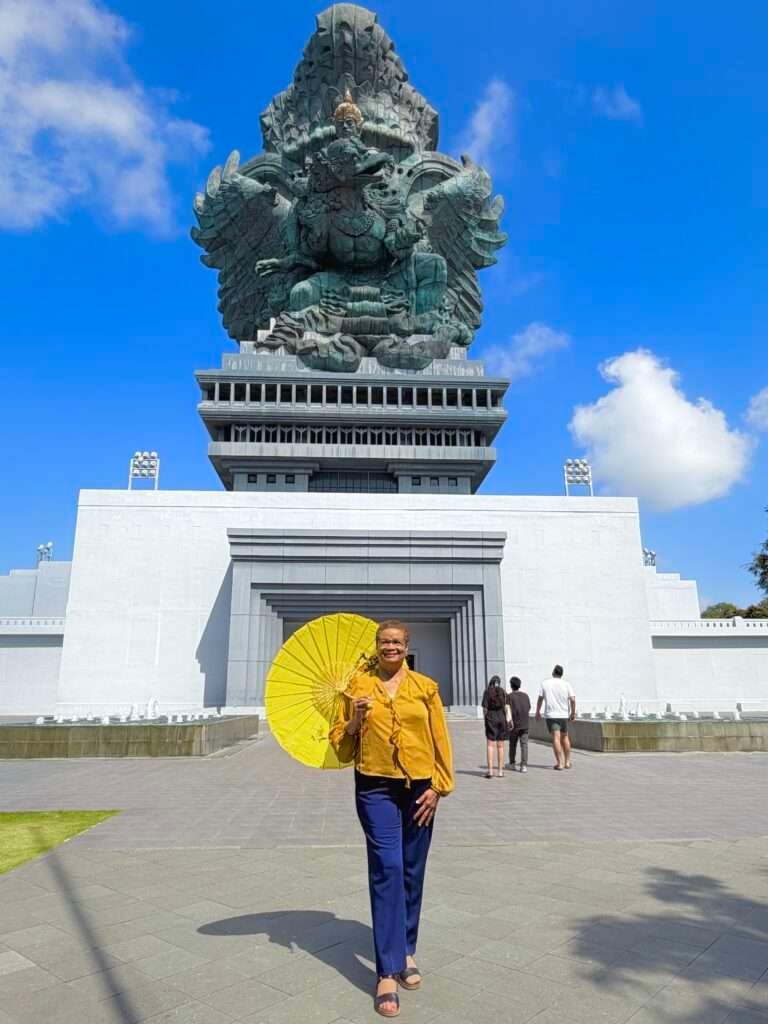
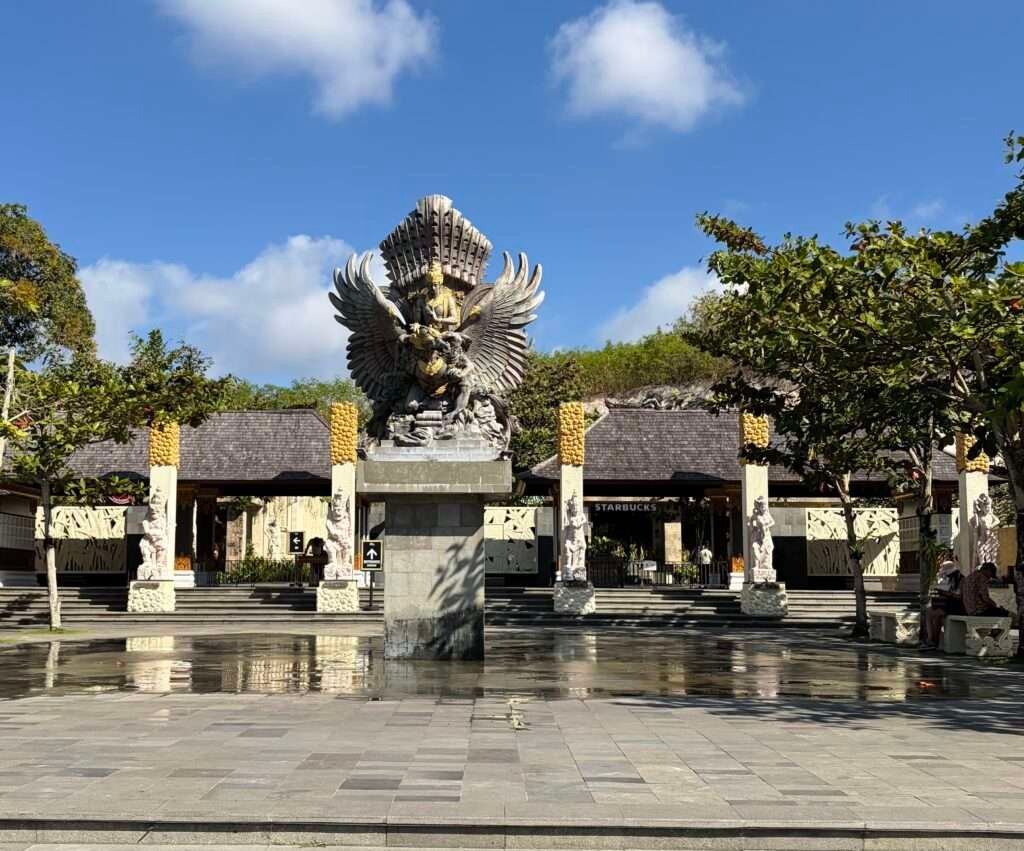
While the historic coastal temples are steeped in antiquity, I also wanted to explore Bali’s grandest modern monument: the Garuda Wisnu Kencana Cultural Park (GWK). The centre-stage attraction here is an absolute colossus—a 121-meter-tall statue of the Hindu God Wisnu riding the mythical eagle, Garuda. It towers so high above the island’s Bukit Peninsula that it is visible from miles away; some travellers even claim they can spot it from the windows of their aircraft as they approach the runway for landing.
I like to keep things entirely practical for you here, so let me give you a very useful tip: skip the exhausting uphill trek in the heat and spend a little extra on the local buggy shuttle service right inside the gates! It was an absolute lifesaver.
GWK cultural park quickly became one of my absolute favourite sights. It is an impeccably well-planned, informative park with brilliant displays that assist tourists in truly learning about the cultural and religious significance behind each statue and shrine. I walked away having learned so much.
When I finally stood directly underneath the main GWK statue, it was nothing short of amazing. Towering over us, it looked so realistic that I became convinced the statue was actively flying, its eyes following me around in circles whichever way I stood to snap another photo! Of course, it was just a magnificent optical illusion created by the clouds moving rapidly across the sky behind it.
While wandering through the park, I noticed a beautiful, local musical performance. I was warmly invited to try playing the traditional instrument myself—it is called a Rindik, a traditional Balinese xylophone crafted from natural bamboo tubes. Using special wooden sticks, you strike the bamboo to produce bright, flowing melodic tones. It was great fun and surprisingly easy to get a rhythm down once you know how!
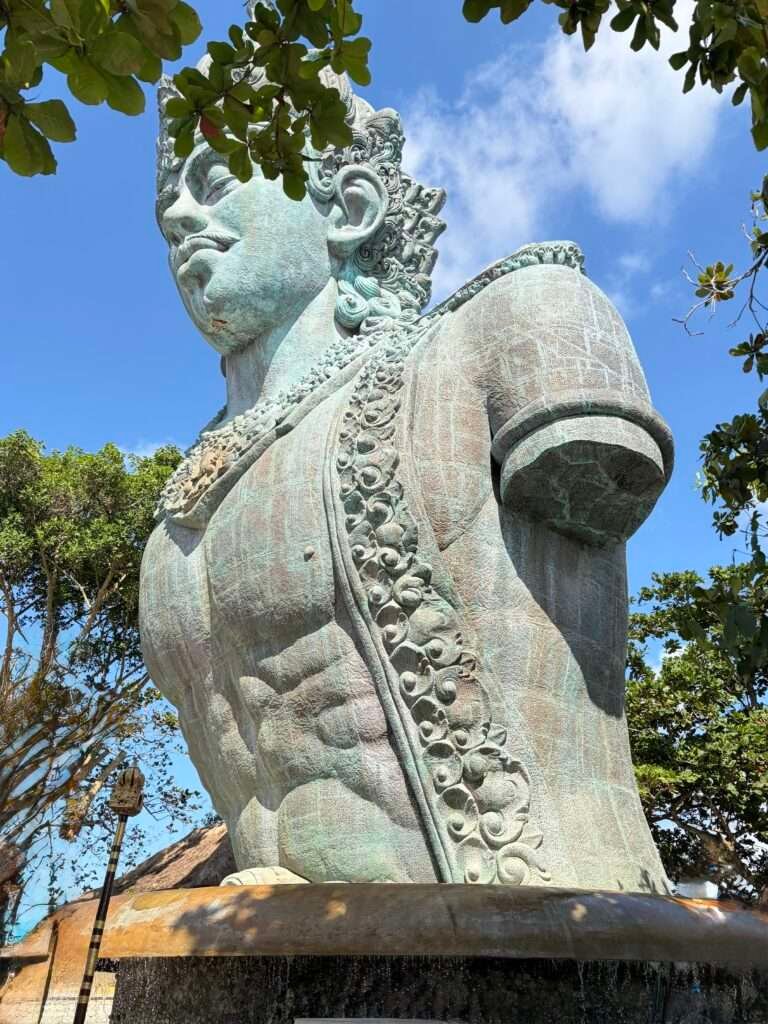
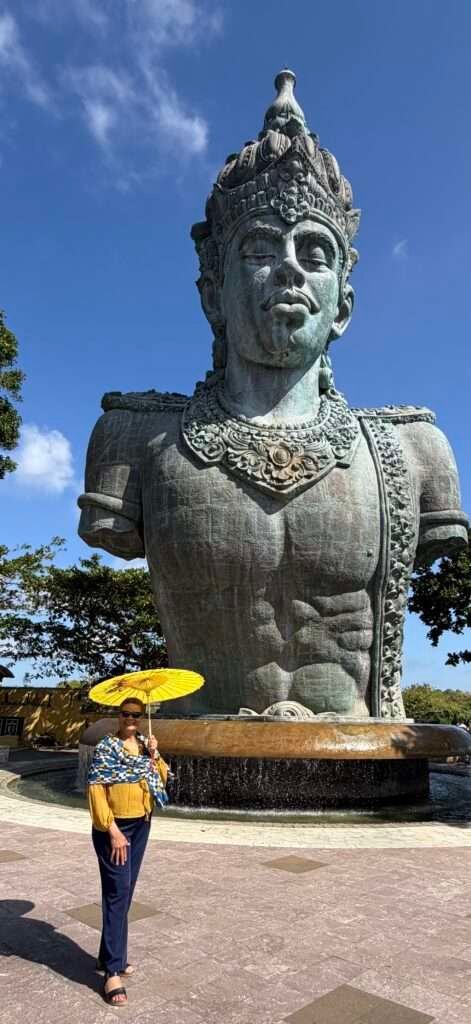
Instead of making the intense effort to climb to the absolute top of the main statue, I decided to spend a couple of hours exploring the park’s upper tiers. Higher up, I spotted a massive sculpted stone head that appeared to be leaning precariously over, reminding me instantly of the Leaning Tower of Pisa. I wasn’t sure if it was another camera trick or a perspective illusion, so I walked completely around it to investigate. What a relief—it was indeed intentionally erected at an angle!
The panoramic view from this high point was utterly breathtaking, stretching out as far as my eyes could take me. Standing there in the intense heat of the sun, I was incredibly glad I had saved my energy and skipped the climb to the top of the main statue, as the view from the terraces was equally magnificent. GWK provided me with a brilliant insight into Balinese culture, and I thoroughly recommend a visit.
Cliffside Drama and Mischievous Monkeys at Uluwatu
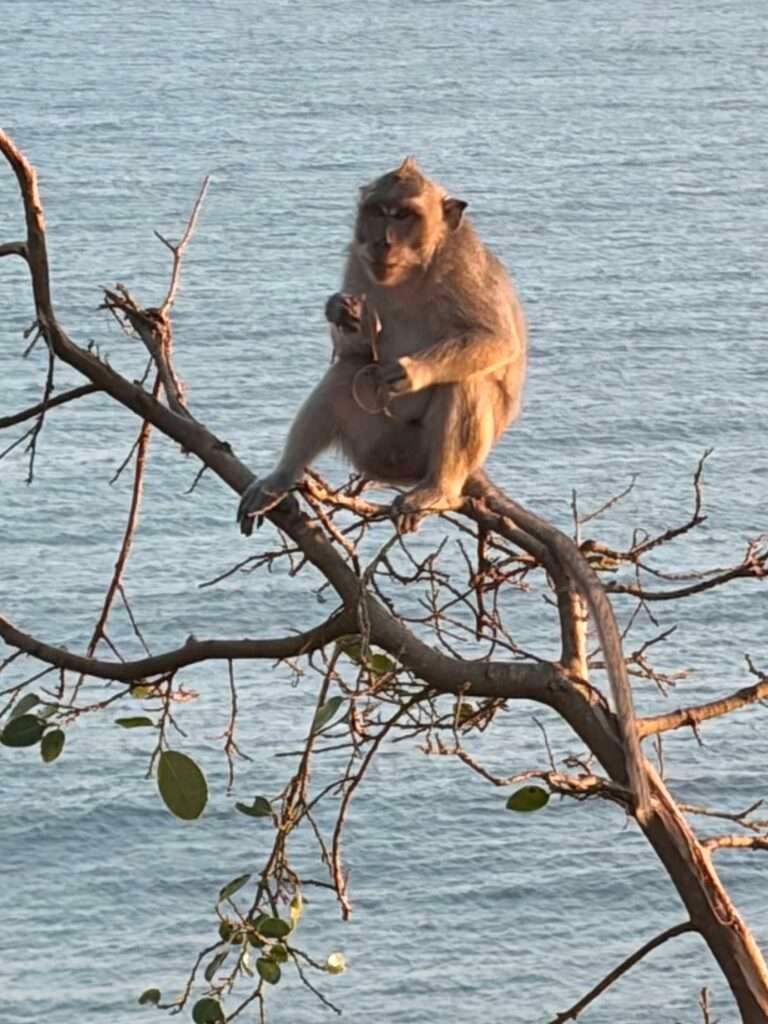
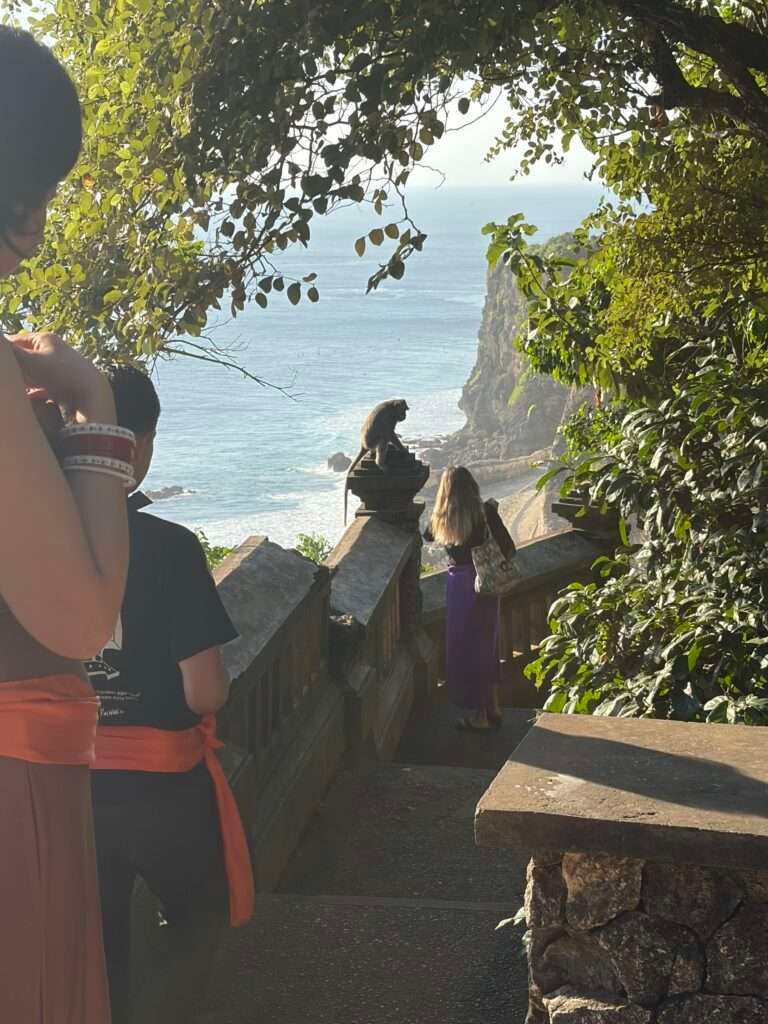
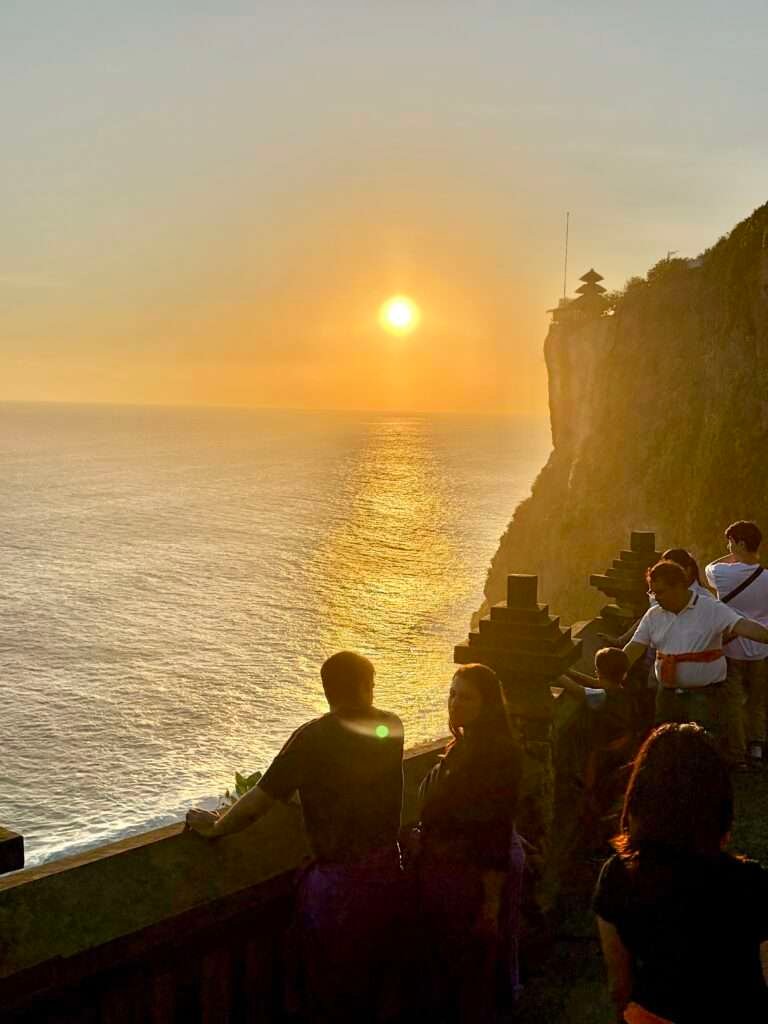
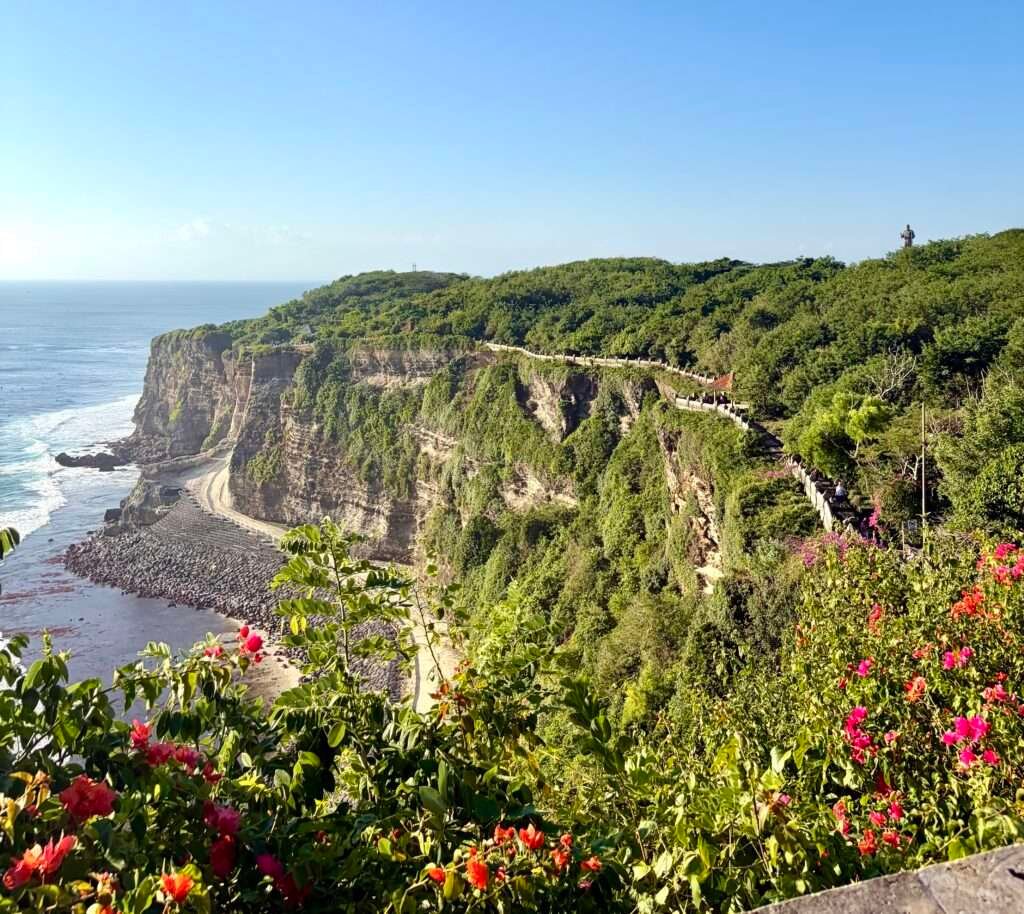
My temple journey eventually took me to Uluwatu Temple (Pura Luhur Uluwatu), which sits dramatically on the edge of a roaring cliff 70 meters above the Indian Ocean. The views here at sunset are absolutely spectacular, but before I could take in the scenery, I had to run the gauntlet of the temple’s most famous residents: the long-tailed macaques.
Now, I like to keep things entirely honest on this blog, so let me tell you straight: my encounter with the Uluwatu monkeys did not leave a positive impact on me! Local legend says they are the sacred spiritual guardians of the temple, but in reality, they operate like a highly skilled gang of local pickpockets.
They are notoriously mischievous and aggressive, swiping sunglasses, phones, purses, and snacks right out of tourists’ hands. I spent my walk along the cliff path clutching my belongings to my chest in absolute survival mode, refusing to make eye contact with them. They certainly add an element of chaos to the spiritual serenity!
Let’s Stay Connected!
Never miss a single story. Sign up for my newsletter, and let’s find out where the next adventure takes us. Inspiring you to experience the world, one journey at a time.
Art as Devotion: From Ubud to the Uluwatu Fire Show
In Bali, art and religion are not separate entities; performance is an act of worship. To experience this firsthand, I sought out two very different, yet equally mesmerising, traditional dances.
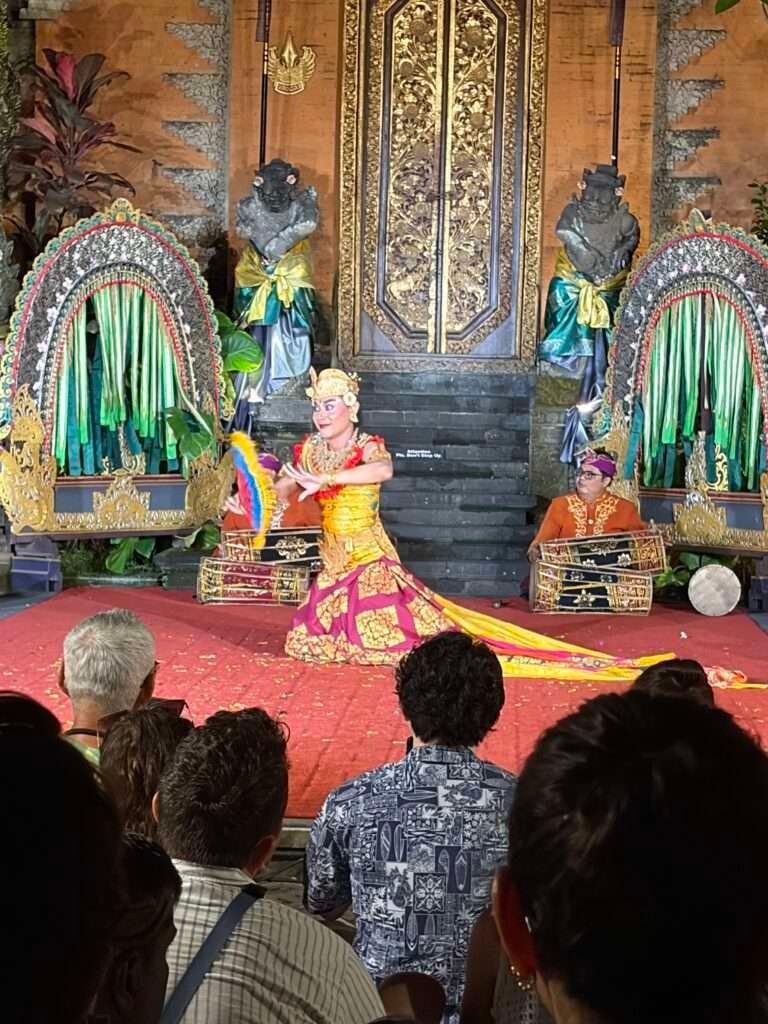
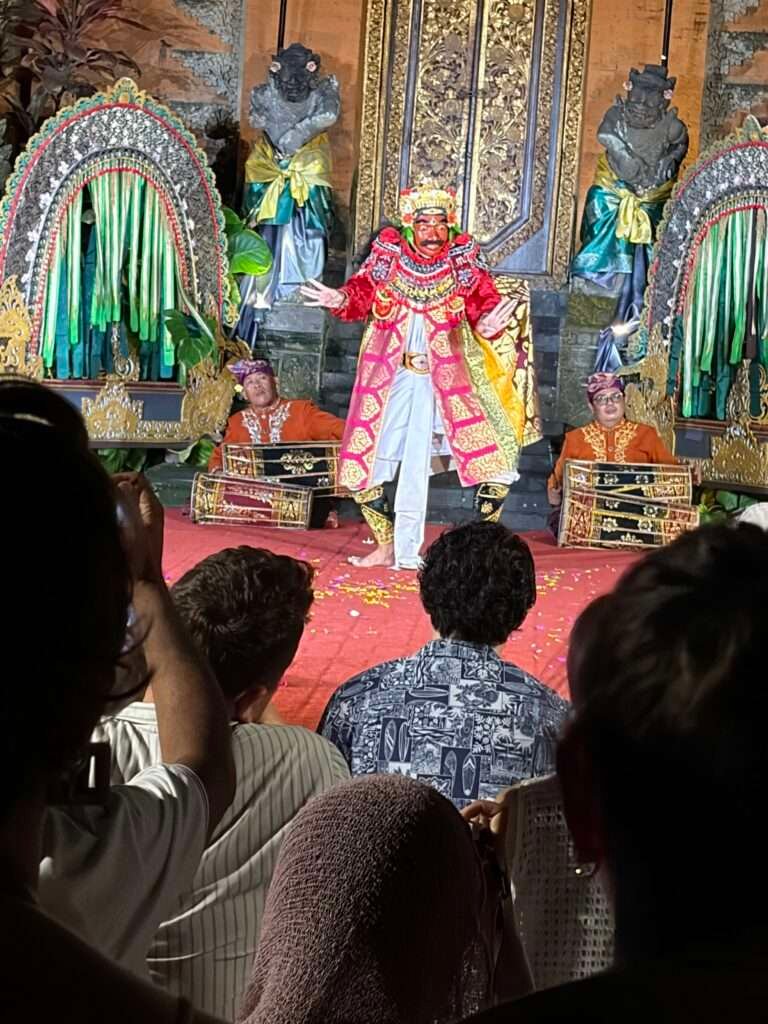
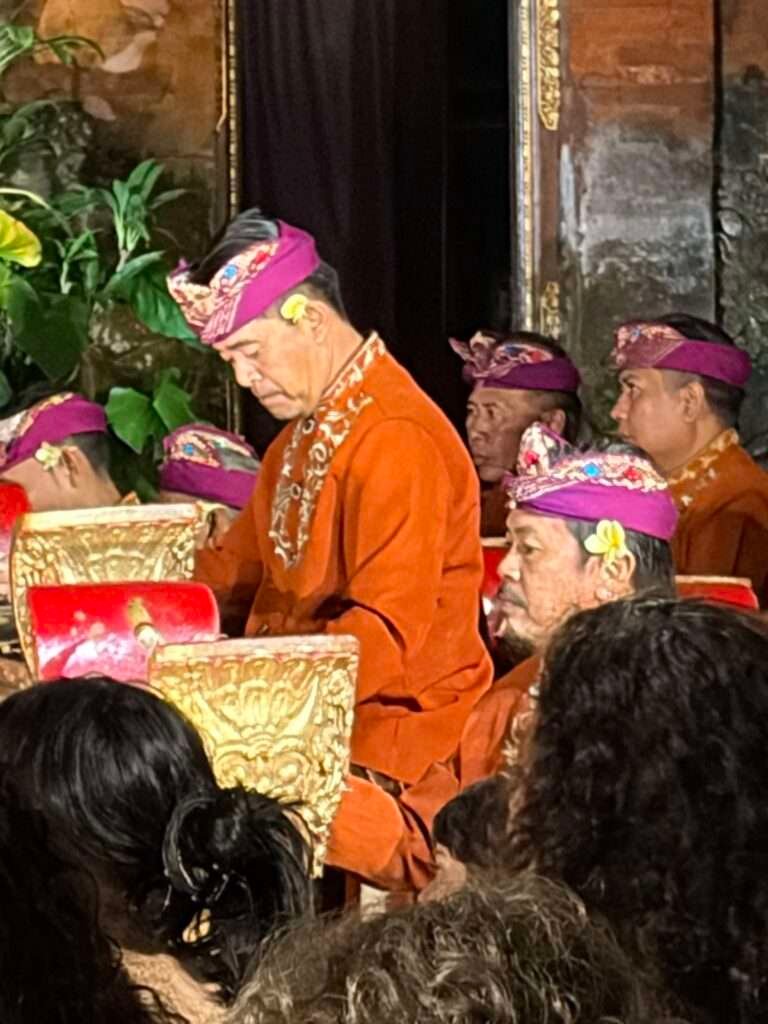
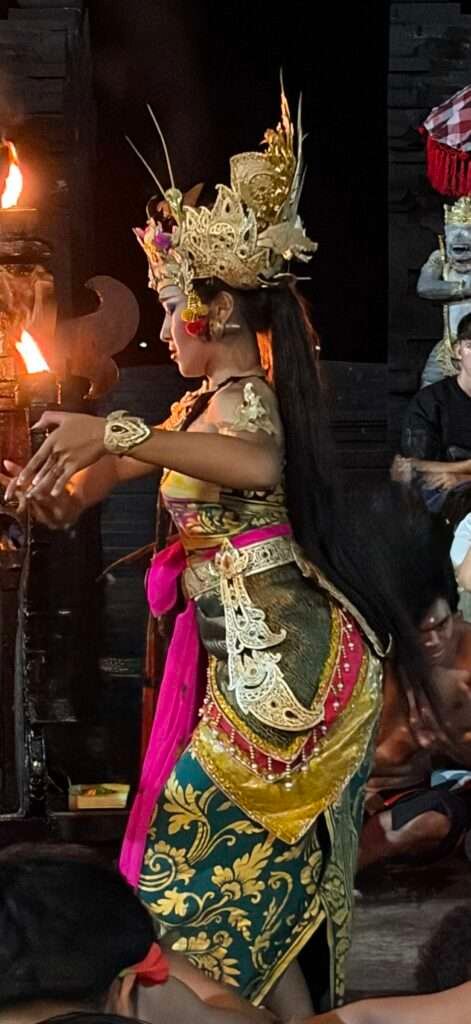
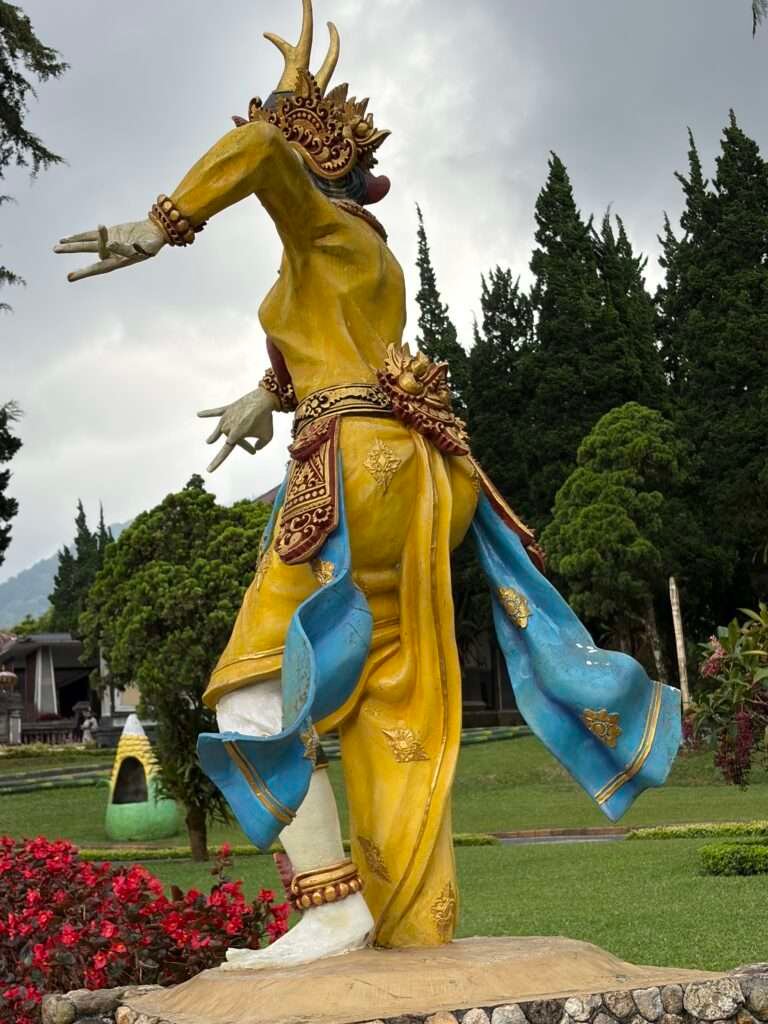
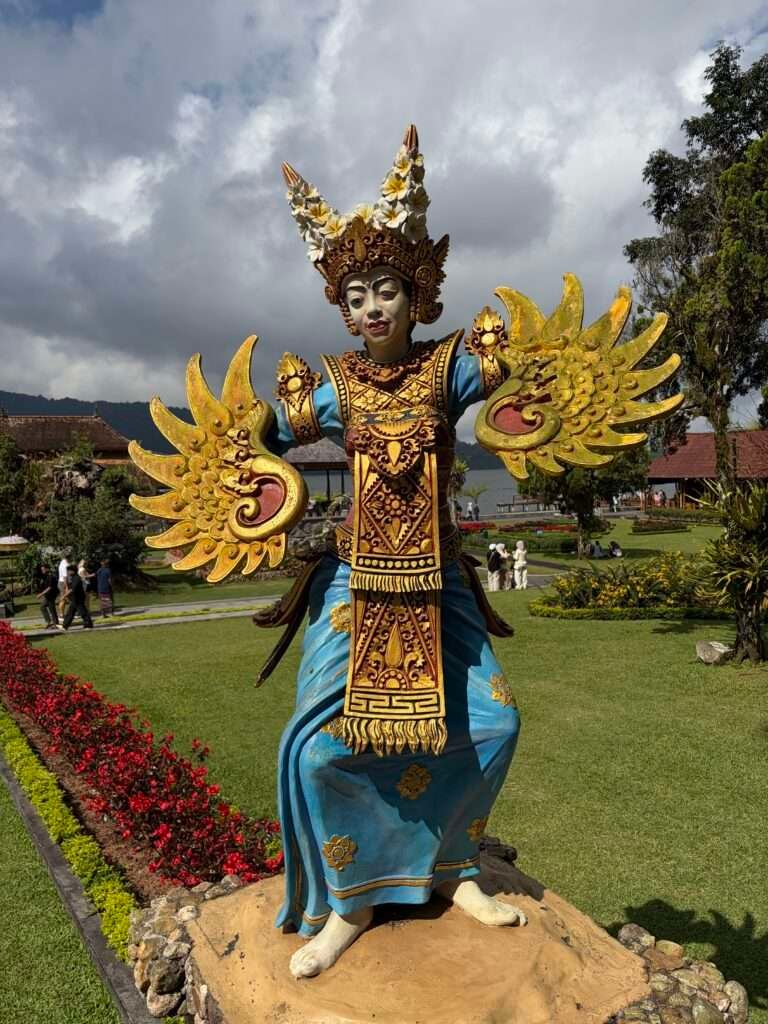
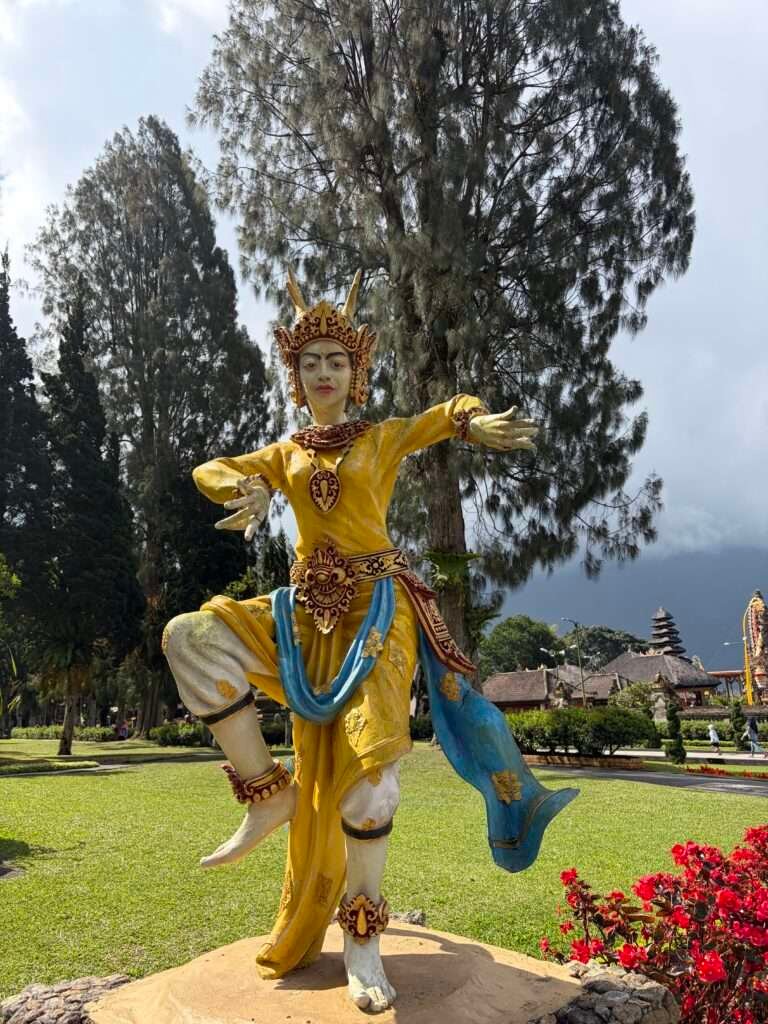
In the cultural heart of the island, I went to the Ubud Palace to watch the traditional Legong Cultural Dance. The dancers wear incredibly elaborate, heavy gold costumes and move with a hypnotic, sharp precision. What fascinated me most was how much of the story is told entirely through their eyes and fingers. Accompanied by the resonant, metallic rhythm of the live Gamelan orchestra, the energy in the palace courtyard was electric.
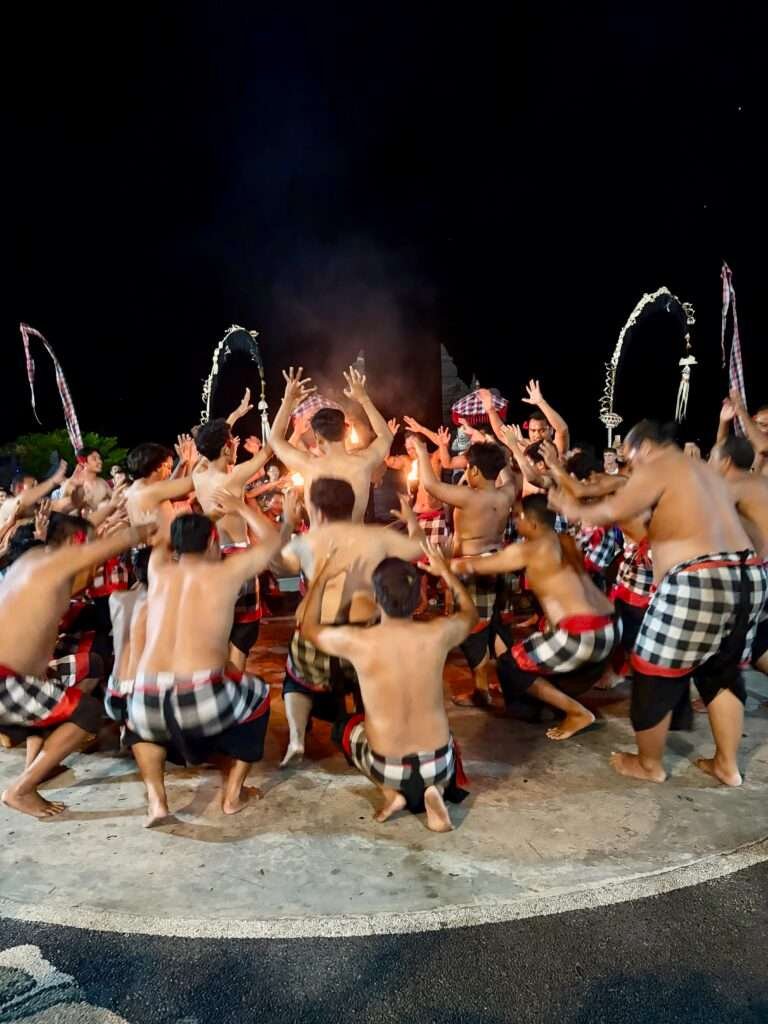
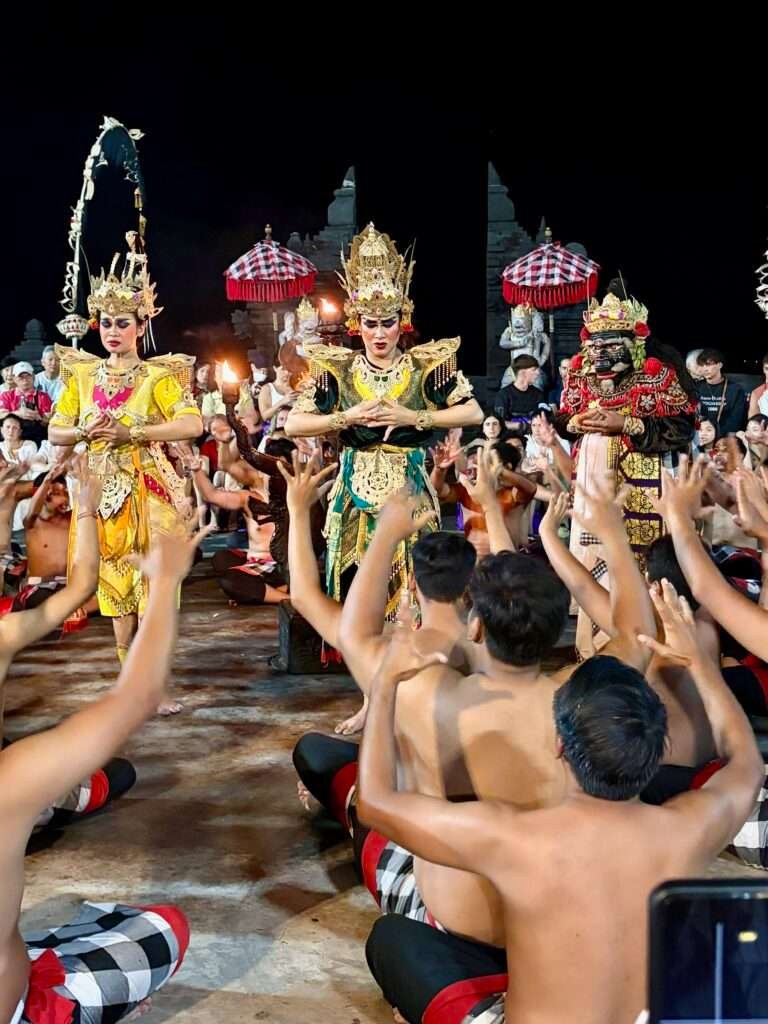
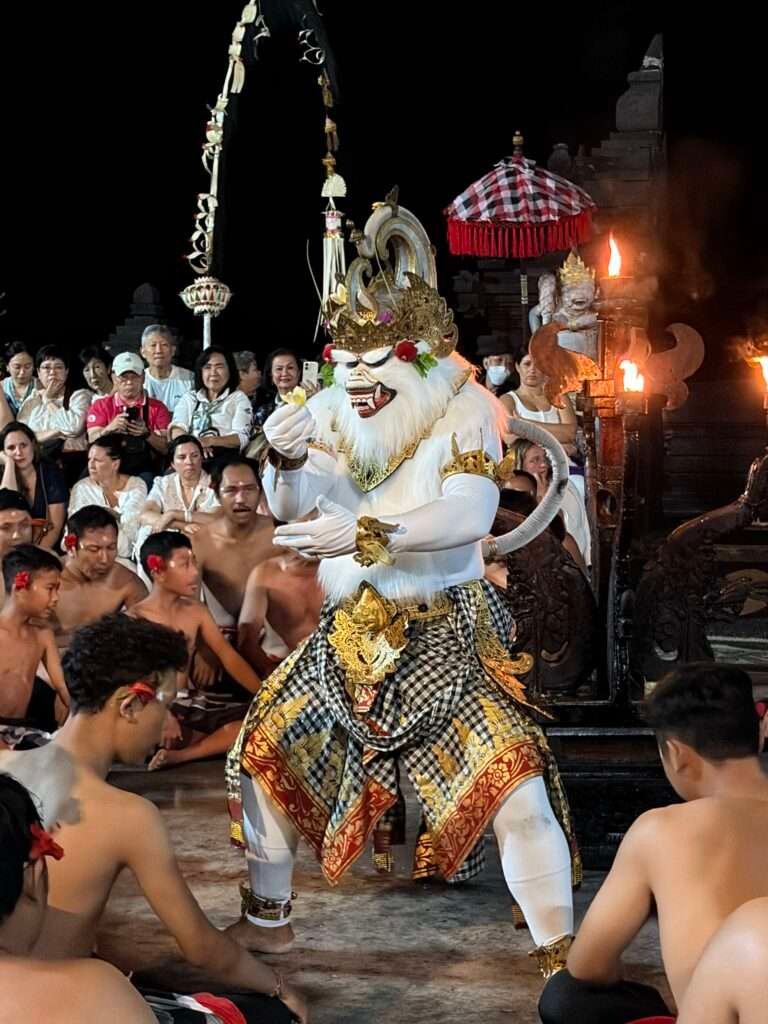
But the real dramatic climax happened back on the cliffs of Uluwatu, where I watched the famous Kecak Dance & Fire Show. Unlike the Legong dance, the Kecak uses absolutely no musical instruments. Instead, a chorus of roughly 50 men sits in a circle, creating a powerful, rhythmic, and utterly hypnotic trance chant (“cak-cak-cak”) that echoes into the night.
As the sun dipped below the ocean horizon, the performance brought scenes of the Hindu epic Ramayana to life, culminating in a breathtaking fire dance where the character of Hanoman, the white monkey warrior, leaps through swirling flames. Sitting in that clifftop amphitheater, surrounded by the rhythm of the chant and the glowing fire, was an unforgettable cultural experience.
Moments of Deep Connection
While my journey ended with a visit to the monumental Garuda Wisnu Kencana Cultural Park, a stunning tribute to Balinese heritage, it was the quiet, human moments of faith that truly stayed with me.
One evening on Seminyak beach, the busy world seemed to fall away. I watched a young Balinese man—perhaps a local leader or priest—sitting solitary by the shoreline. He prayed with complete focus before walking directly into the ocean waves to complete a ritual cleansing after returning from a nearby temple.
Witnessing that quiet act of devotion, combined with the lingering scent of sweet incense drifting through the streets and the collective joy of the Galungan celebrations, made me feel something wonderful. It gave me a profound sense of spiritual health.
Bali reminds us that when we travel with an open mind and a curious heart, we don’t just see new places, we renew our own lives all over again.
Never miss a single story. Sign up for my newsletter, and let’s find out where the next adventure takes us. Inspiring you to experience the world, one journey at a time.