My Bali Journey: Temples, Sunsets, and Unexpected Moments
10 July 2026
Bali is said to be a destination for affordable luxury, wellness and spirituality, Hindu temples, surfing, beach clubs and varied landscapes. I certainly experienced all except surfing and beach clubs, but my strongest memories were from discovering Balinese culture – watching families celebrate Galungan and Kuningan ceremonies, tasting dragon fruit juice, eating snake fruit for the first time, and discovering Balinese dishes, which gave me a deeper appreciation of the island and its people.
When I stepped off the plane in Bali on a warm Wednesday evening, I was carrying the fatigue of a 17-hour flight from London. I had flown on a Singapore Airlines Airbus A350-900 widely considered one of the best long-haul aircraft in the sky, and to my relief, the journey hadn’t felt nearly as daunting as I’d feared. I simply poured a glass of wine, watched several Korean movies, slept, and went with the flow.
I arrived with a heart full of anticipation, ready to begin a new adventure. But nothing quite prepared me for the sheer shift in energy I was about to experience. I didn’t just visit Bali; I felt it.
Here is how I navigated the island on my own terms, the everyday rituals that captivated me, and the unexpected moments that stayed with me long after I returned home.
Planning Bali myself: My Seminyak Base
I am a big believer in planning my own path, and for this trip, I chose a boutique hotel right in the heart of Seminyak, just a short walk from the beach.
If you are planning your own Bali adventure, my biggest tip is to book directly with the hotel. By doing so, my booking came with a wave of unexpected perks: free airport pickup, Bali Home Cultural Program, discounted entry to local beach clubs, and vouchers for Waterbom Bali and the Devdan Theatre show.
From the moment I arrived, the staff were genuinely warm and welcoming. I noticed the guest list was a lively mix of Australian travellers enjoying the proximity to home, and Asian families, particularly from India, drawn to the island’s unique spiritual roots. On my very first day at reception, I signed up for the hotel’s “Bali Home Programme” , a decision that completely shaped my stay.
First Balinese Massage vs. Thai Massage
After that long flight from London, my first priority was restoration. Back in the UK, I had researched local spas and used WhatsApp to book a Balinese massage combined with a manicure and pedicure. (In Bali, almost every local business uses WhatsApp, and the response times are incredibly fast).
If you’ve ever had a Thai massage, you know it involves a lot of elbows, body weight, and intense stretching. I usually leave a Thai massage feeling like I’ve been lovingly beaten up!
A Balinese massage is the exact opposite. It is gentle, deeply soothing, and uses aromatic oils that immediately melted my travel fatigue away. It was exactly what my body needed. I practically dozed off on the treatment table, completely relaxed.
Feeling Like a Queen: The Traditional Cultural Dress
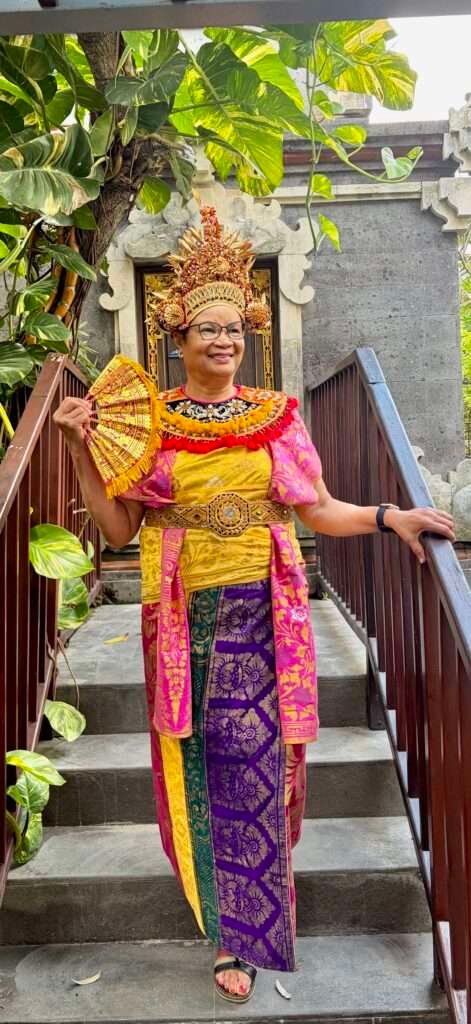
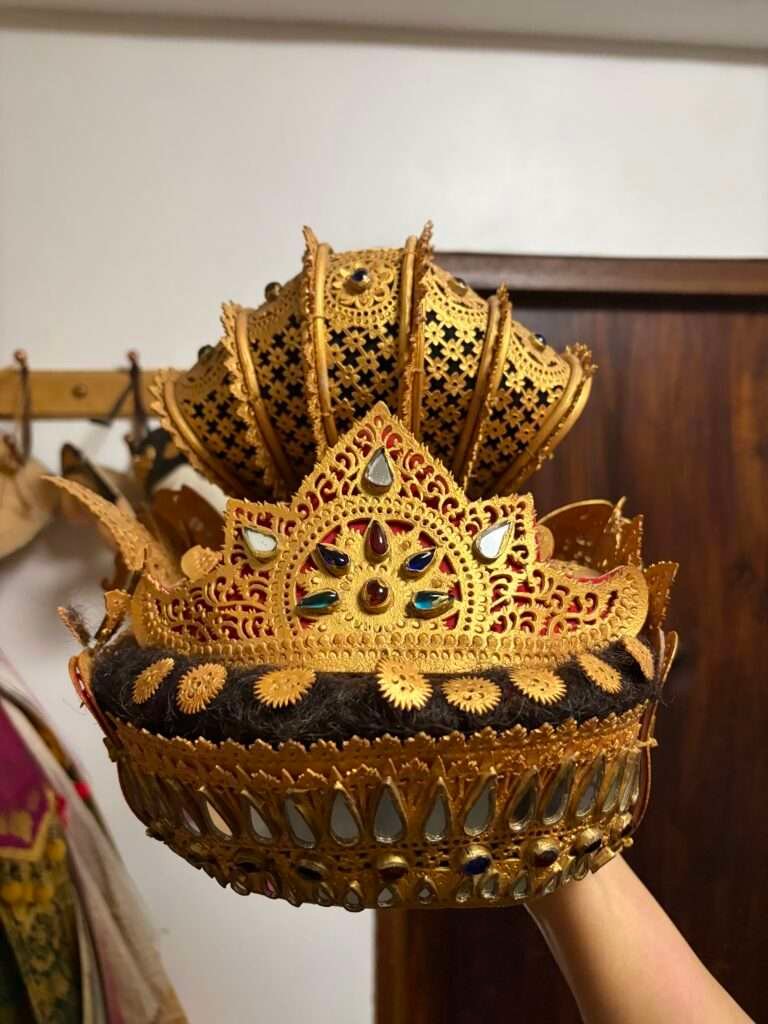
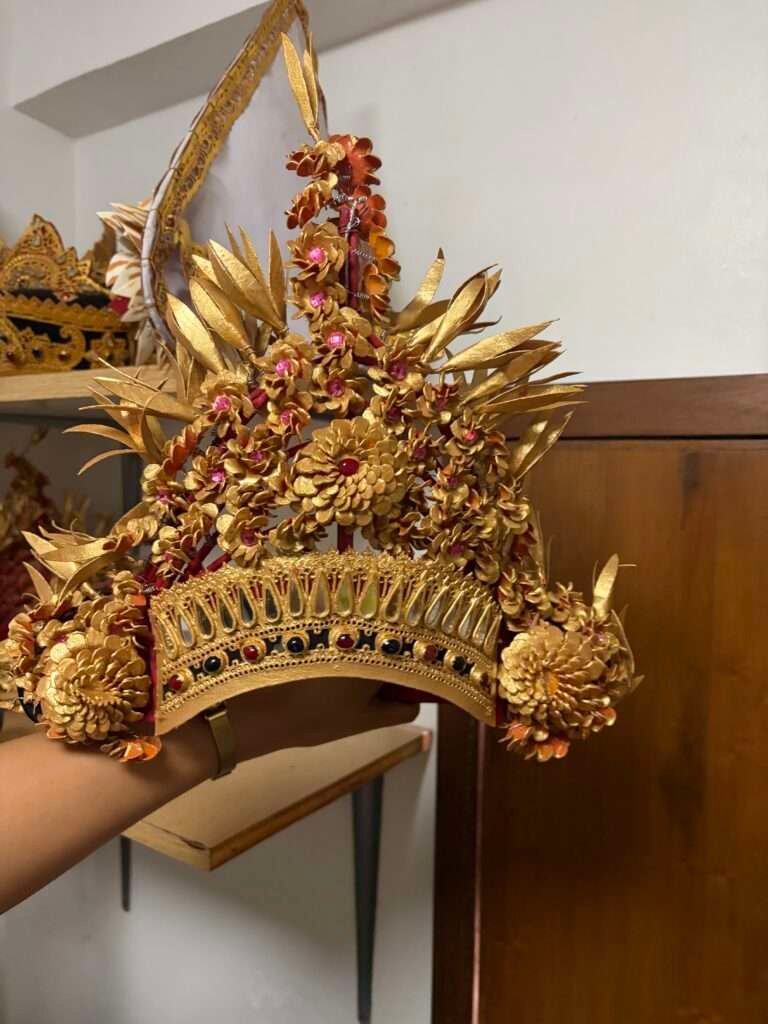
Through my hotel’s cultural program, I took up an offer to try on traditional Balinese dress. I was deeply curious about the history behind the garments, and a lovely staff member named Lilik was incredibly proud and excited to share her culture with me.
She explained that this specific styling is worn during the Mesangih, a deeply important coming-of-age ceremony for young Balinese girls and boys. This coming of age ceremony is a sacred ritual with deep rooted tradition and beliefs,and involves the filing ofteeth.It is quite a joyful and elaborate ceremony for families and the community together to celebrate.
Lilik expertly selected the colours and fitted the intricate, beautiful layers of fabric. When she was finished, I looked in the mirror and felt like a queen. Standing there, I could fully understand how a 17-year-old would feel wearing this. It is a garment that makes you feel grown up, honoured, and ready to step into adulthood. Lilik was so proud of the result that she asked to take photos for the hotel’s publicity, and I was more than happy to oblige.
Everyday Rituals: Canang Sari and Home Temples
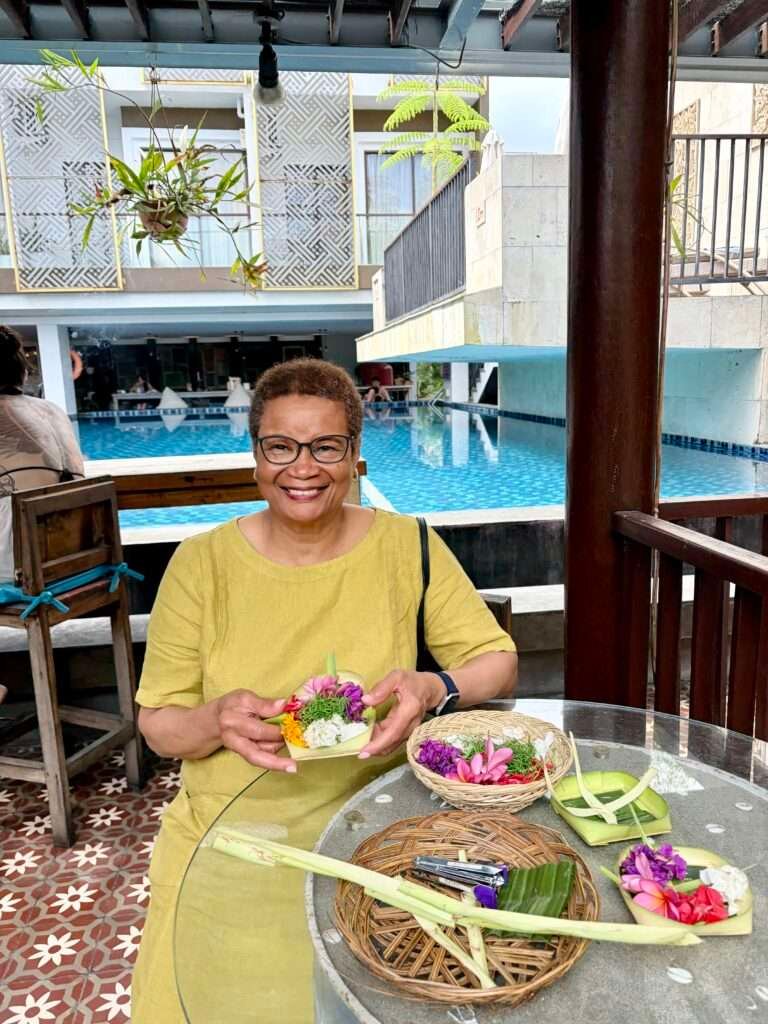
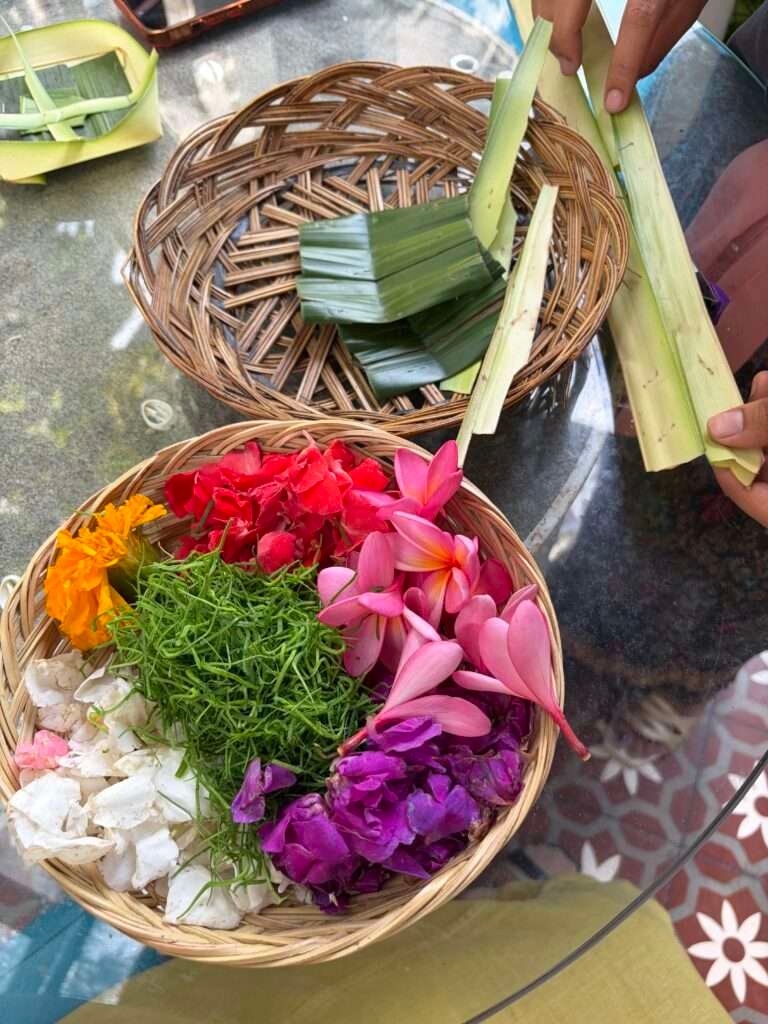
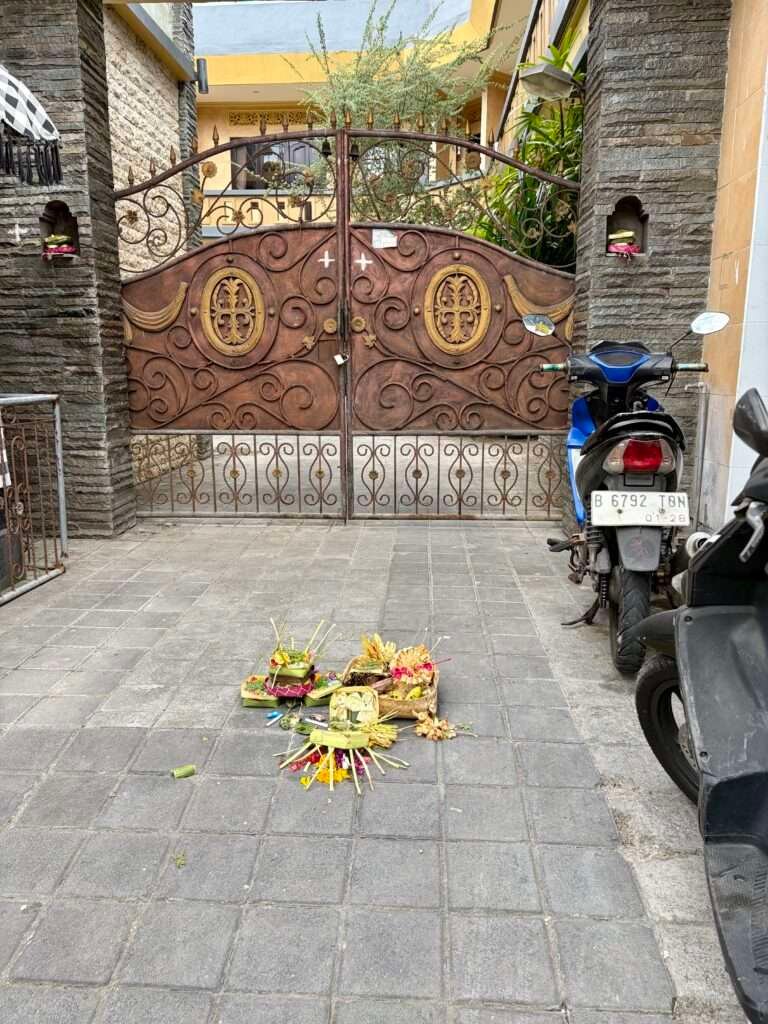
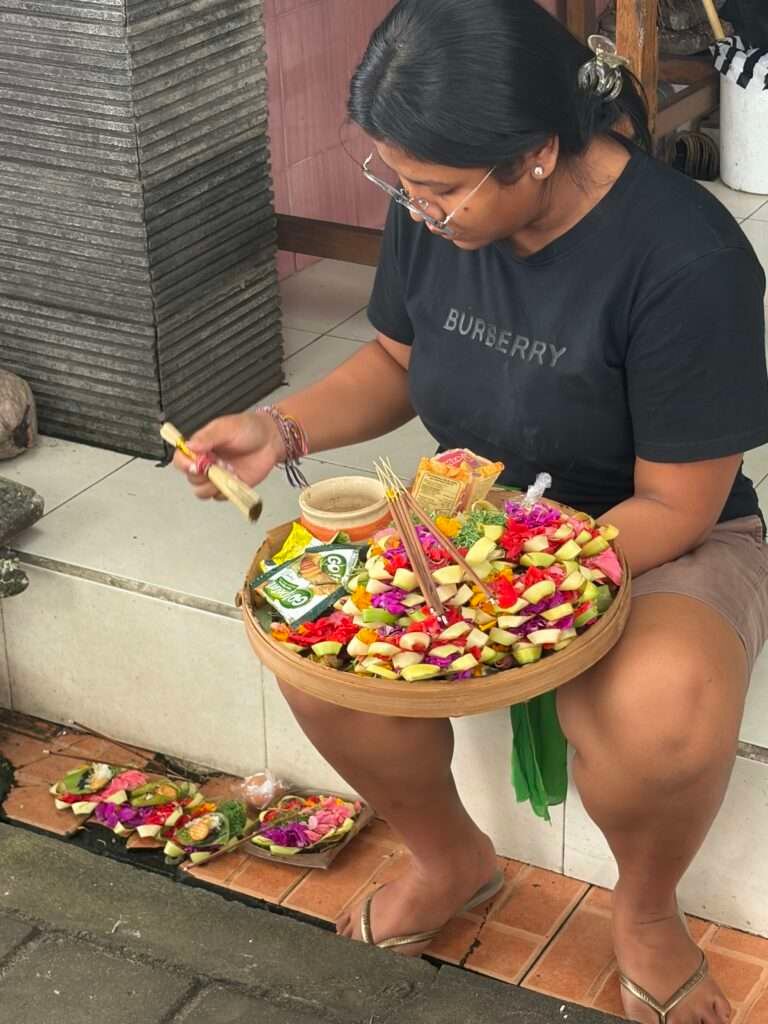
Lilik also sat down with me to teach me how to create a Canang Sari, the small, vibrant daily offerings you see all over the island. Together, we wove small, square palm leaves and filled them with brilliantly coloured flowers and incense. I was so proud of mine that I kept it in my hotel room for the rest of my stay. Lilik told me she makes about 15 of these every single day for her own family compound.
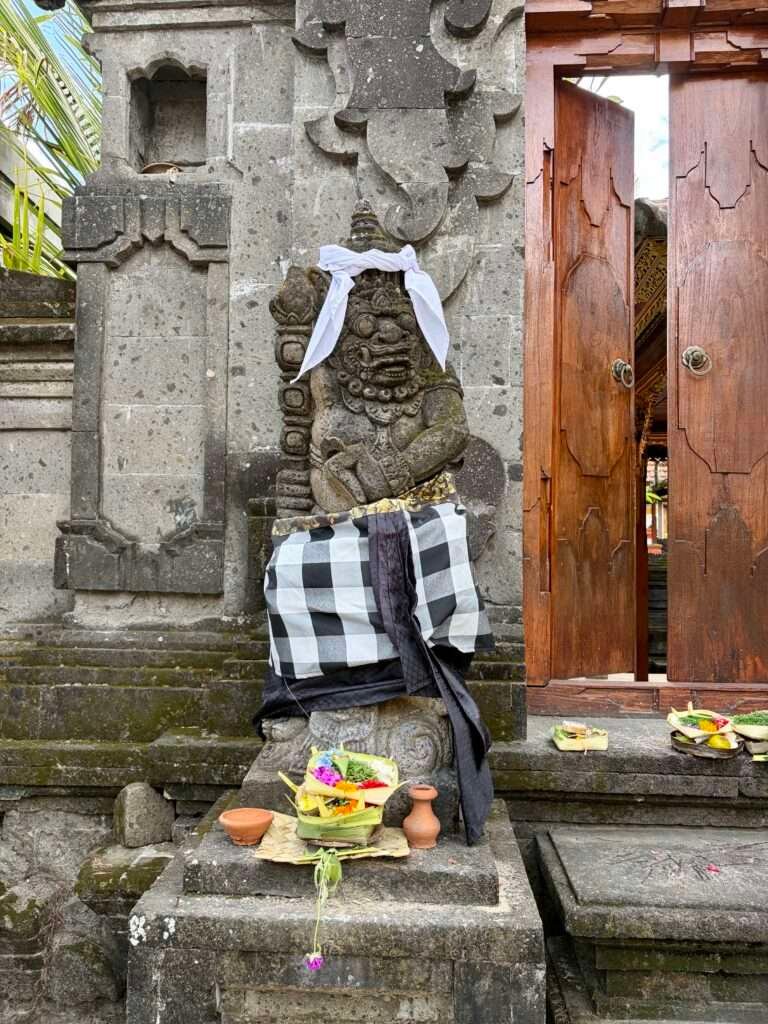
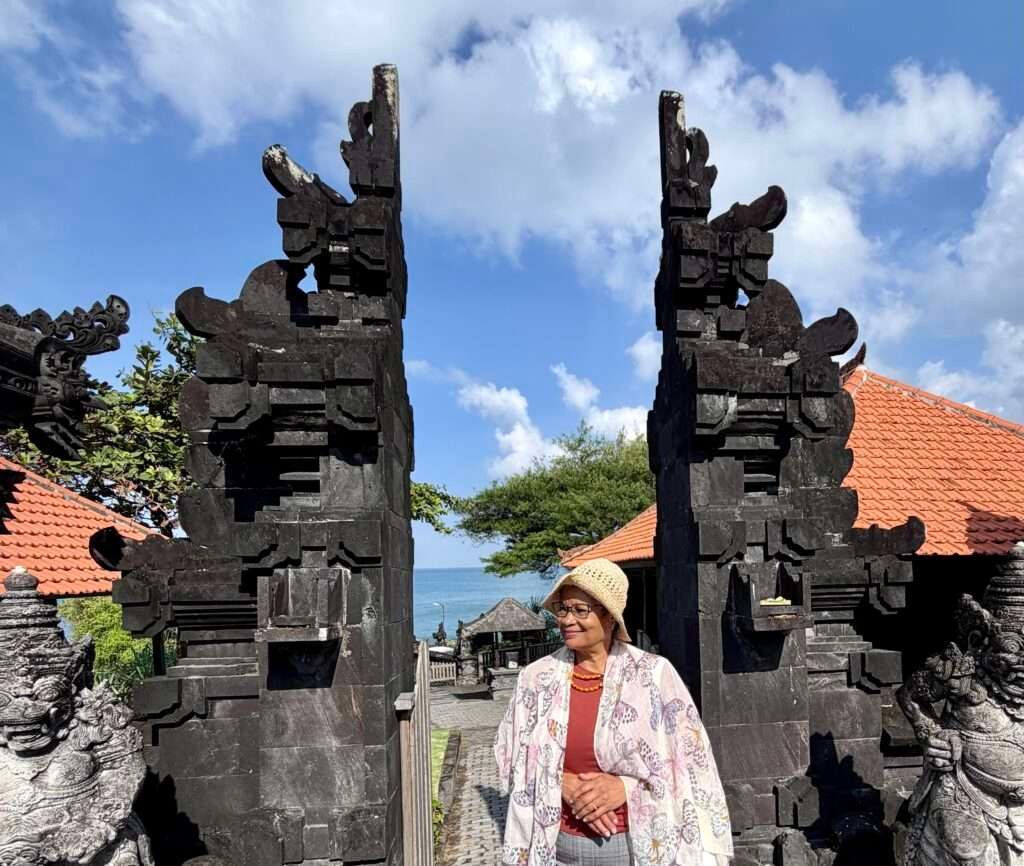
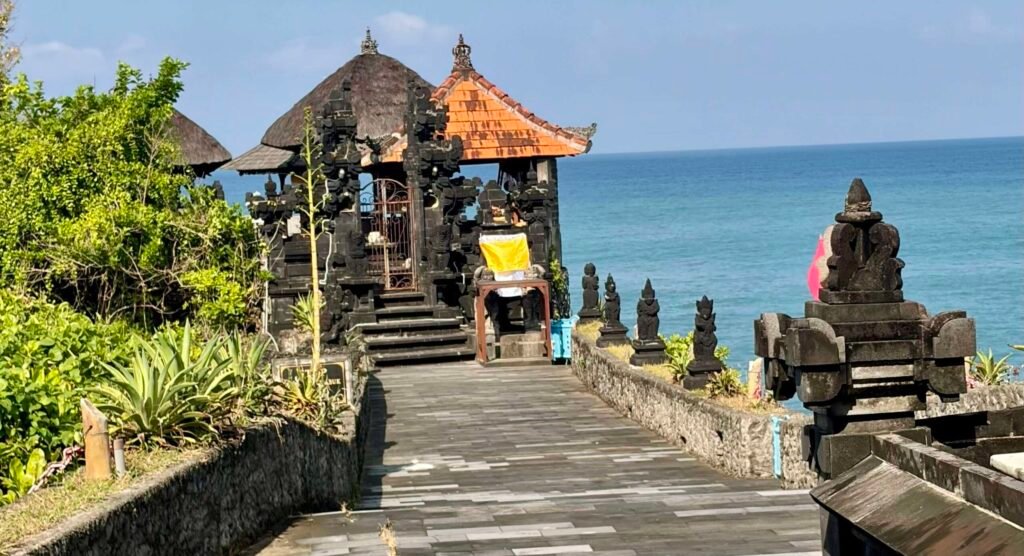
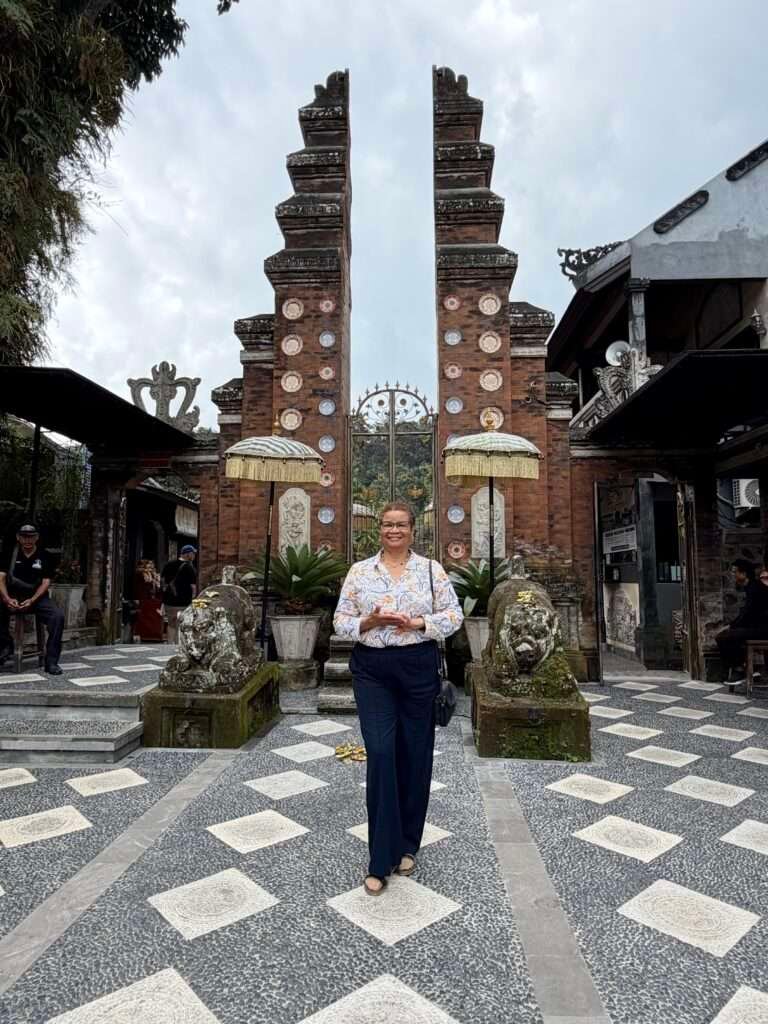
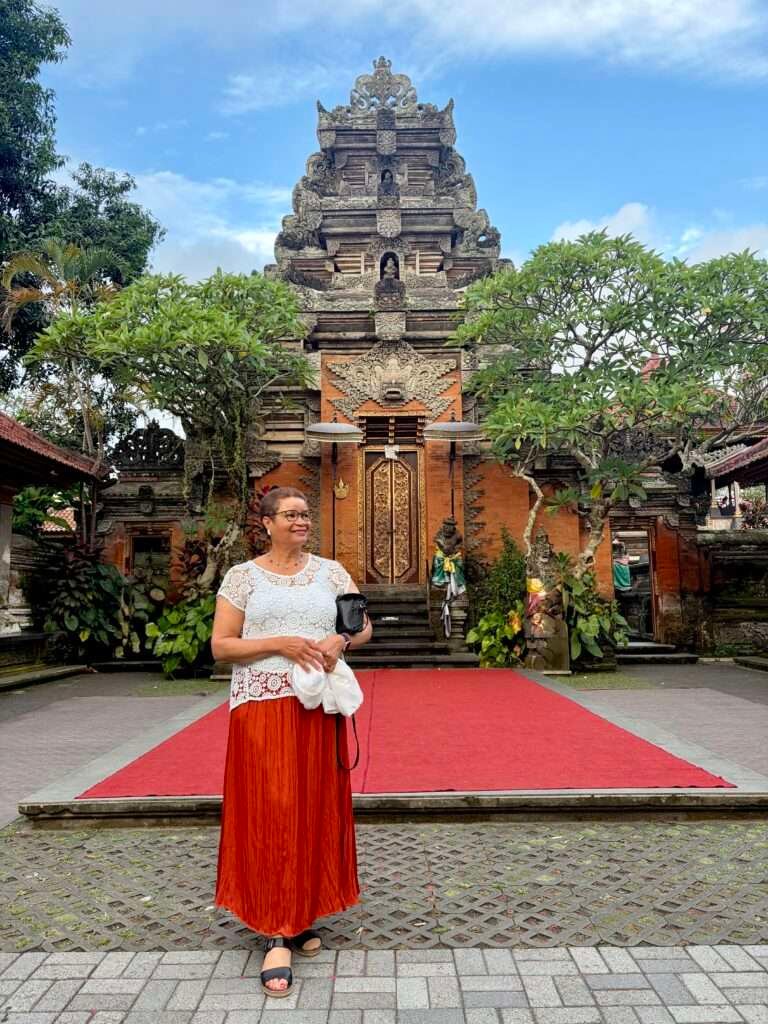
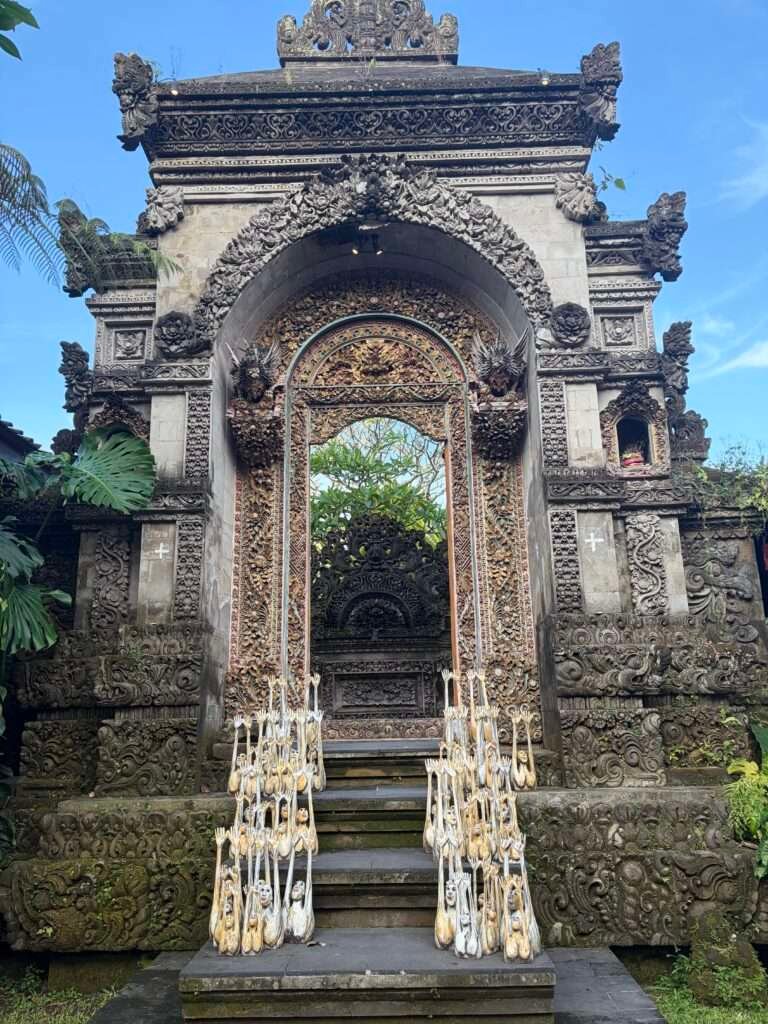
This daily ritual of gratitude is woven into the very fabric of Balinese life. Coming from the UK, I noticed a fascinating architectural difference: unlike Indian Hindu shrines, which are usually kept enclosed safely inside the house, Balinese temples are built prominently in front of the home. Every single house has an intricate, dark temple outside its gates.
The architecture itself is captivating, made of volcanic black sand and stone, covered in sharp, detailed carvings that look somewhat scary to Western eyes! I found myself hesitant to stare at them for too long. Many are draped in a distinctive black-and-white checkered cloth (Kain Poleng), representing the balance of good and evil, light and dark. These statues and temples are a constant, beautiful reminder that religion and tradition are the literal heartbeat of this island.
Let’s Stay Connected!
Never miss a single story. Sign up for my newsletter, and let’s find out where the next adventure takes us.
The Magic of Galungan and Kuningan
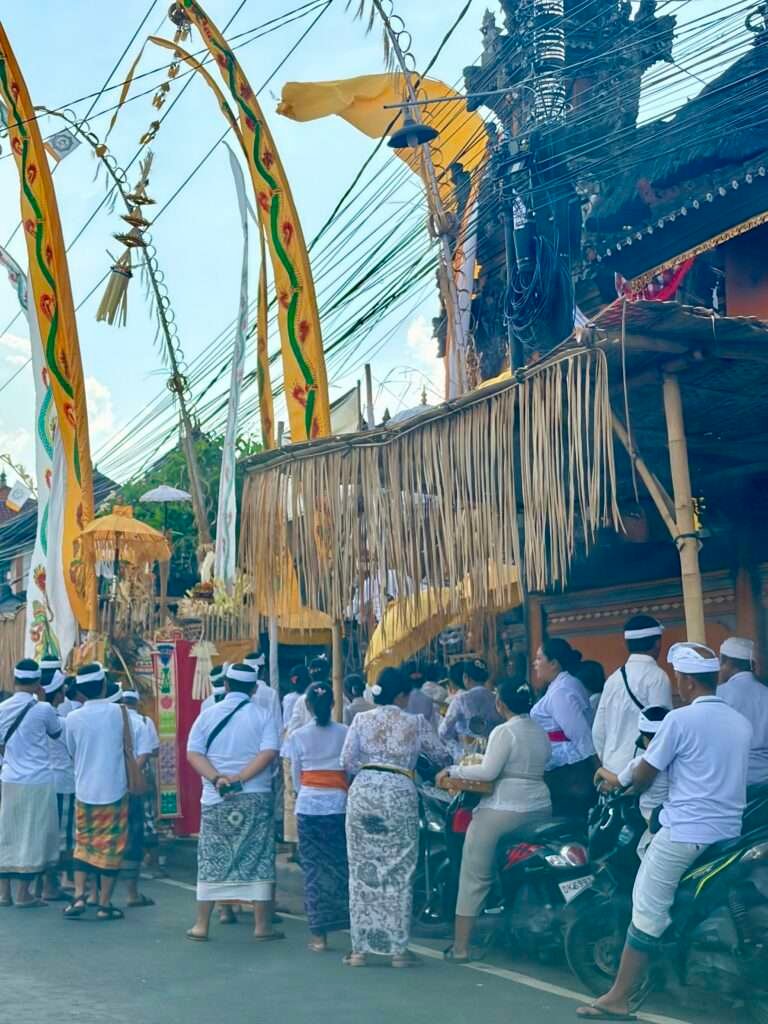
By pure serendipity, I arrived in Bali during one of the most sacred times on the Balinese Hindu calendar: the ceremonies of Galungan and Kuningan. I watched everyday faith and community unfold right in front of me. It wasn’t a performance put on for tourists; it was real, raw, and deeply intentional.
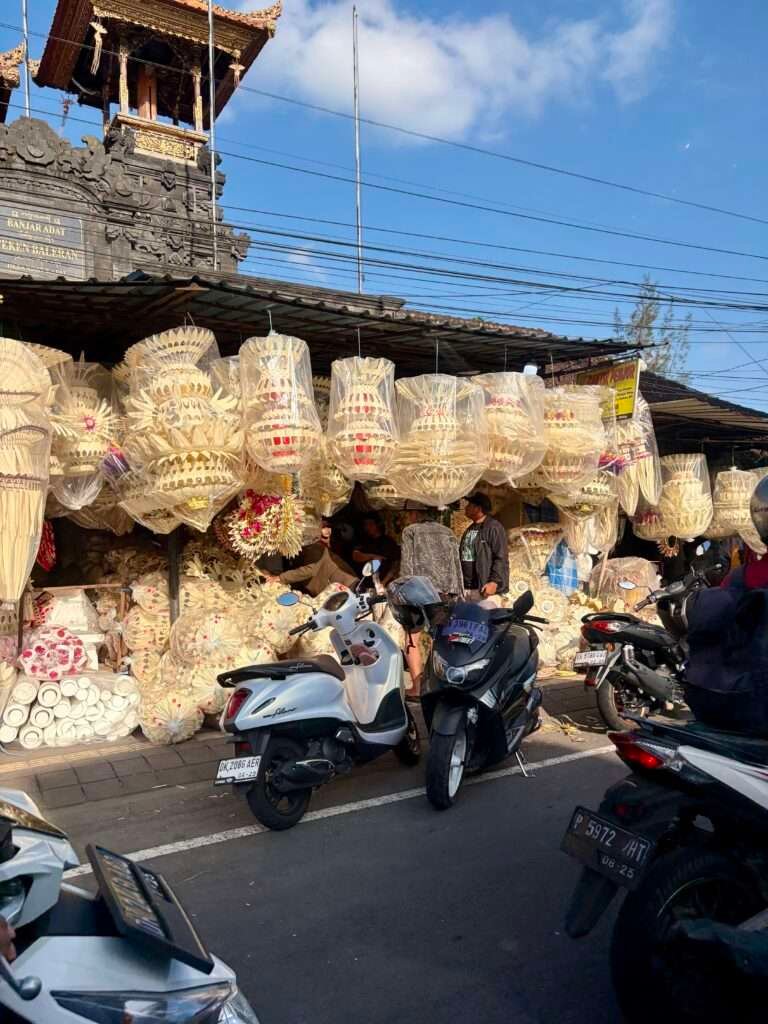
The energy on the island shifted noticeably. Days before the festival, the streets erupted in a buzz of activity. Markets and supermarkets were stacked high with vibrant mountains of fruit, which locals use for offerings instead of flowers.
People shopped with immense purpose, balancing massive boxes of fruit and supplies on scooters, vans, and cars. The atmosphere felt exactly like the frantic, happy lead-up to Christmas back home, but entirely unique to Balinese culture. Everyone was filled with joy, eager to head back to their home villages to be with family.
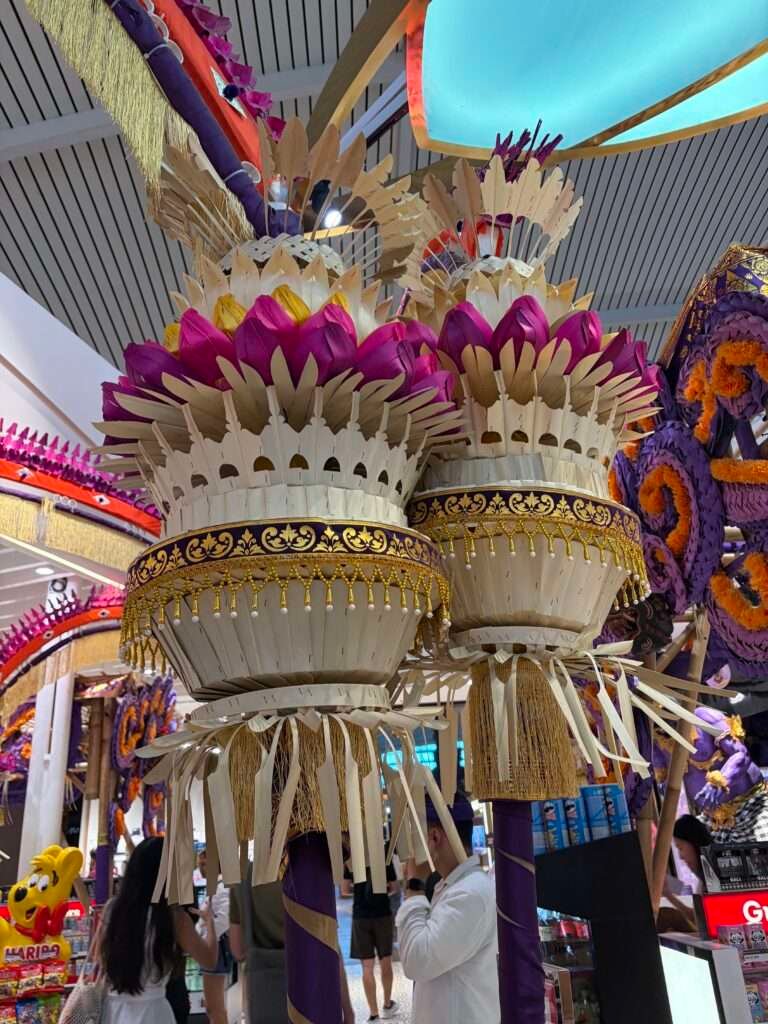
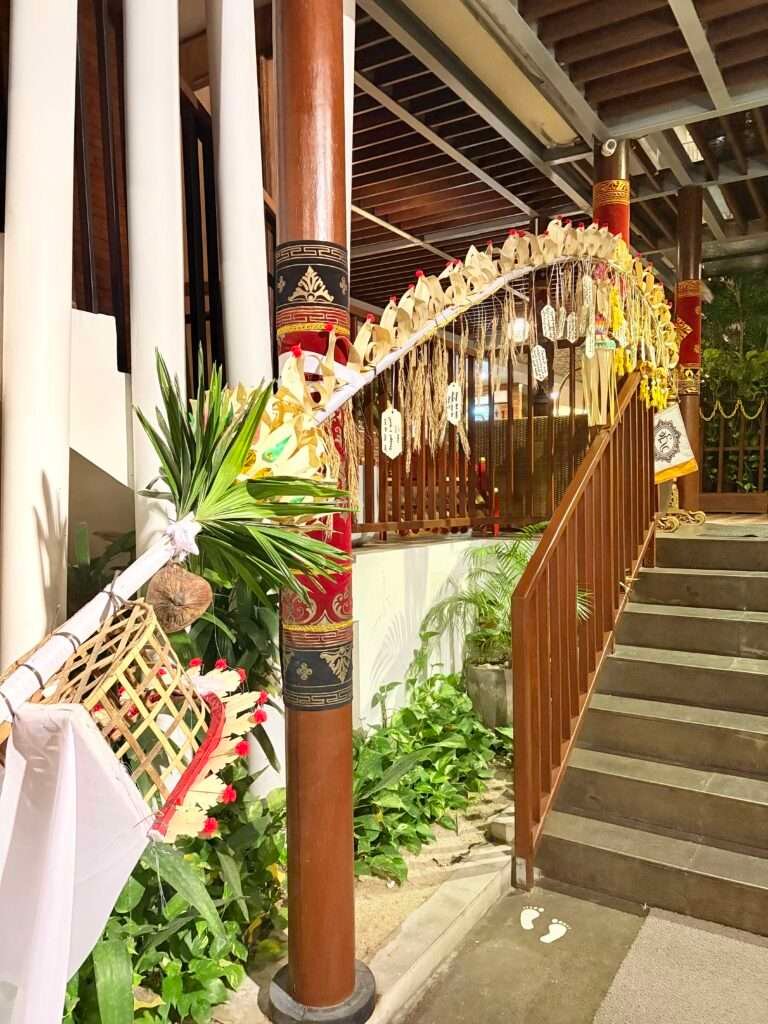
The most breathtaking sight was the Penjor—massive, beautifully decorated bamboo poles that line the streets and curve gracefully over the roads. They were beautiful in the city, but out in the suburbs and rural villages, they were absolutely spectacular. My hotel erected its own Penjor, and guests were encouraged to pin a note with their wishes and desires to it. I gladly pinned mine.
To show my respect, I bought apples, oranges, and grapes as gifts for my private drivers to take back to their villages. They were incredibly touched by the gesture, thanking me for embracing their culture and religion so openly.
Moments That Stayed with Me
There were so many fragments of this trip that permanently etched themselves into my heart.
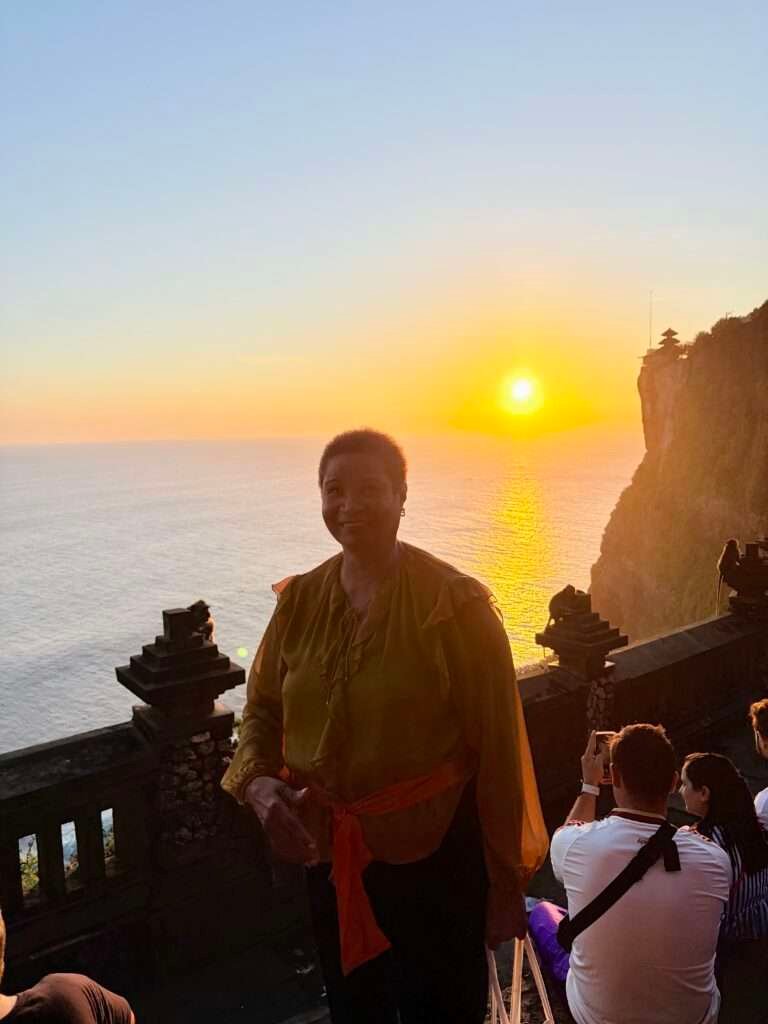
The first was the stunning Balinese sunsets. I have always loved sunsets; I cannot help but stop and admire them. They capture the raw, fleeting power of Mother Nature, a brilliant spectacle of “now you see me, now you don’t.”
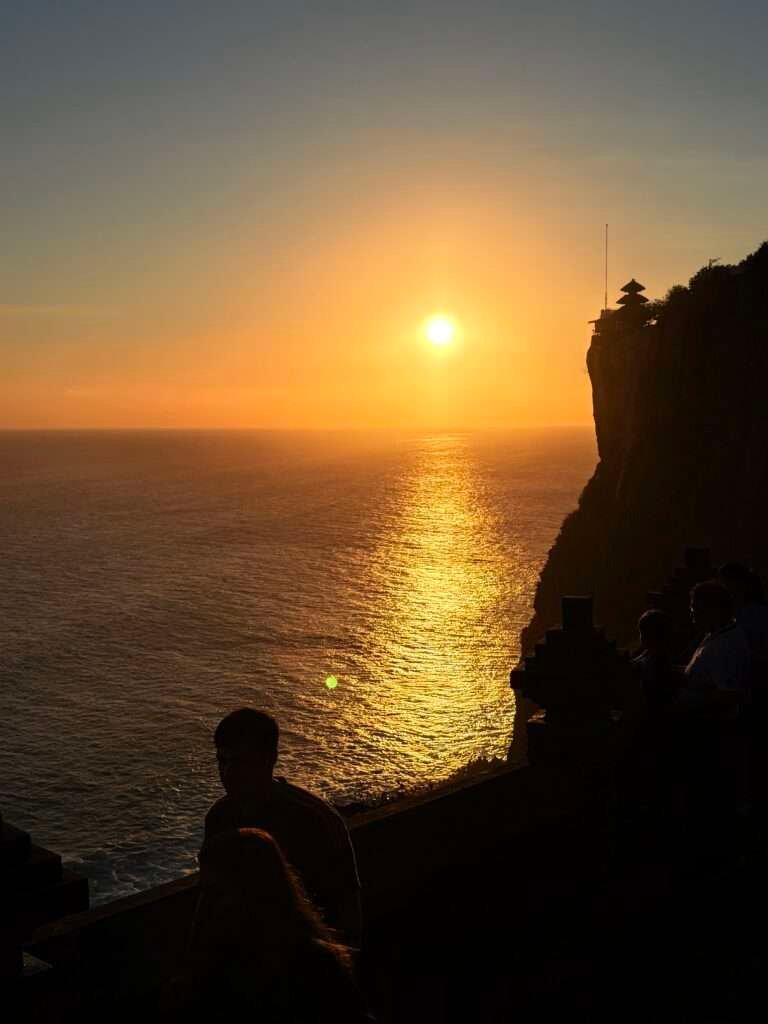
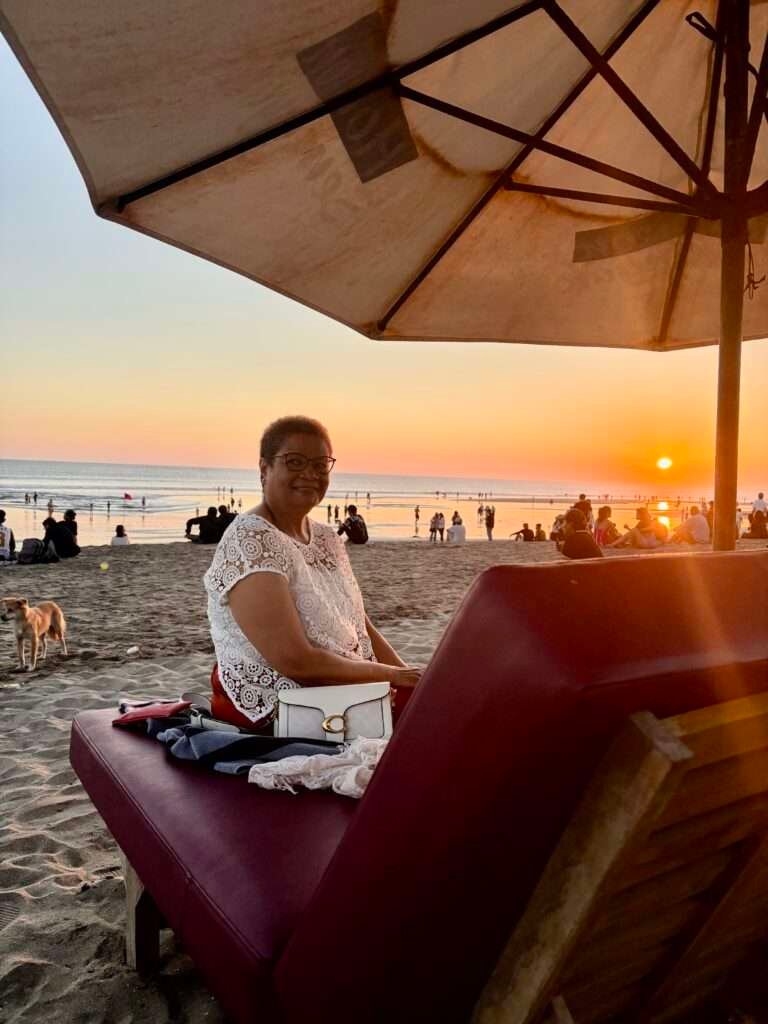
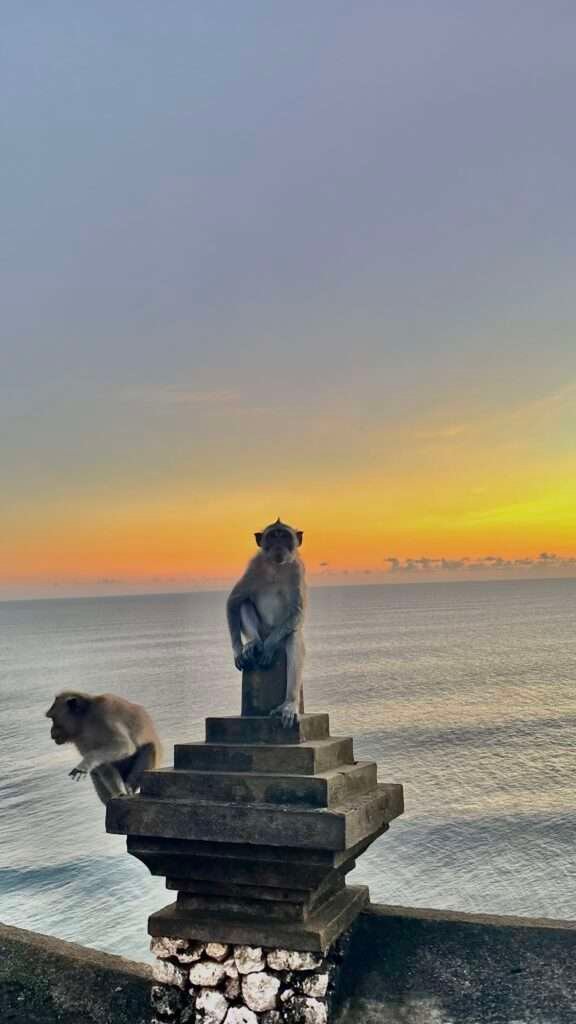
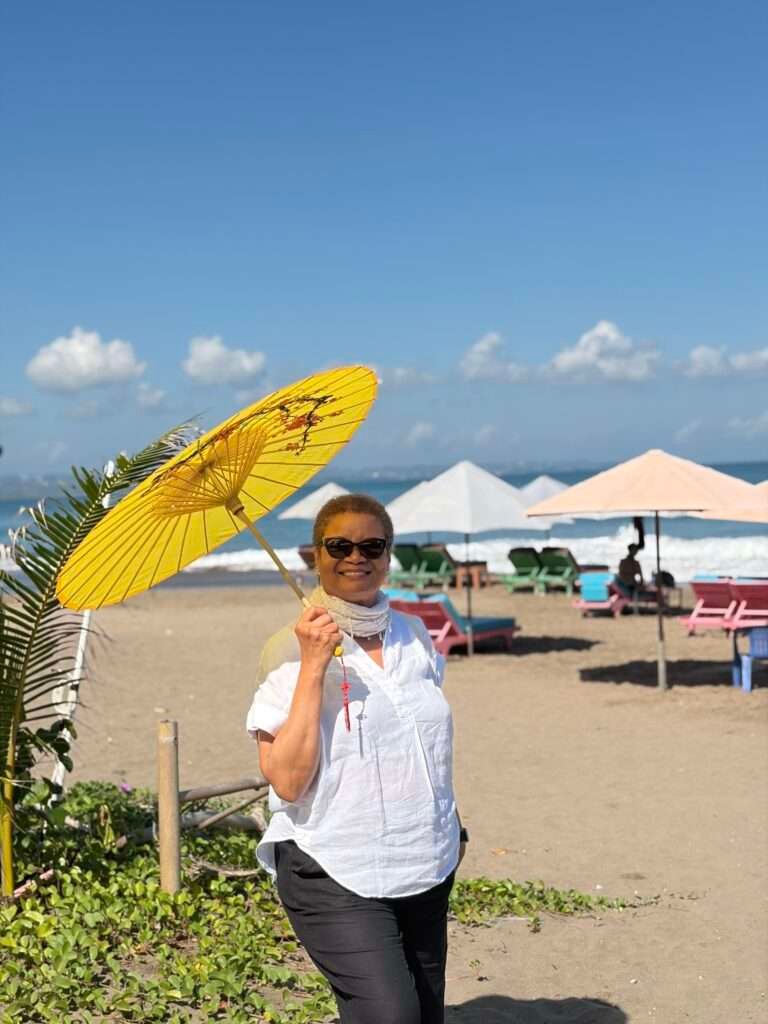
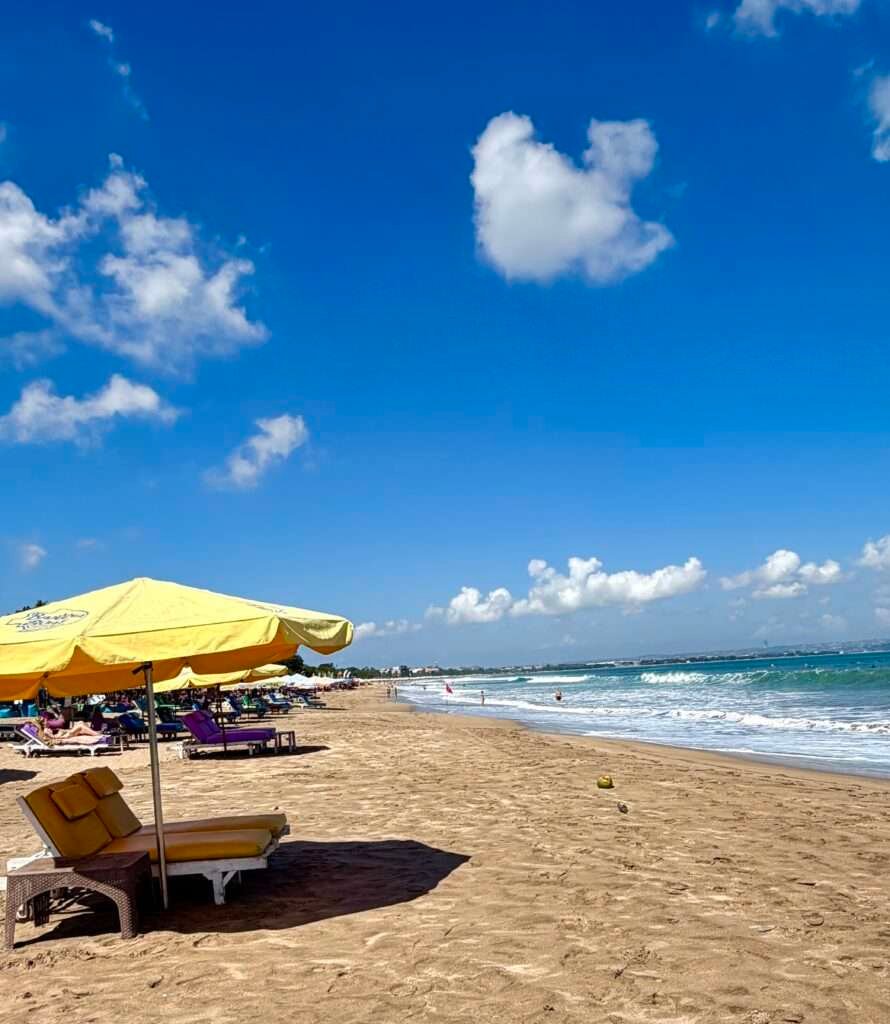
In my travels, I have been fortunate enough to watch the sun go down over the Yangtze River, across the desert of Wadi Rum, and over the islands of Greece, all equally mesmerising to me. But Bali holds its own magic. The golden light spilling over the roaring ocean cliffs at Uluwatu is spectacular, and watching that fiery orange-red bowl of a sun slowly disappear beneath the horizon at Seminyak beach is pure magic.
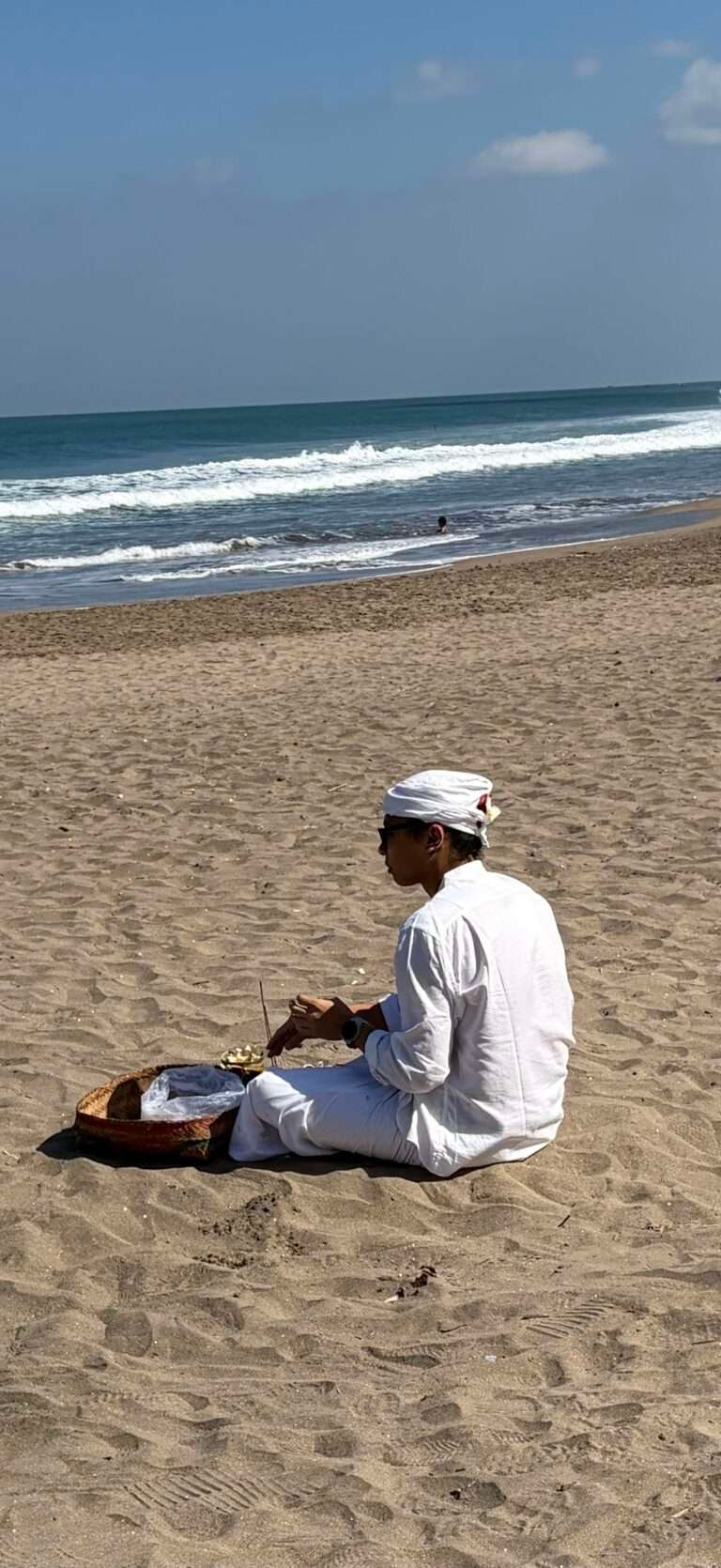
One evening on Seminyak beach, the busy world seemed to fall away entirely. I watched a young Balinese man, perhaps a local leader or priest, sitting solitary by the shoreline. He prayed with complete focus before walking directly into the ocean waves to complete a ritual cleansing after returning from a nearby temple.
But it was the human connections that taught me the most. During my stay, every single private driver I hired to take me on sightseeing tours called me “Mom.” At first, I wondered why nobody was using my actual name. Later, I discovered that it was simply a deeply rooted, respectful Balinese way of addressing an older woman. That one small, everyday gesture told me more about the warmth of Indonesian culture than any commercial guidebook ever could.
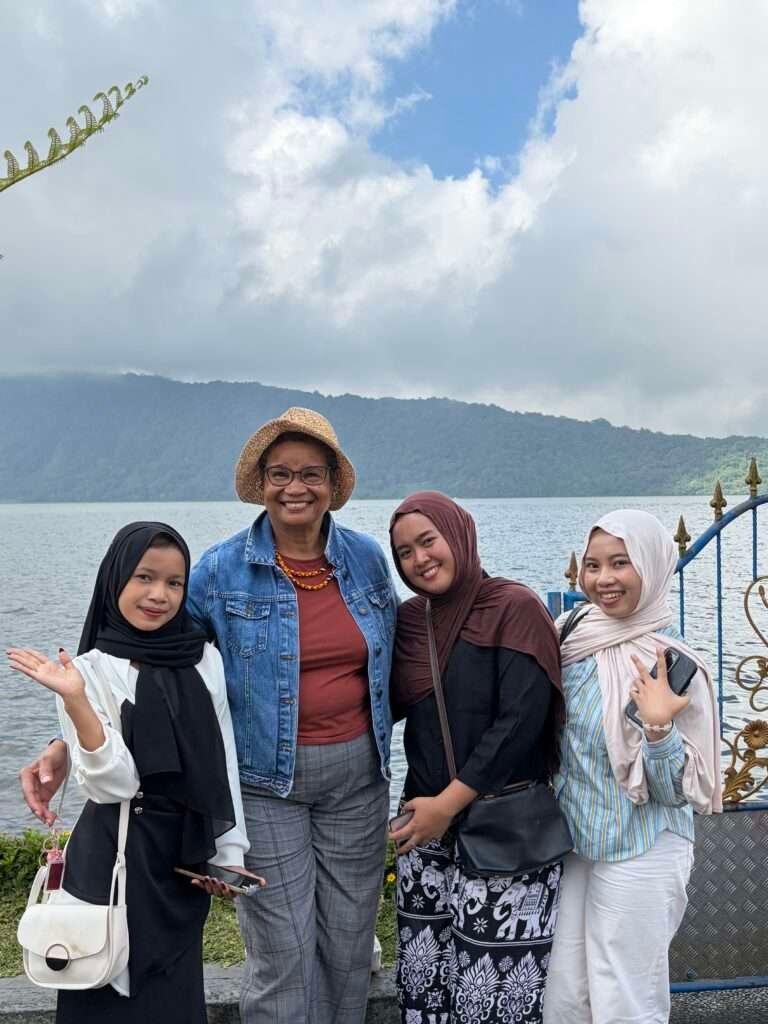
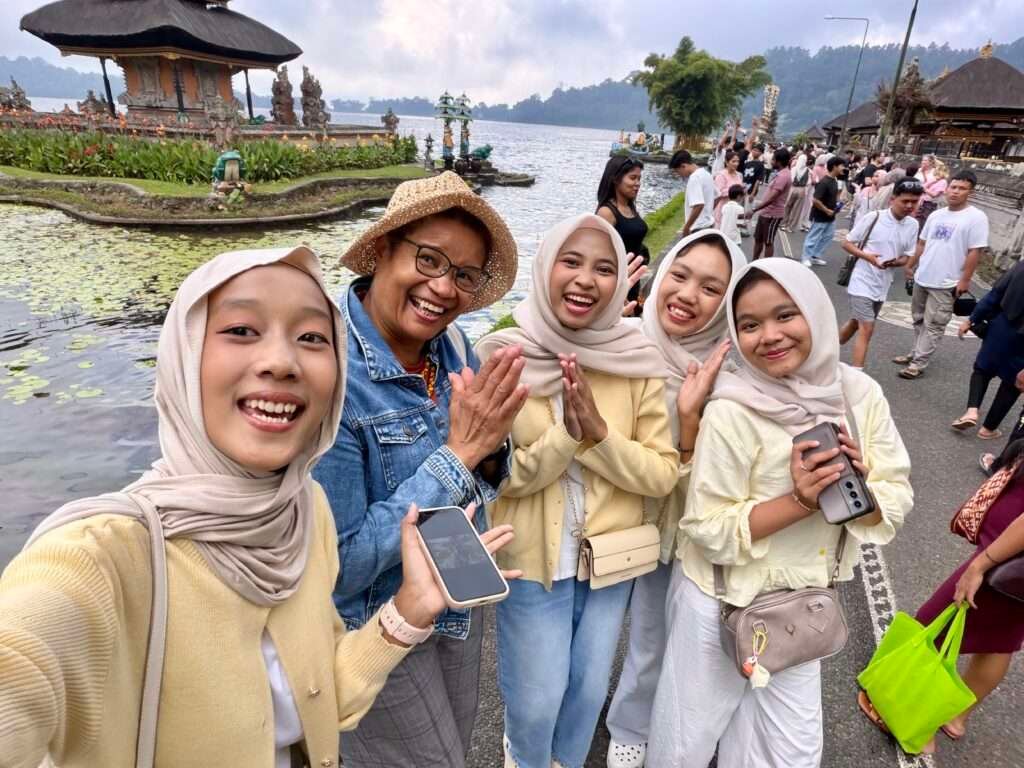
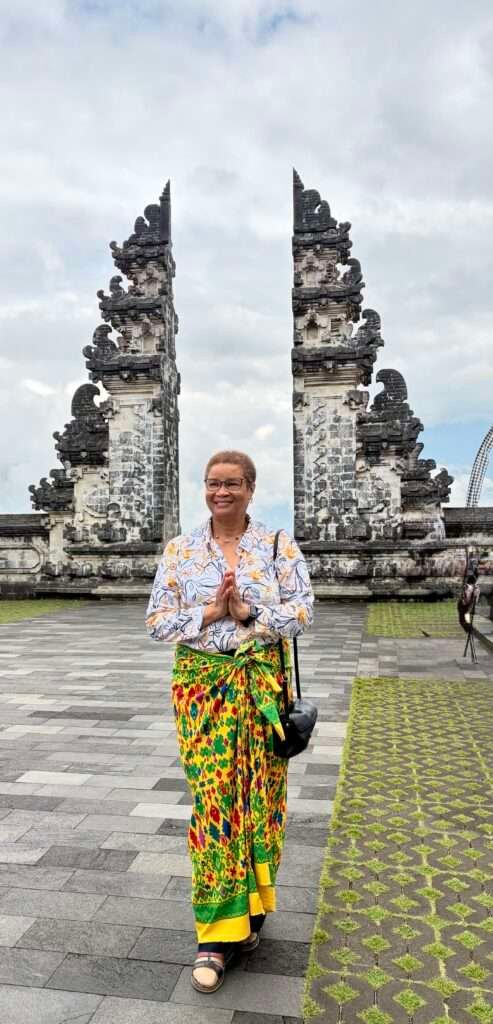
Another memorable encounter happened at the water temple of Ulun Danu Beratan. A group of local university students approached me and politely asked if they could interview me for a college assignment. They wanted to know why I had chosen Bali and what had impressed me most so far. I could tell they expected me to give the typical tourist answers: the sandy beaches, the surfing, the nightlife, the cheap spas, or the tattoo parlours.
Instead, I looked at them and told them how much I admired the Balinese people, specifically how they continue to protect and cherish their ancient traditions and religious beliefs despite all the heavy external tourism influences. The moment I said it, their faces completely lit up with pride. Before we said goodbye, they eagerly asked if we could take a photograph together
Moments like that beach ritual, the warmth of my drivers, and the proud smiles of those students remain some of my absolute happiest memories of Bali. They are proof that when you step out with an open mind, the world embraces you right back.
Unexpected Bali and My Quiet Moment
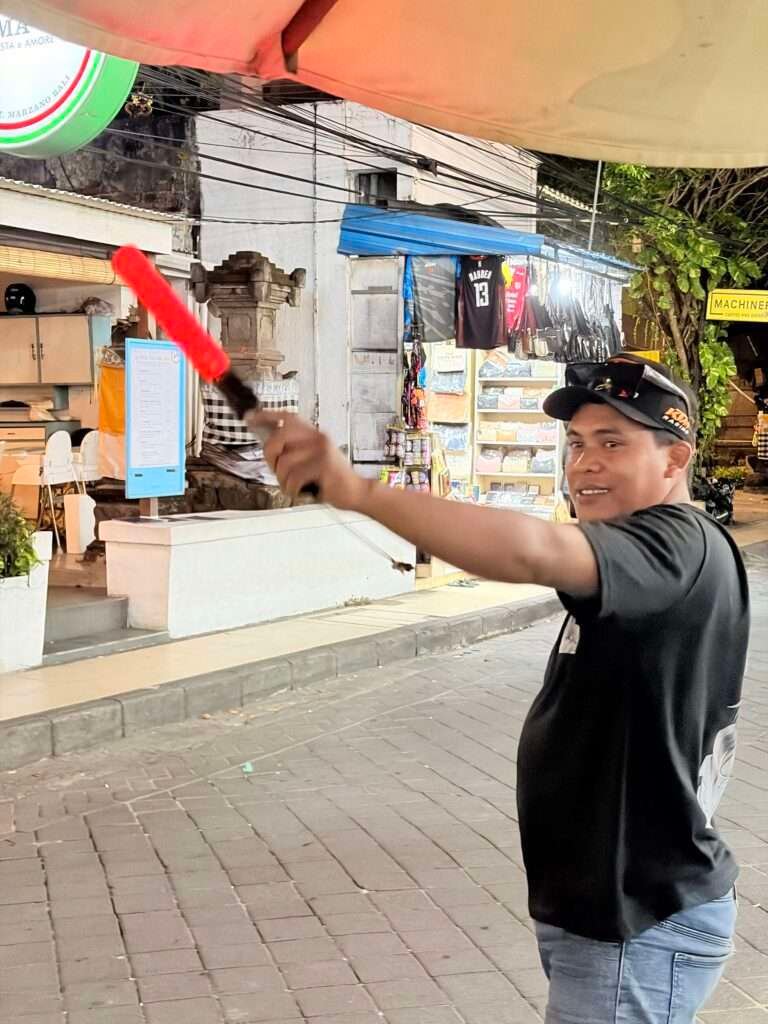
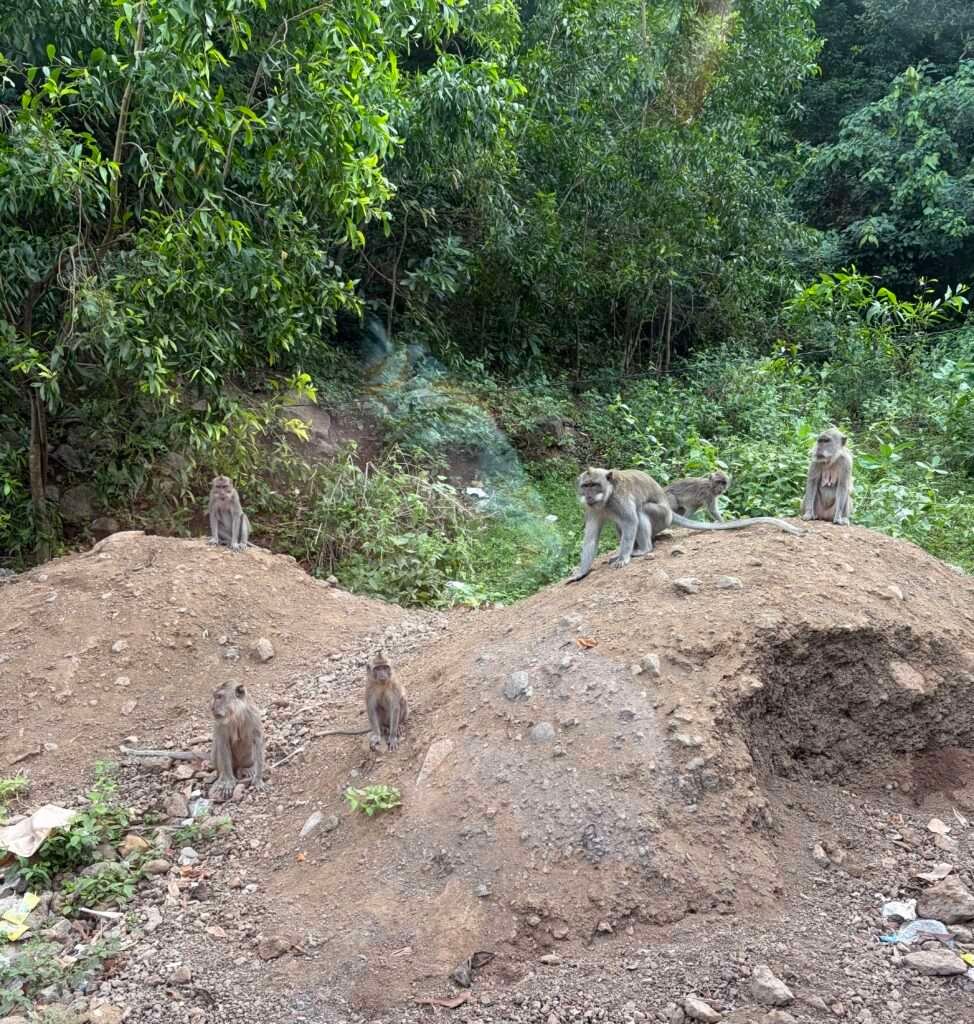
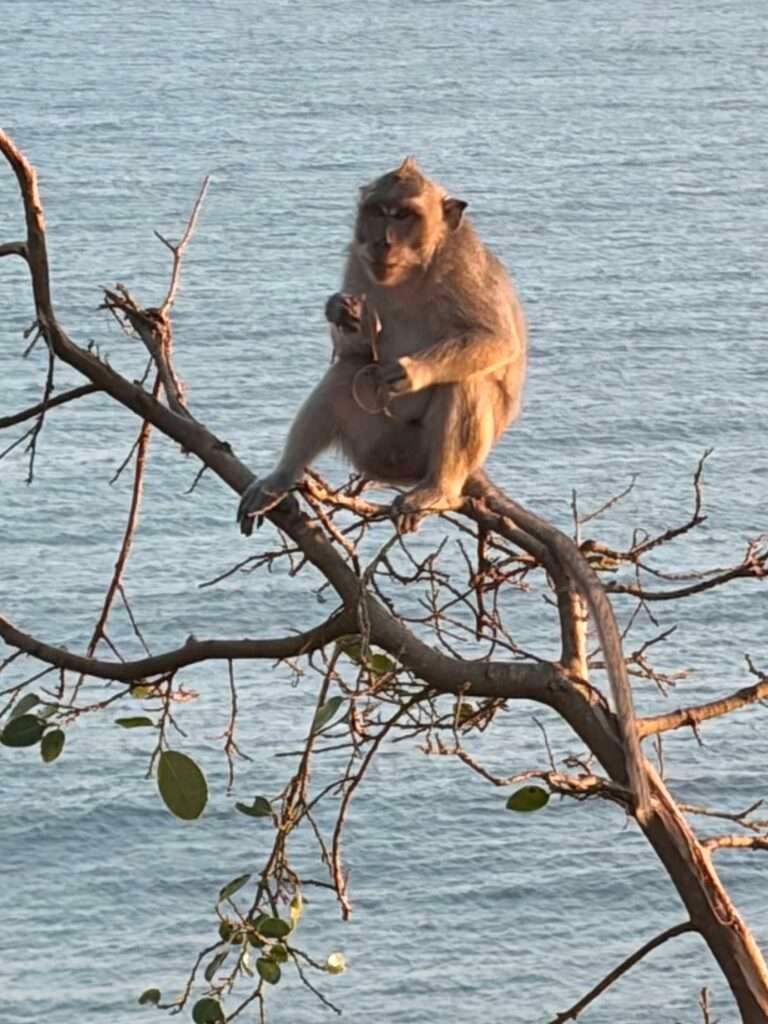
Bali is a place of intense contrasts. On one hand, you have the chaotic, vibrant energy of the tourist hubs: the constant negotiation with timeshare sellers, the mischievous monkeys in Uluwatu Temple, the ubiquitous tattoo shops, and the local traffic control system where two men with flags somehow manage to orchestrate entire intersections.
And then there are the scooters. They weave through the streets like a synchronised school of fish. I watched in absolute amazement as entire families—women, men, and children—balanced casually on a single scooter as if it were the most natural thing in the world. Having survived the traffic of Vietnam in the past, I knew how to cross the roads without fear, but I firmly drew the line at riding a scooter myself, especially without a helmet!
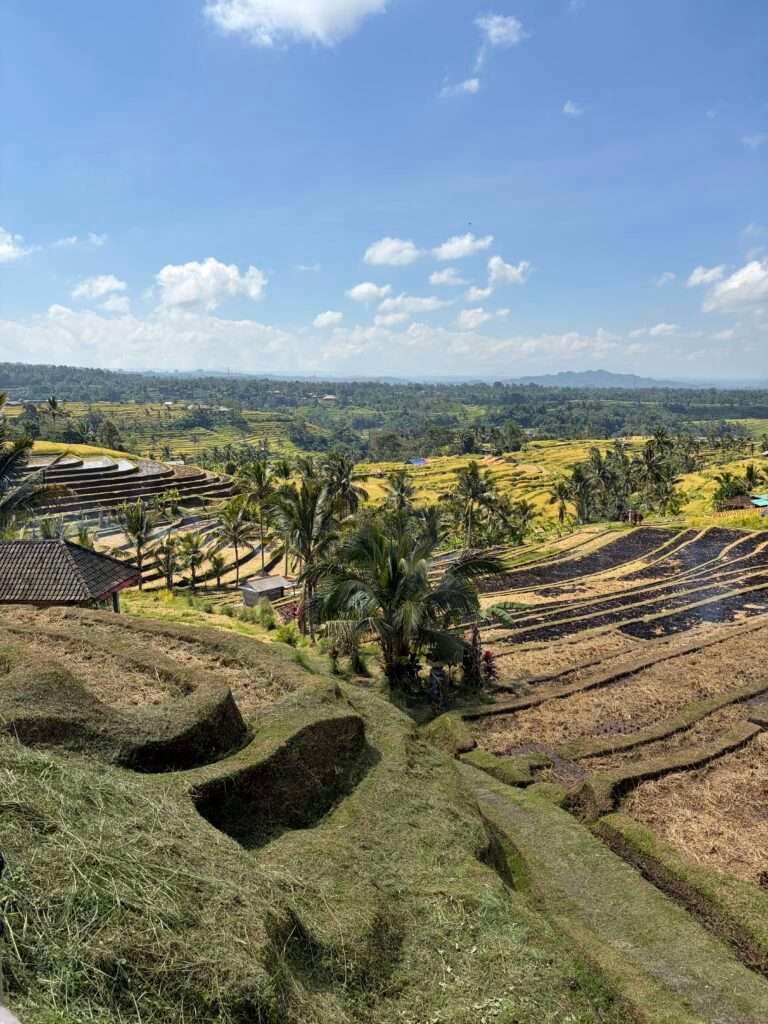
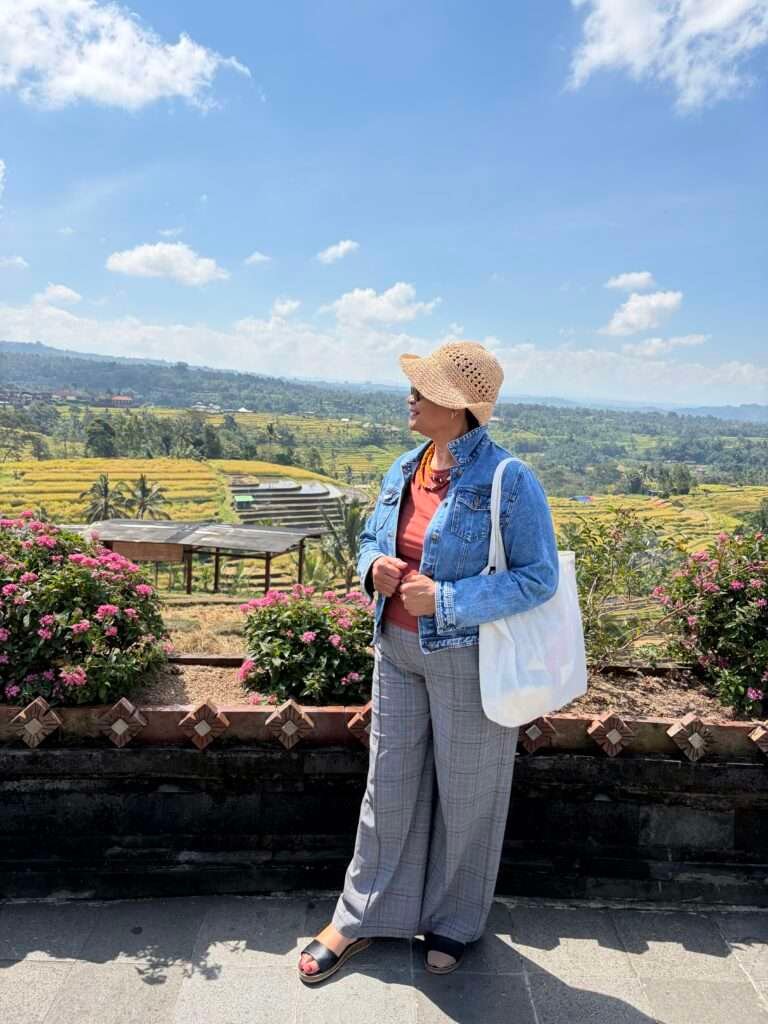
Yet, amidst all this beautiful chaos, I found my most quiet moment which surprisingly happened at the Jatiluwih Rice Terraces.
Unlike the crowded tourist spots, Jatiluwih is an unusual, expansive, and deeply peaceful place. Perched on a low level wall, looking out over the endless, sweeping waves of emerald-green terraces, the sound of the scooters faded away.
In that vast, quiet green landscape, I felt a profound sense of spiritual health. It was a moment of pure presence. It reminded me exactly why I still travel, why I still seek out the unknown, and why—no matter our age—there is always a “next” adventure waiting to open us up to the world.
Never miss a single story. Sign up for my newsletter, and let’s find out where the next adventure takes us. Inspiring you to experience the world, one journey at a time.
Standing at the very edge of mainland England, I discovered that Land’s End is about far more than a famous signpost. It was the rugged…
2 thoughts on “My Bali Journey: Temples, Sunsets, and Unexpected Moments”
Tolu
Thank you Molly for this exciting and revealing account of your trip to Bali. It gave an insight into the life and culture of the Balinese people. The pictures were beautiful and they complimented your story very well. Well done.
I am looking forward to reading the rest of your adventures in Bali.
Hi Tolu, thank you so much for your lovely comment. I’m delighted you enjoyed the first post. I hope that by the time you’ve read all three, you’ll feel as though you’ve travelled with me to Bali, shared its wonderful food and discovered the spiritual heart of this remarkable island. Enjoy the rest of the journey. Molly



Thank you Molly for this exciting and revealing account of your trip to Bali. It gave an insight into the life and culture of the Balinese people. The pictures were beautiful and they complimented your story very well. Well done.
I am looking forward to reading the rest of your adventures in Bali.
Hi Tolu, thank you so much for your lovely comment. I’m delighted you enjoyed the first post. I hope that by the time you’ve read all three, you’ll feel as though you’ve travelled with me to Bali, shared its wonderful food and discovered the spiritual heart of this remarkable island. Enjoy the rest of the journey. Molly