Jerash – One of the World’s Best-Preserved Roman Cities
2 July 2022
Originally published: 2 July 2022 • Refreshed: August 2026
This article is part of my Jordan – An Open-Air Museum series, where I share the places that made my journey through Jordan so memorable. You can also explore my other posts on Petra, Wadi Rum, the Dead Sea and more from this unforgettable trip.
Before visiting Jordan, I knew almost everything I wanted to see centred around Petra.
Jerash wasn’t really on my radar.
In fact, had it not been included in my tour itinerary, I probably wouldn’t have visited at all.
What a mistake that would have been.
Often described as one of the world’s best-preserved Roman cities outside Italy, Jerash is a remarkable archaeological site that brings ancient history vividly to life. Buried beneath sand for centuries before being rediscovered and excavated, the city dates back thousands of years and is still revealing its secrets today. Walking through its grand streets, temples and public spaces, it wasn’t difficult to imagine what life must have been like when Jerash was a thriving Roman city.
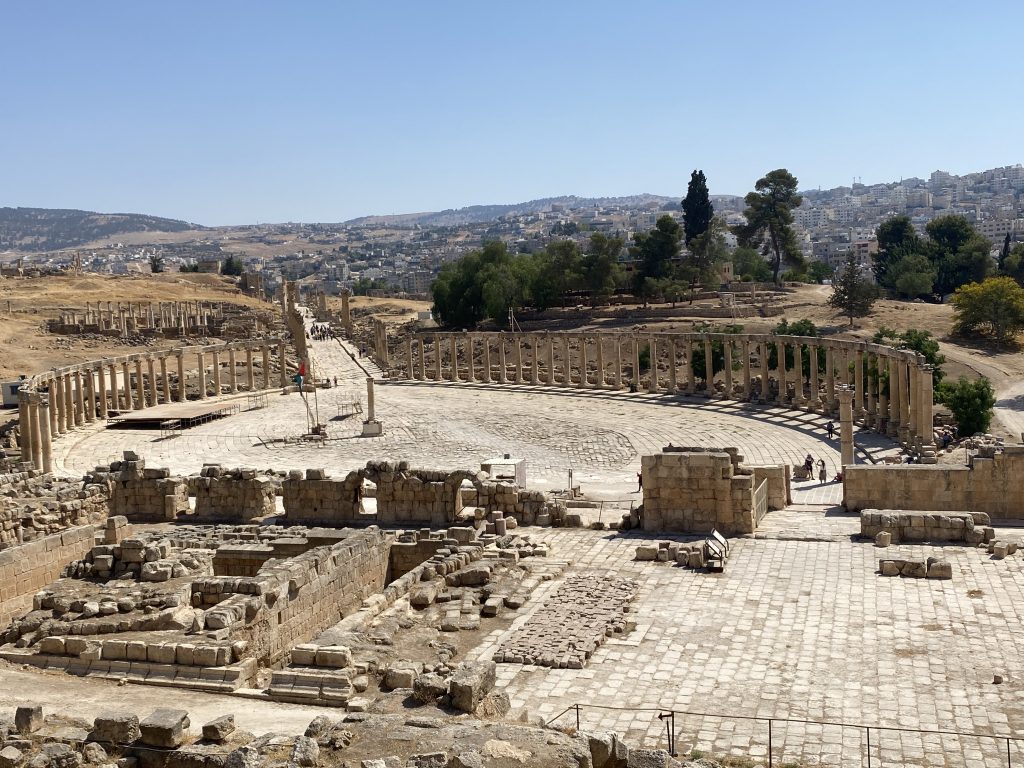
The Oval Plaza
First Impressions – A City Frozen in Time
One of the first things that struck me was the sheer scale of the site.
It is enormous.
Although archaeologists have spent decades uncovering Jerash, only part of the ancient city has been excavated. Everywhere I looked there seemed to be another impressive ruin waiting to be explored.
As we wandered through the site, our guide helped bring the city to life. We explored magnificent temples, elegant colonnaded streets, theatres, fountains, stadiums and public buildings while learning how sophisticated Roman life had been.
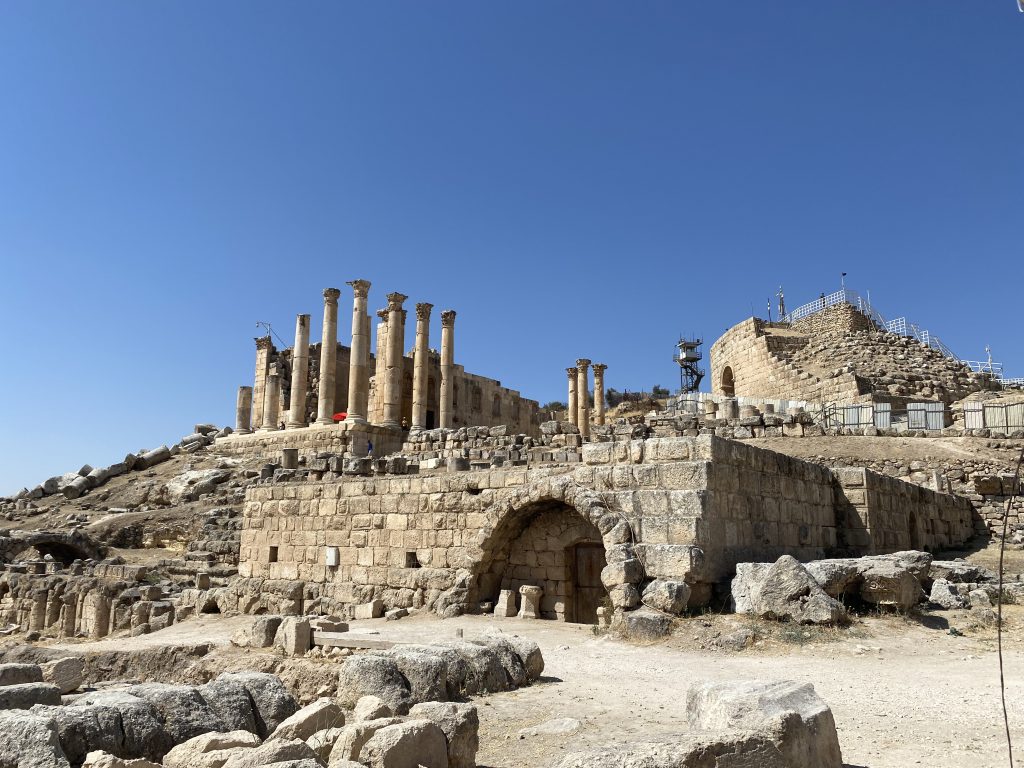
The Temple of Zeus
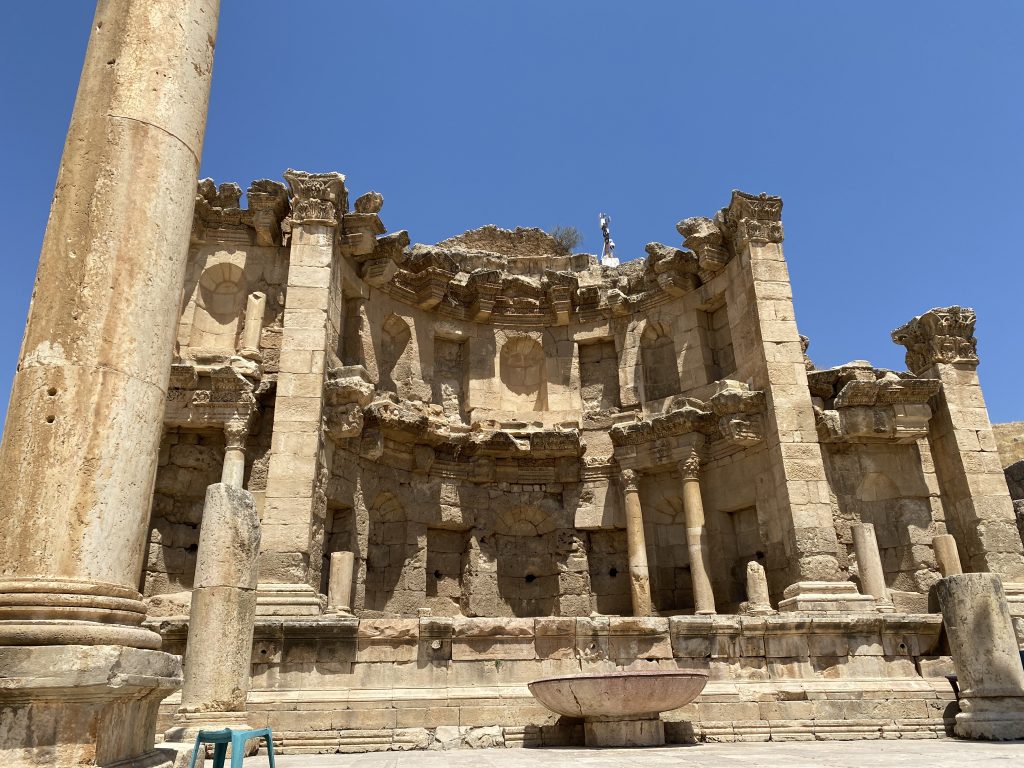
The Ancient Engineering That Amazed Me
What fascinated me most, however, wasn’t one of the grand monuments.
It was the drains.
Yes…the drains!
Our guide pointed out the original drainage channels that still run beneath parts of the city. Nearly two thousand years later they remain clearly visible, a remarkable reminder of the engineering skills of the Roman builders.
It made me appreciate just how advanced these ancient civilisations really were.
This truly was a city built to last.
Feeling a Two-Thousand-Year-Old Column Move
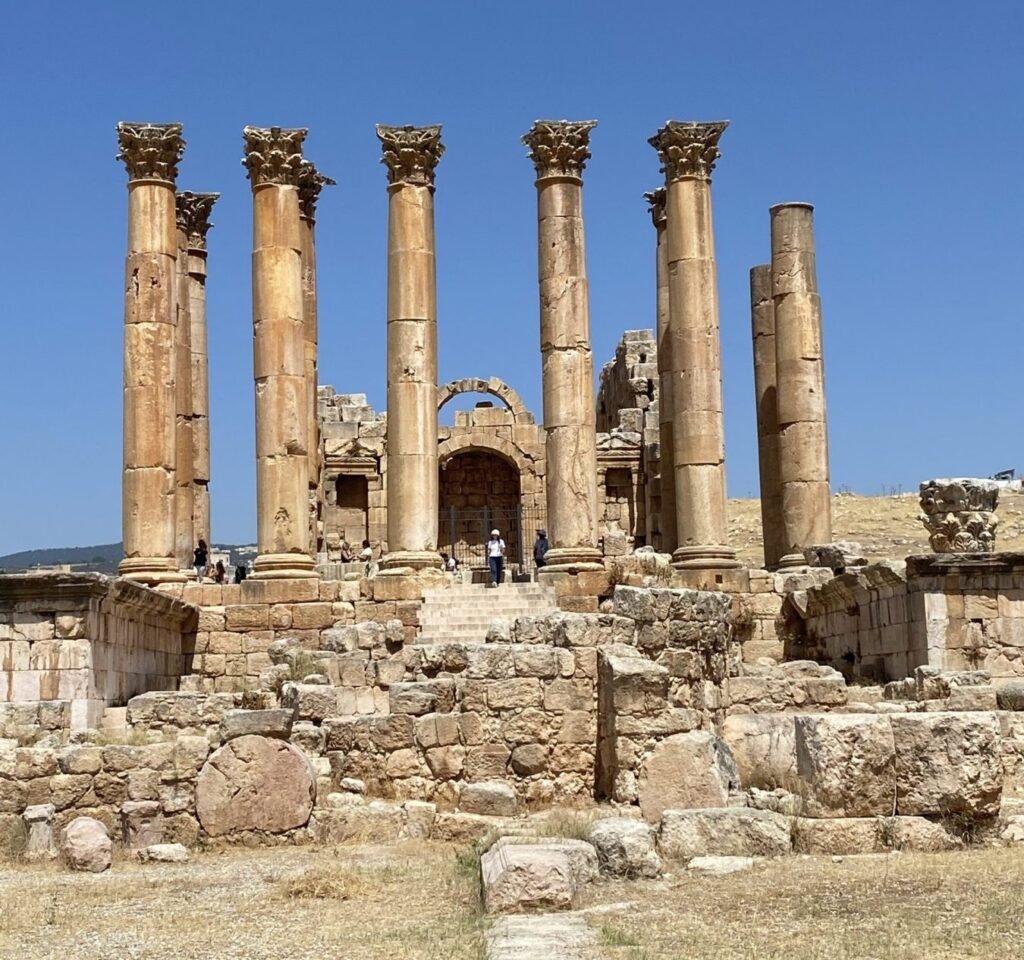
Nearby stands the impressive Temple of Artemis, dedicated to the goddess of hunting.
Even today its towering sandstone columns are breathtaking. Looking at them, I couldn’t help imagining how magnificent the temple must have appeared nearly two thousand years ago.
Then our guide demonstrated something I will never forget.
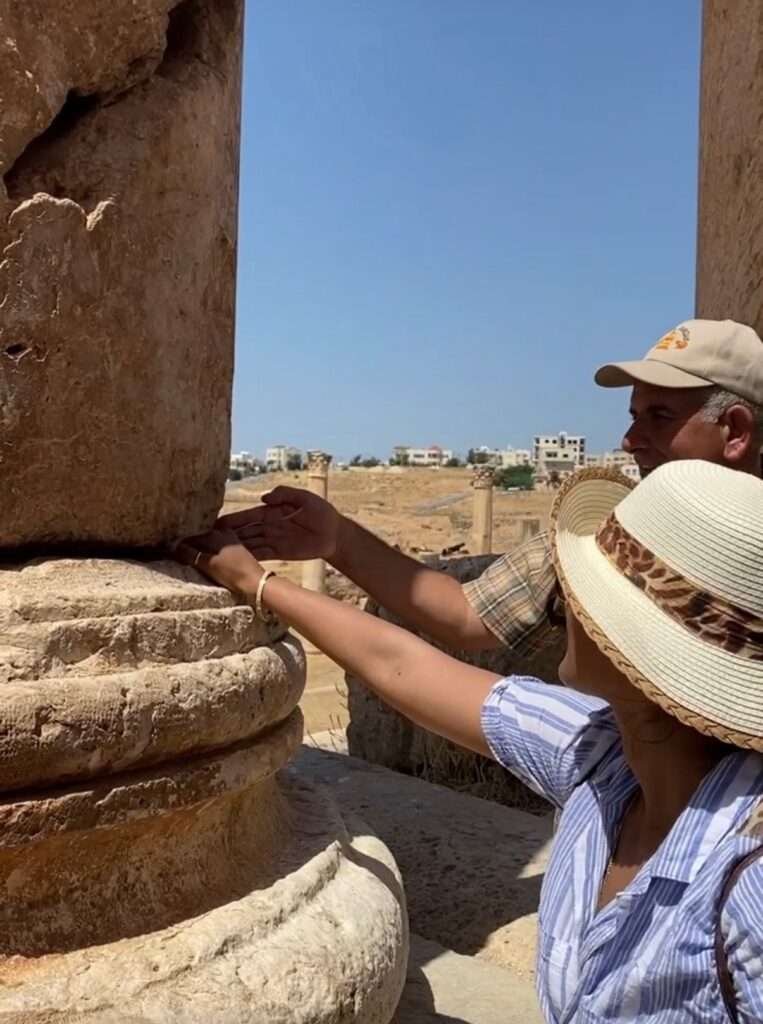
Using nothing more than a spoon, he showed us that one of the enormous columns still moves ever so slightly with the wind. He invited us to place a hand inside the narrow gap beside the column.
I could actually feel it moving. Very gently. Very slightly.
But enough to make me instinctively step back!
Standing beside a towering ancient column and feeling it move was both fascinating and slightly unnerving. It was one of those unexpected travel moments that no guidebook prepares you for.
Temple of Artemis
The Moving Column
An Unexpected Sound in Ancient Jerash
Just when I thought Jerash couldn’t surprise me any more…
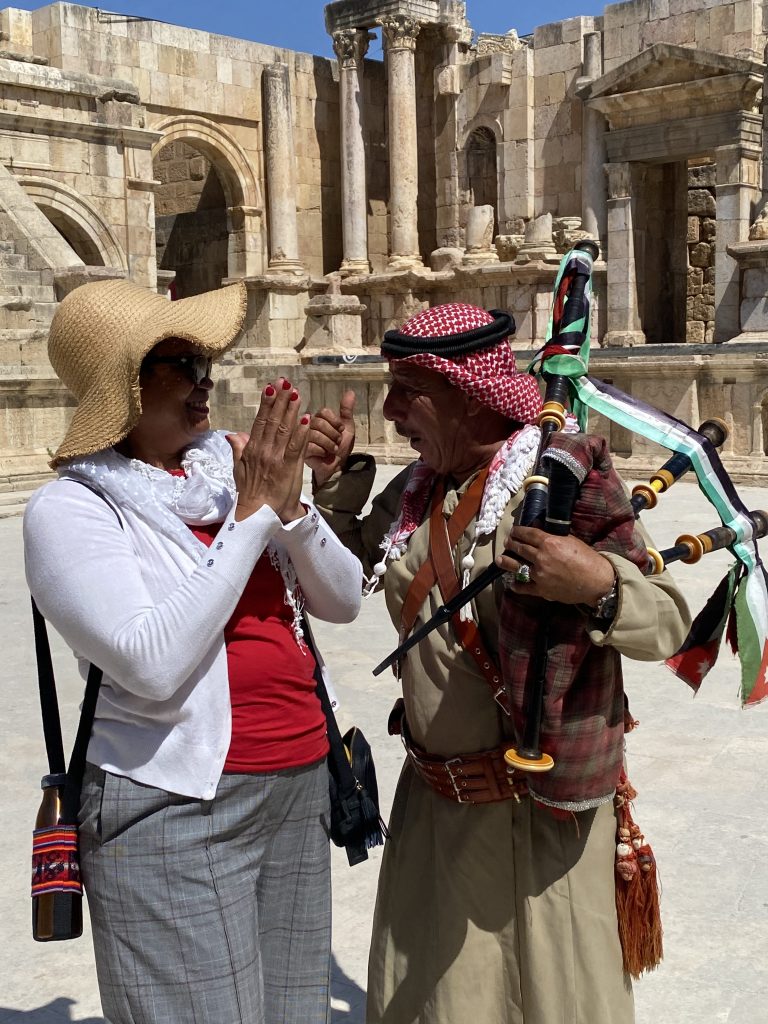
…I heard bagpipes.
Of all the sounds I expected to hear while exploring an ancient Roman city in Jordan, Scottish bagpipes certainly weren’t one of them.
A local musician entertained visitors with beautiful melodies that echoed around the ancient ruins.
It was completely unexpected. And somehow completely memorable.
Travel has a wonderful habit of surprising us when we least expect it.
The bagpipe player
Walking the Streets of Ancient Jerash
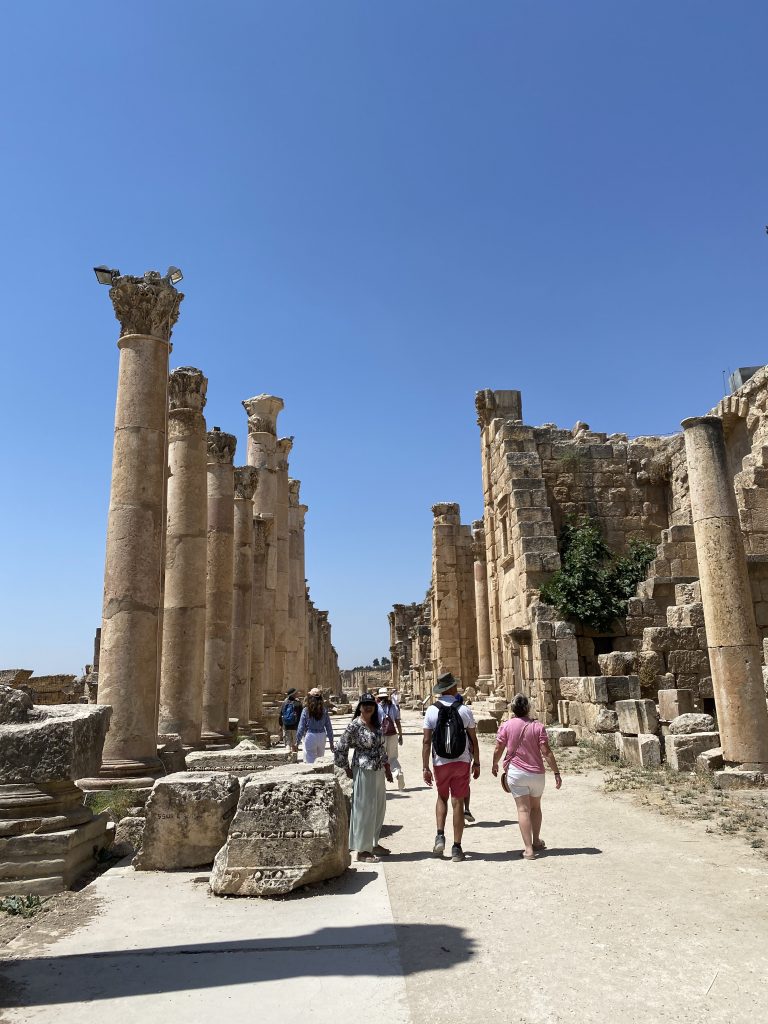
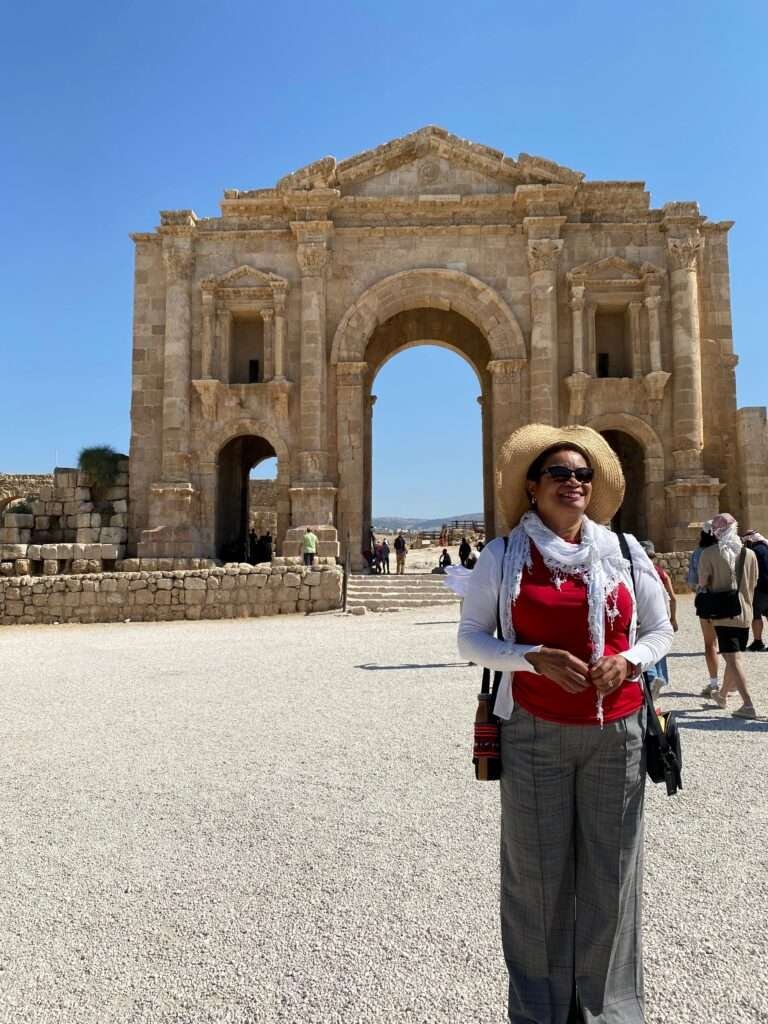
Before leaving, I wandered along the city’s elegant colonnaded street and stopped beneath Hadrian’s Arch, built to honour the visit of the Roman Emperor Hadrian.
Looking around, it was easy to imagine merchants, travellers and local people walking these very same streets nearly two thousand years ago.
History didn’t feel distant here.
It felt wonderfully alive.
Colonnaded Street
Molly at Hadrian's Arch
Final Thought
By the time I left, I realised Jerash had become far more than just another stop on my itinerary.
It had transported me back almost two thousand years.
Petra may be Jordan’s headline attraction, but Jerash quietly steals your admiration in a completely different way.
If you enjoy history, archaeology or simply walking through places where the past feels remarkably alive, don’t overlook Jerash.
It turned out to be one of the biggest surprises of my Jordan adventure.
This article is part of my Jordan – An Open-Air Museum series, where I share the places that made my journey through Jordan so memorable. You can also explore my other posts on Petra, Wadi Rum, the Dead Sea and more from this unforgettable trip.Originally published: 2 July 2022.
Let’s Stay Connected!
Never miss a single story. Sign up for my newsletter, and let’s find out where the next adventure takes us. Inspiring you to experience the world, one journey at a time
Jerash at a Glance
Location: About 50 km (31 miles) north of Amman.
Best known for: One of the world’s best-preserved Roman cities.
Allow: At least 2–3 hours to explore.
Don’t miss: The Oval Plaza, Temple of Artemis, Hadrian’s Arch, the Colonnaded Street, and if you’re lucky, perhaps even the bagpipes!
While Canterbury Cathedral may be the main attraction, the city itself has so much more to offer. From medieval gateways to peaceful riverside walks, Canterbury…
Seafood, cliff-top views, Old Town charm and England’s steepest funicular railway — Hastings surprised me in the best possible way and became my favourite UK…