Visiting Canterbury was an easy decision. At the heart of this historic city stands Canterbury Cathedral, one of the oldest and most important cathedrals in England and a place steeped in history, faith, and intrigue.
This is not just a beautiful building. It is one of Europe’s most important pilgrimage sites and the scene of one of the most famous events in British history — the murder of Archbishop Thomas Becket.
Booking & My Top Tip
Booking tickets online was simple and straightforward.
My top tip: When booking your entry ticket, add the Cathedral’s guided tour. It is excellent value and truly brings the history to life.
I visited just after Covid restrictions were lifted and, surprisingly, it was very quiet. In fact, my partner and I ended up having the guide almost to ourselves, a real treat.
Our guide, a charming and knowledgeable lady, clearly loved being back. She followed a well-structured route and shared fascinating stories and details throughout. My only challenge? Remembering it all!
The Martyrdom – A Defining Moment
The most significant part of the Cathedral is The Martyrdom, marking the spot where Archbishop Thomas Becket was murdered in 1170.
Four knights, believing they were acting on the orders of King Henry II, carried out the attack. This moment transformed Canterbury into a major pilgrimage destination and remains central to its story today.
Standing there, you can’t help but pause and reflect on the weight of history.
The Martyrdom
The Cloisters & Chapter House
The Great Cloisters were one of the highlights for me.
They once connected the different parts of the monastery when monks lived here, and walking through them today feels almost timeless. The craftsmanship is incredible intricate carvings of faces, animals, and medieval symbols line the arches above.
Our guide pointed out details I would never have noticed on my own. Some meanings were clear, others more mysterious but all beautifully crafted.
The Chapter House, once used for meetings and daily monastery life, added another layer to understanding how the Cathedral functioned in the past.
The Great Cloisters
The Chapter House
The detail in the carving is stunning.
The Candle in the Trinity Chapel
The candle marks the spot where Thomas Becket was buried.
In front of the shrine, you might be able to see from the photo, the roundels which represent the twelve signs of the zodiac.
Stained Glass & Hidden Stories
The stained glass windows were simply stunning. Each one tells a story from a time when most people could not read, a visual history brought to life through colour and design.
I learned that some of the oldest windows depicting the ancestors of Christ date back to the 12th century. Imagine that glass that has survived for centuries.
They weren’t on display during my visit, but hearing about them made me appreciate just how special this place is.
St Augustine’s Chair
One of the more unexpected highlights was St Augustine’s Chair, a ceremonial chair dating back to the 13th century.
It’s incredible to think something so old is still standing today. Moments like this really bring history closer from something you read about to something right in front of you.
St Augustine’s Chair
Beyond the Main Spaces
Outside, we were shown the herb garden and the ruins of the monks’ dormitory.
Some features left us slightly puzzled like engraved words such as “unbroken,” “everlasting,” and “immortal.” Even our guide wasn’t entirely sure of their purpose, which made it all the more intriguing.
There was also a poem by William Wilberforce carved into stone, another unexpected detail that added to the sense of discovery.
The Monks' dormitory ruins
The Water Tower as seem from the outside.
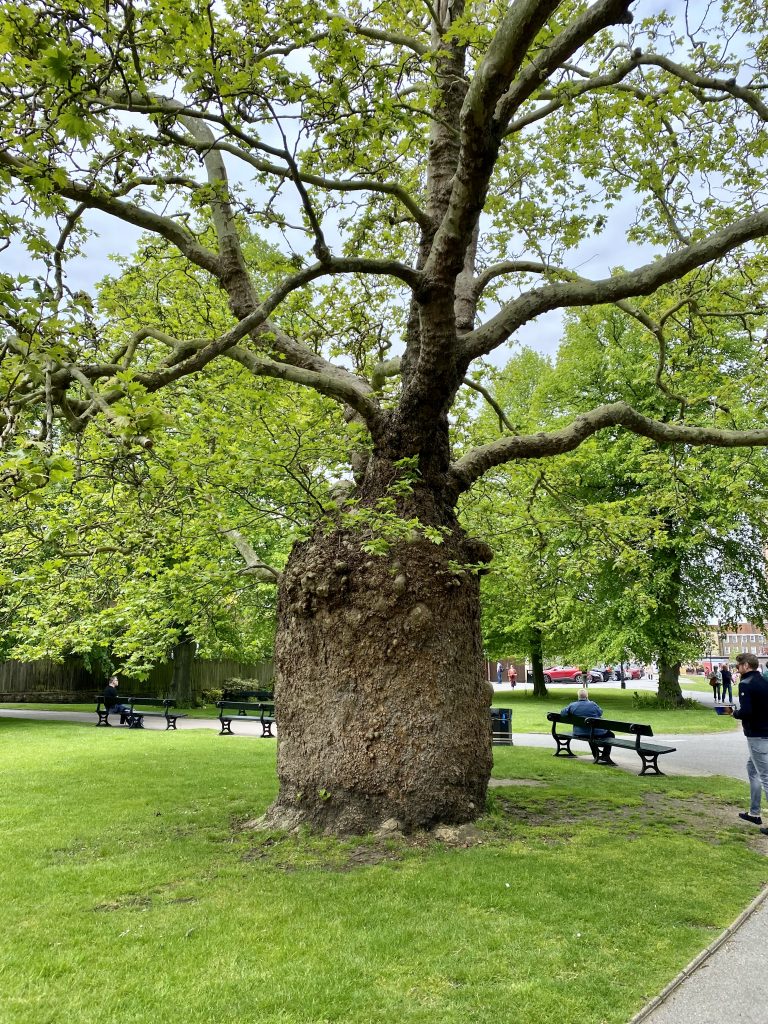
Fascinating tree in the grounds.
Engraved stone with words.
Engraved stone with poem
Final Thoughts
My visit to Canterbury Cathedral was fascinating. It’s a place where history, religion, and architecture come together in a way that feels both grand and deeply human. I left with a much greater appreciation of its role in British history and a few stories I won’t forget anytime soon.
Canterbury Cathedral
mollywozhere photo, naturally!
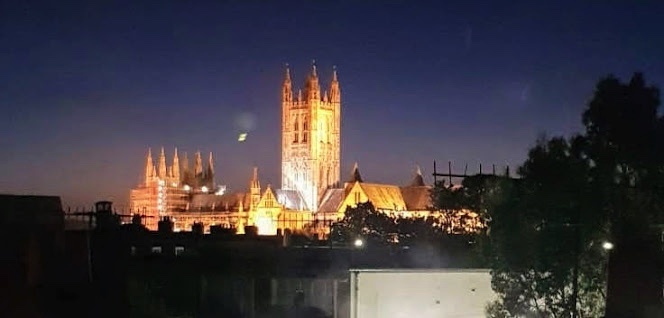
I love this photo of a night shot of the Cathedral, simply stunning!