Madaba, Jordan – Discovering the World’s Oldest Mosaic Map
2 July 2022
Originally published: 2 July 2022 • Refreshed: August 2026
This article is part of my Jordan – An Open-Air Museum series, where I share the places that made my journey through Jordan so memorable. You can also explore my other posts on Petra, Wadi Rum, the Dead Sea and more from this unforgettable trip.
Before visiting Jordan, I had never heard of Madaba.
Like many visitors, I was travelling to see Petra, Wadi Rum and the Dead Sea. Madaba was simply another stop on the itinerary, and I didn’t know quite what to expect.
It turned out to be a fascinating visit.
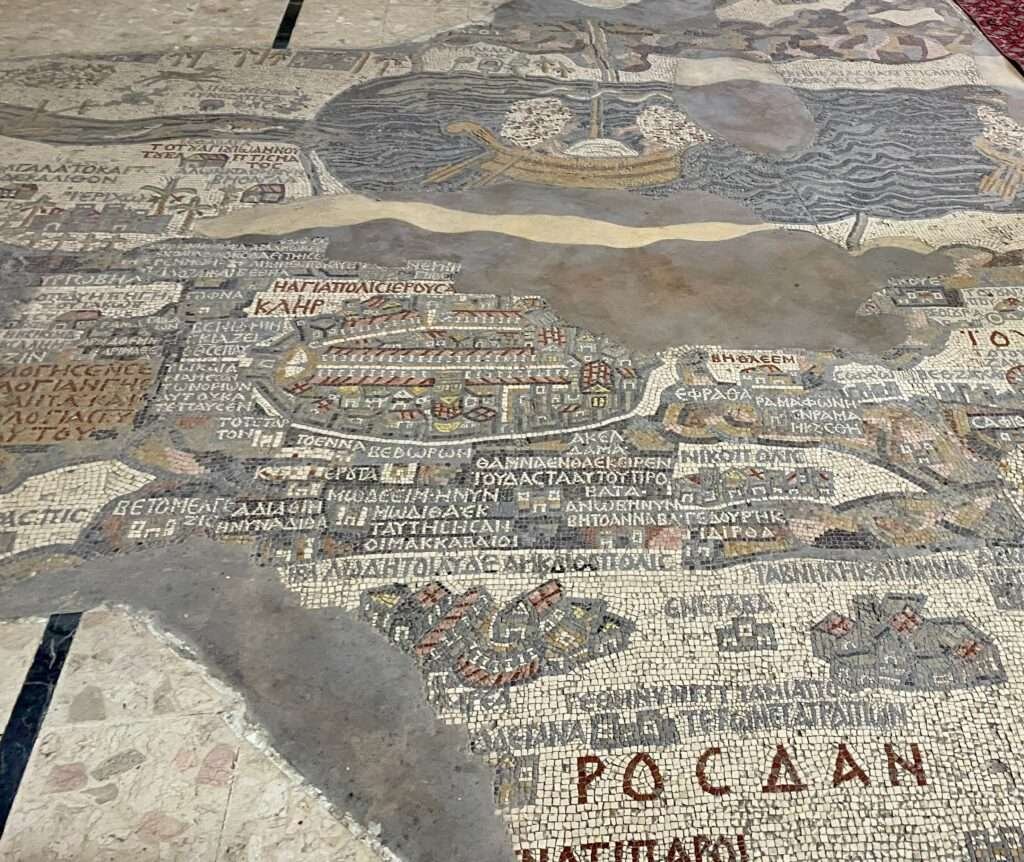
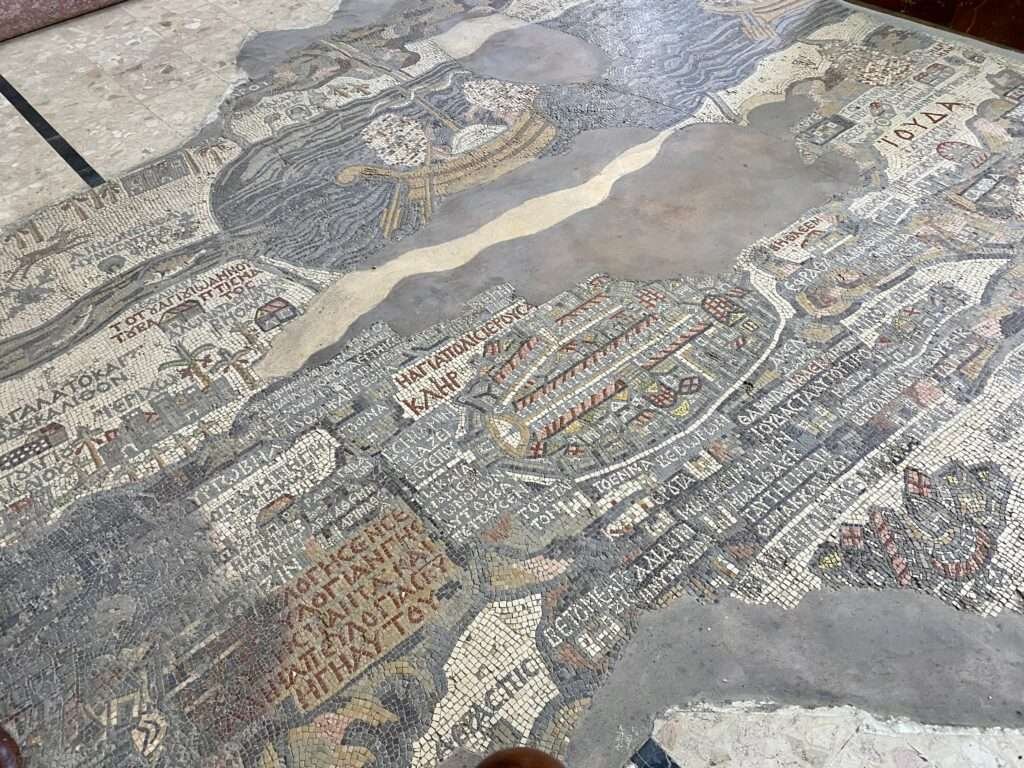
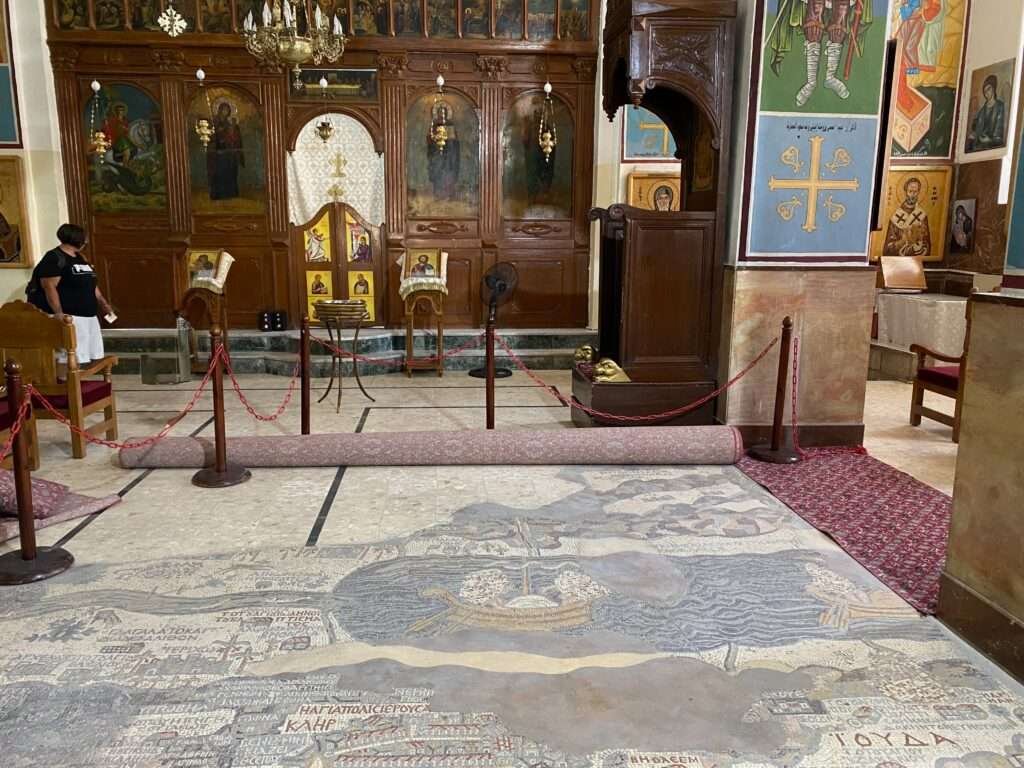
Madaba is best known for the famous Mosaic Map of the Holy Land, housed inside the Greek Orthodox Basilica of Saint George. Created in the sixth century AD, it is believed to be the oldest surviving mosaic map of the Holy Land and is one of Jordan’s most important historical and religious treasures
Closer view of the mosaic
Closer view of the mosaic
My First Impression
When I first looked at the mosaic, I have to confess, it looked like complete gobbledygook!
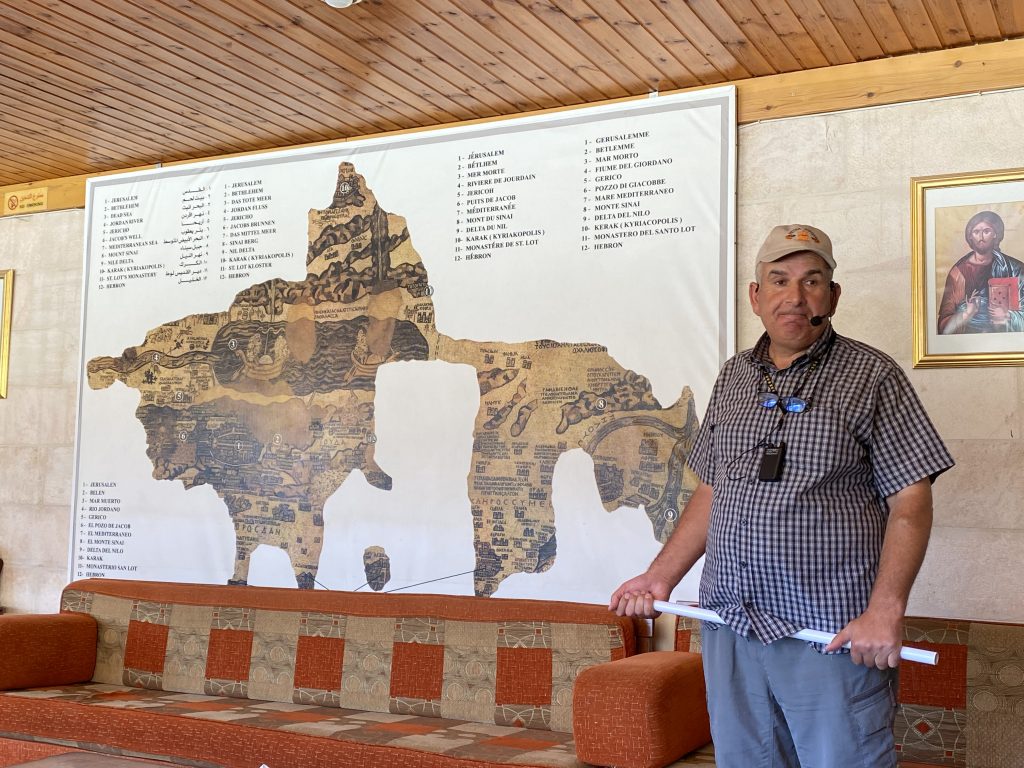
Millions of tiny coloured stones formed what seemed to be a jumble of shapes and patterns that made no sense to me at all. Thankfully, our tour guide, Adna, was on hand to explain what I was looking at.
As he pointed out rivers, mountains, valleys and important biblical places such as Jerusalem, Bethlehem and Jericho, the mosaic gradually began to make sense. What had looked like a confusing pattern slowly became a remarkable map of the Holy Land.
I found it fascinating how understanding the story completely changed the way I looked at it.
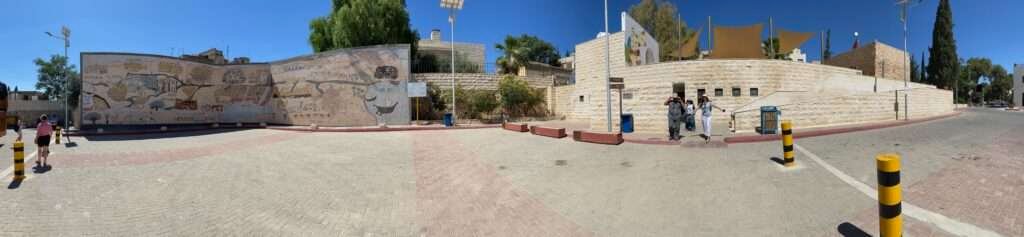
Map of the area
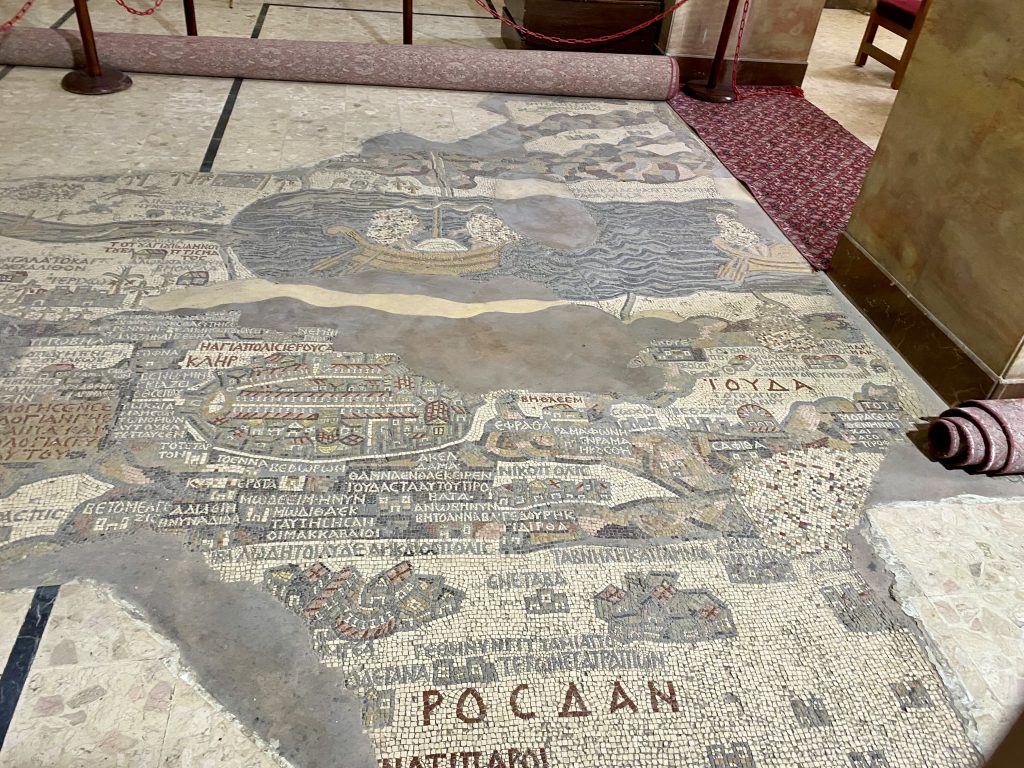
Closer view of the mosaic
A Remarkable Piece of History
The mosaic was created around 1,500 years ago and originally consisted of almost three million tiny pieces of coloured stone.
Although parts of it have been damaged over the centuries, enough remains to appreciate the extraordinary skill of the craftsmen who created it.
Standing there, I couldn’t help thinking about how many people must have admired this same mosaic over the centuries.
History suddenly felt very close.
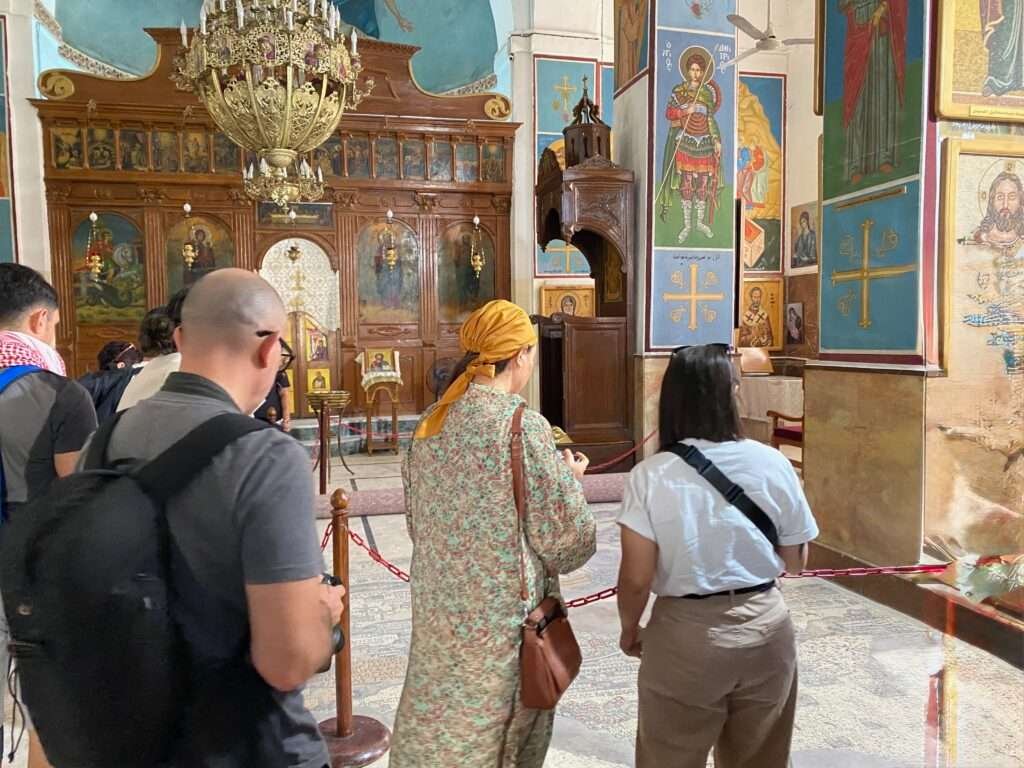
Inside the Basilica of Saint George
A Church That Is Still Alive
The mosaic is housed inside the Greek Orthodox Basilica of Saint George. What I particularly liked was that this isn’t simply an historic building open to tourists. It is still a working church.
Visitors quietly admire the famous mosaic while local people continue to worship there, giving the church a peaceful atmosphere that I really appreciated.
It reminded me that this isn’t just an archaeological treasure. It is still an important place of faith.
Inside the Basilica of Saint George
Final Thoughts
Madaba may not have the spectacular scenery of Wadi Rum or the grandeur of Petra, but it has something equally valuable. It tells an important part of Jordan’s story.
I arrived expecting to see an ancient mosaic. I left with a much greater appreciation of the history, craftsmanship and faith that it represents.
Sometimes the quieter places leave the strongest impression. Madaba certainly did.
Madaba at a Glance
Location: Around 30 km (19 miles) southwest of Amman.
Best known for: The sixth-century Mosaic Map of the Holy Land, believed to be the oldest surviving mosaic map in the world.
Highlights: The Greek Orthodox Basilica of Saint George, the remarkable mosaic and Madaba’s rich biblical heritage.
My favourite moment: Watching the mosaic come to life as our guide explained the places and stories hidden within what had first looked like complete gobbledygook.
Let’s Stay Connected!
Never miss a single story. Sign up for my newsletter, and let’s find out where the next adventure takes us. Inspiring you to experience the world, one journey at a time.
This article is part of my Jordan – An Open-Air Museum series, where I share the places that made my journey through Jordan so memorable. You can also explore my other posts on Petra, Wadi Rum, the Dead Sea and more from this unforgettable trip