Machu Picchu, Peru: A Journey of Awe and Discovery
29 January 2020
Machu Picchu: Standing Above the Clouds
There are few places on earth that evoke such sense of wonder as Machu Picchu in Peru, South America. It is an incredible and an unforgettable place. Nothing prepared me for the experience. This ancient city is perched 2440 metres above sea level on a mountain in the Urubamba Valley in the Andes Mountains in Peru.
For a long time, Machu Picchu felt like somewhere other people went.
My daughter completed the four-day Inca Trail years earlier and spoke about it so vividly that it almost became hers in my mind. I listened, fascinated and quietly unsure whether I would ever stand there myself.
The idea of hiking for four days at altitude did not appeal to my ageing knees. But I discovered there was another way. I travelled by train from Cusco to Aguas Calientes, and then by bus up the winding mountain road, arriving not exhausted, but ready to take it in.
I may not have hiked for four days, but I was there. And that was enough.
What Makes Machu Picchu Extraordinary
Machu Picchu was built by the Incas over 500 years ago. Hidden for centuries and rediscovered in 1911 by Hiram Bingham. This fortress city was constructed without modern tools, with stones carved and placed so perfectly they’ve endured earthquakes for generations.
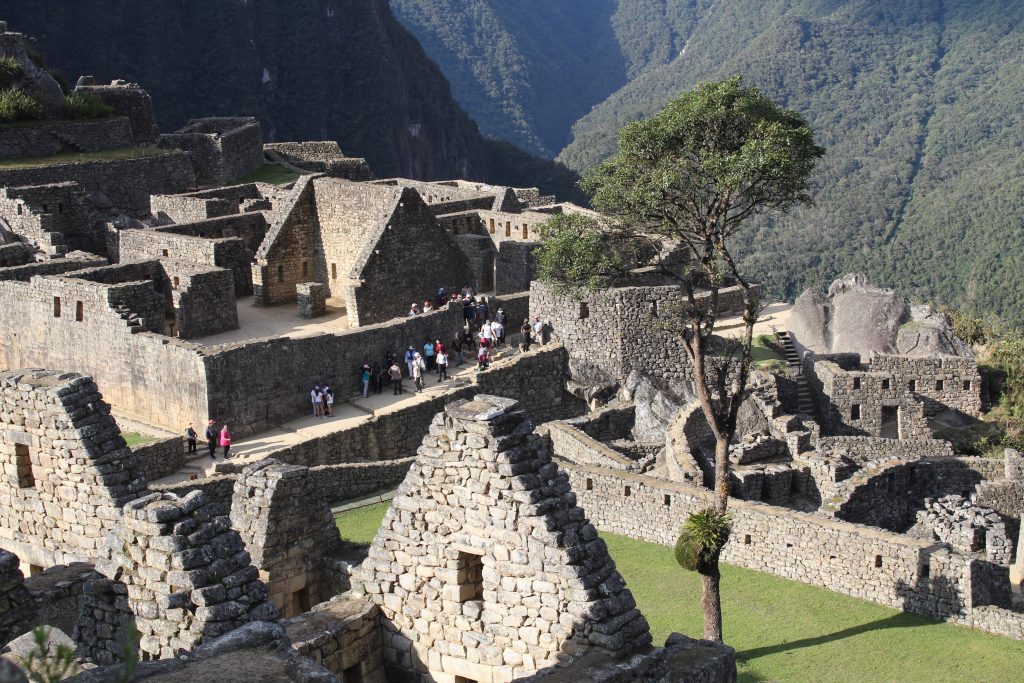
When I realised that I was actually standing on top of a mountain, on a ruin built by ancient civilisation thousands of years ago, could not help but wonder why on earth this city was built, and how they built it. The stones are expertly carved and put together without modern day mortar, tools or equipments. And each section was built with a purpose, well thought through and perfectly laid.
I had seen the photos and read about Machu Picchu but when I actually set eyes on it, I was left speechless and in awe. Machu Picchu is a destination. It is not a place that you “go pass”.
It was built by the Incas as a fortress and not easily accessible, making it a natural hideout. It is not surprising that the Spaniards did not find it when they invaded Peru, and it was “lost” for centuries until it was discovered by Hiram Bingham in 1911.
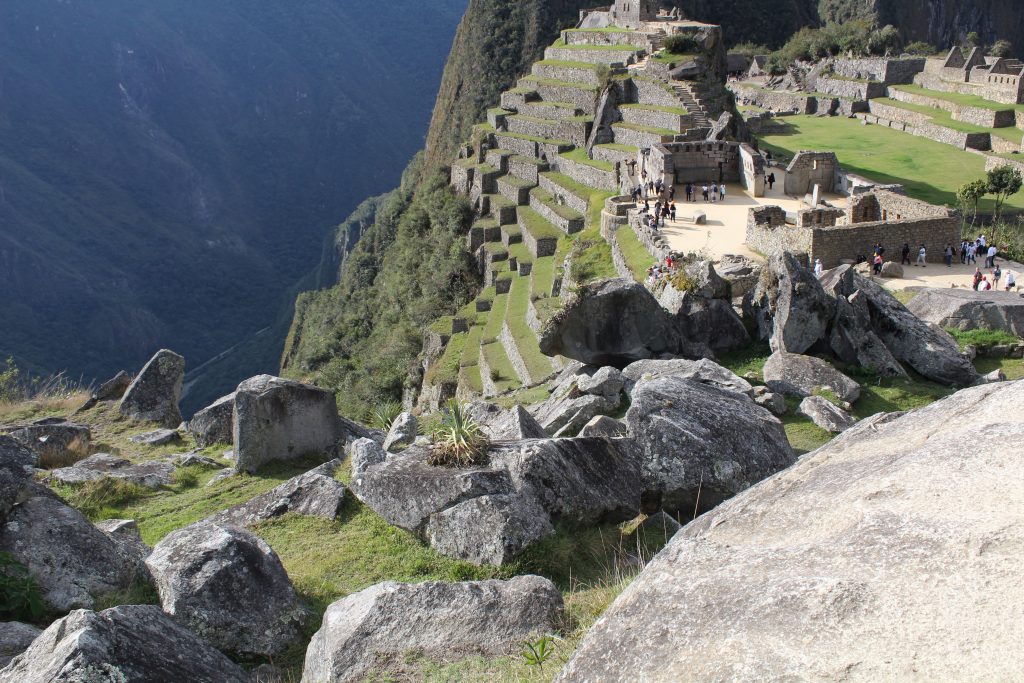
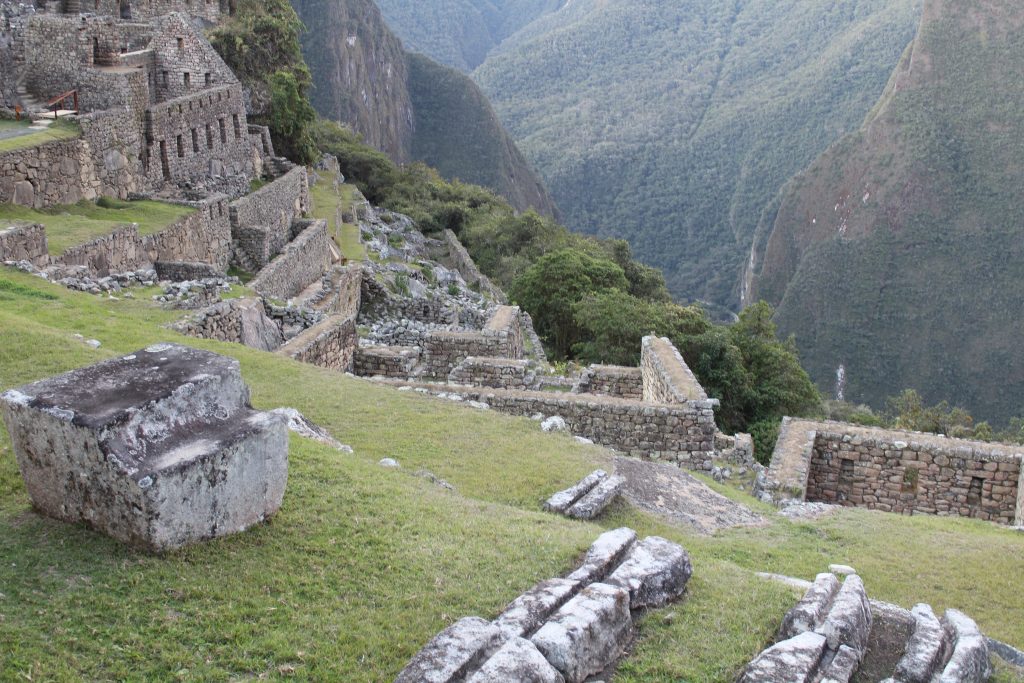
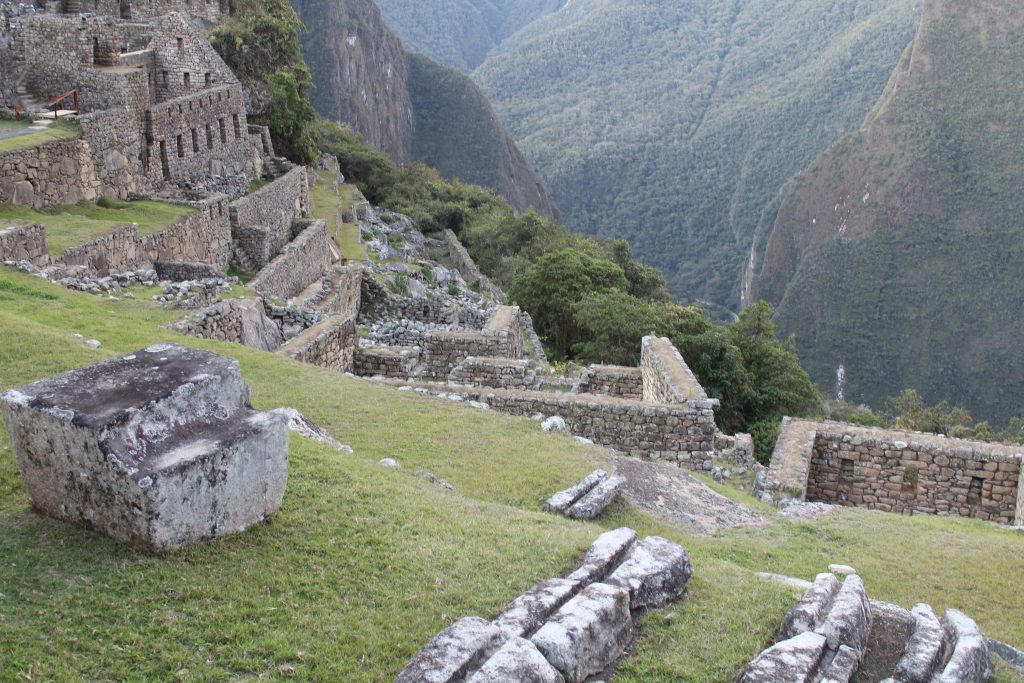
The Incas had excellent technical skills, productivity was good and served the Inca empire well. There were intriguing buildings and terraces used for farming, with ingenious systems for drainage. I was fascinated by them all.
Astronomy was a well developed science for the Incas and it was closely linked to their religion and rituals. The Temple of the Sun for example served to map the movement of the sun and the moon, and they based their decisions about farming on it.
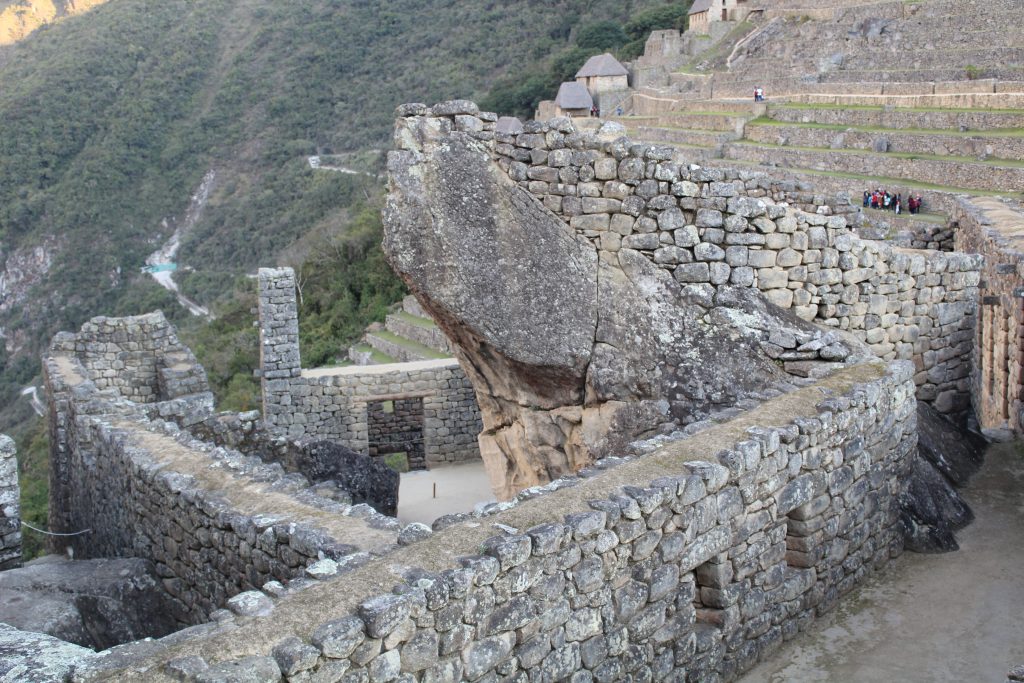
There werealso the Temple of the Condor and the Temple of the Three Windows.
The Incas, surprisingly, believed in the Milky Way which I found fascinating. Their understanding of the Milky Way and the movement of the sun felt remarkably advanced for a civilisation so often described simply as “ancient.”
The Temple of the Sun
The sun god, Inti, was amongst the most revered gods of the Inca civilisation. The Temple of the Sun is one of the most important structures in Machu Picchu. And it is said that the Temple was a ritual centre in honour of Pachamama (Mother Earth).
Temple of the Sun - a view from above
I was guided through a number of structures in Machu Picchu; some were more significant and more important than others. And each one with its own story. The Inti Watana for example was used as a sundial or calendar for both the winter solstise 21st June and summer solstice, 21st December.
The Guard House
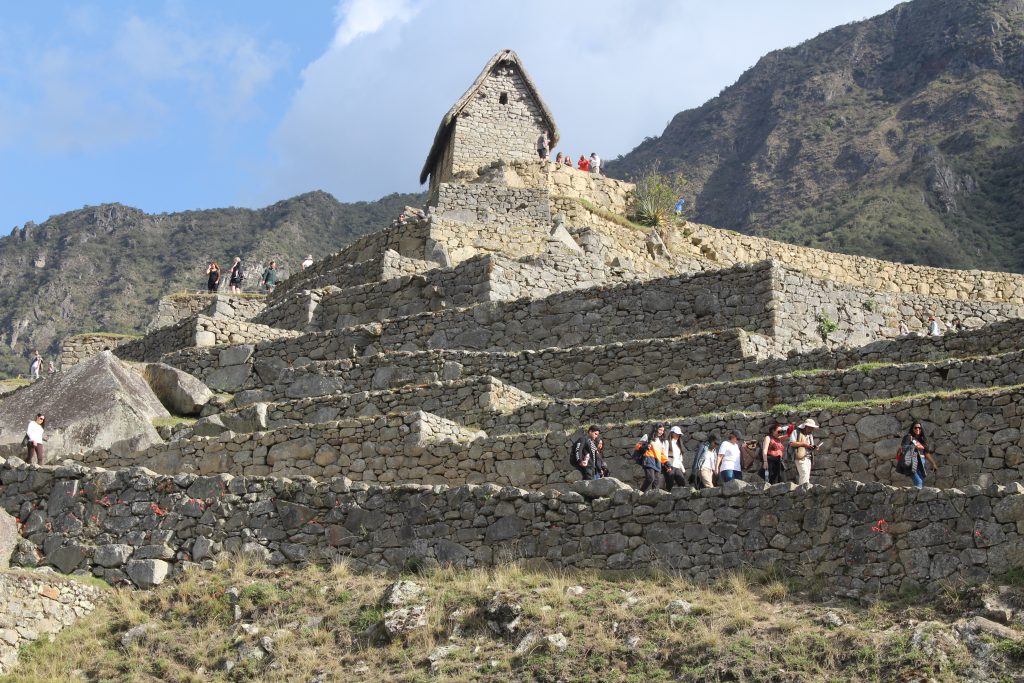
The Guard House is often described as the best place for the iconic photograph. It surprised me. From the outside, it lookedlittle more than a vantage point for photos.
And yet, if I am honest, I felt slightly underwhelmed. It seemed less like a place to linger and more like a designated viewing platform. Important historically, yes, it once served as a watch point over the main entrances but now it felt like a queue forming for the perfect shot.
I took the photograph, of course. And then I moved on. What stayed with me far more were the temples.
A close up view of The Guard House from one of the terraces.
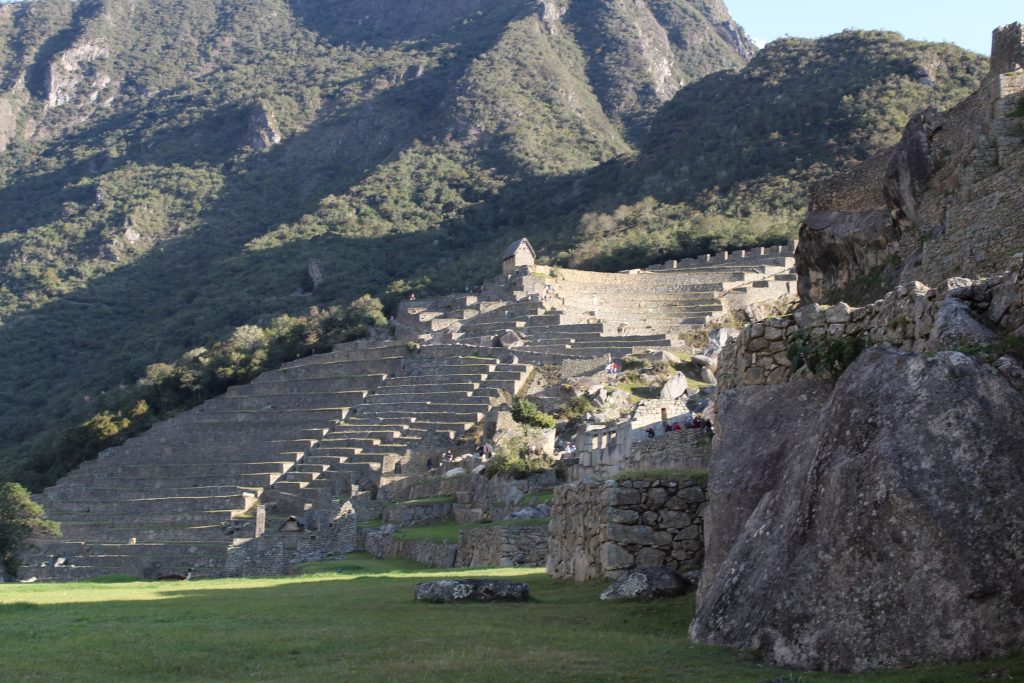
An aerial view of the Guard House
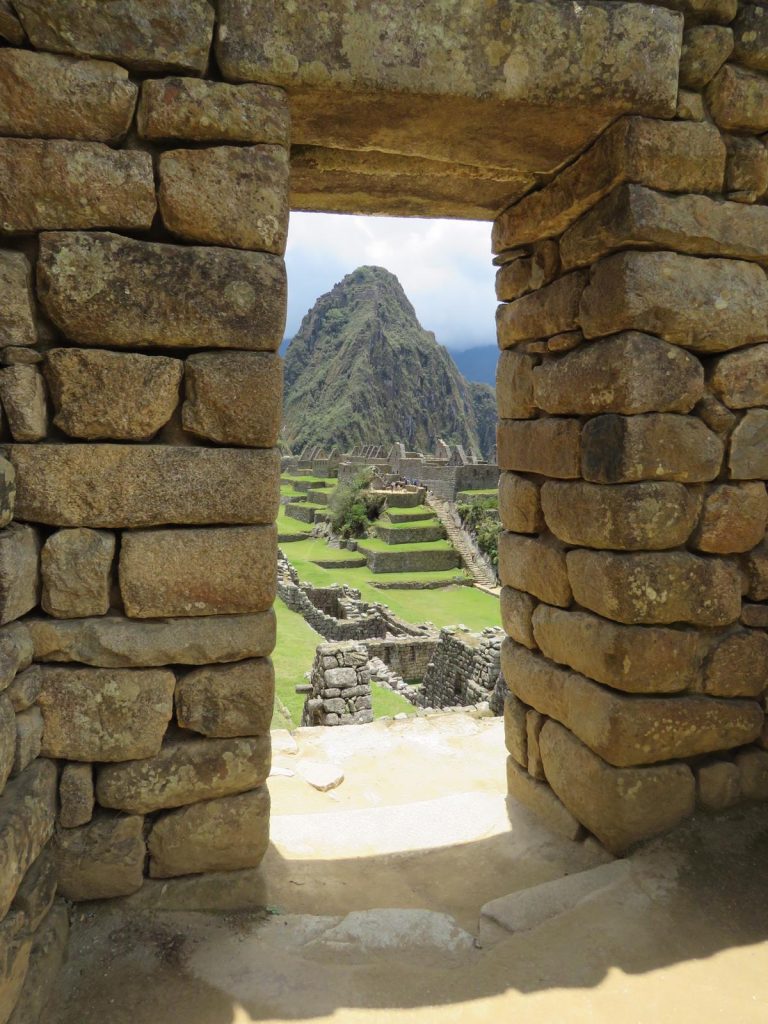
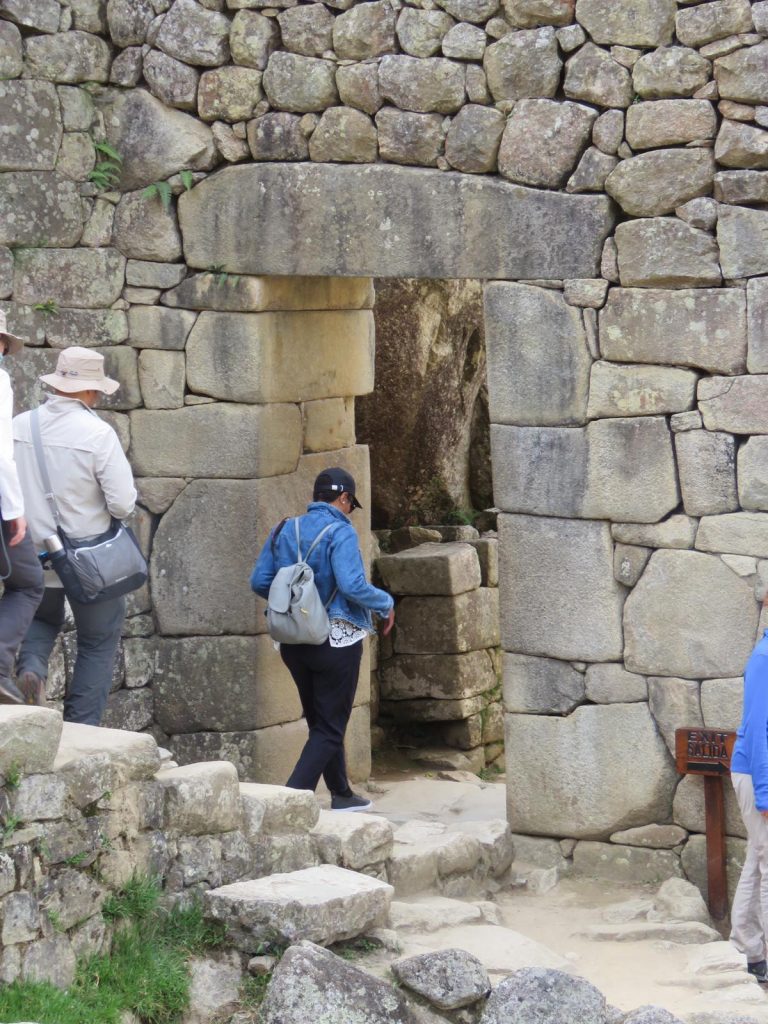
This doorway caught my attention not least because of the view of Machu Picchu beyond but because of the build and design – ingenious.
View of Machu Picchu in the background through a doorway.
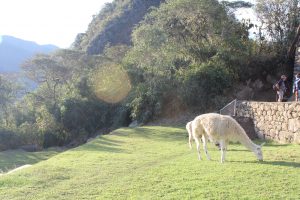
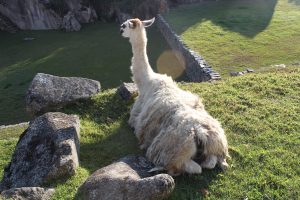
And then there were the alpacas — grazing calmly, completely unbothered by altitude, tourists, or history. Far more graceful than I felt at 2,440 metres.
Alpaca on Machu Picchu caught grazing
The Sun Gate
The Sun Gate offered another perspective. Many visitors trek here as part of the Inca Trail, but I took the easier route. The trek would have been a little tough on my ageing legs. It was said that on a clear day, the reward was a better panoramic view of Machu Picchu.Even so, I reckoned that I had the best view I could possibly had wished for already. So I gave it a miss and spent my valuable time soaking up the atmosphere and the magnificent views.
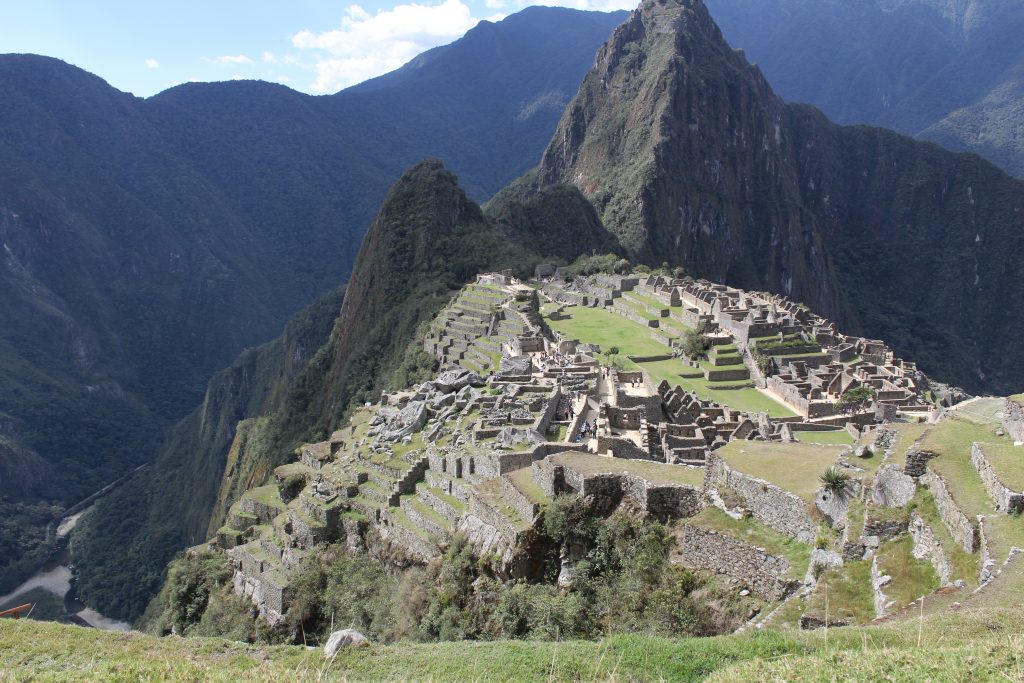
An aerial view of Machu Picchu -picture perfect.
Visiting Machu Picchu is more than seeing the ruins. It’s about feeling them.
It is not surprising that Machu Picchu was voted one of the 7 Wonders of the World in 2007. It truly deserves its place on the UNESCO World Heritage list. I personally would have placed it as number two after the Great Wall of China, and not no. 4.
If you are able to visit Machu Picchu, I would encourage you to do so. The experience left me with more than photos or memories. It gave me courage — the courage to take on challenges, to embrace the unknown, and to stand in awe of what humans can create and preserve.
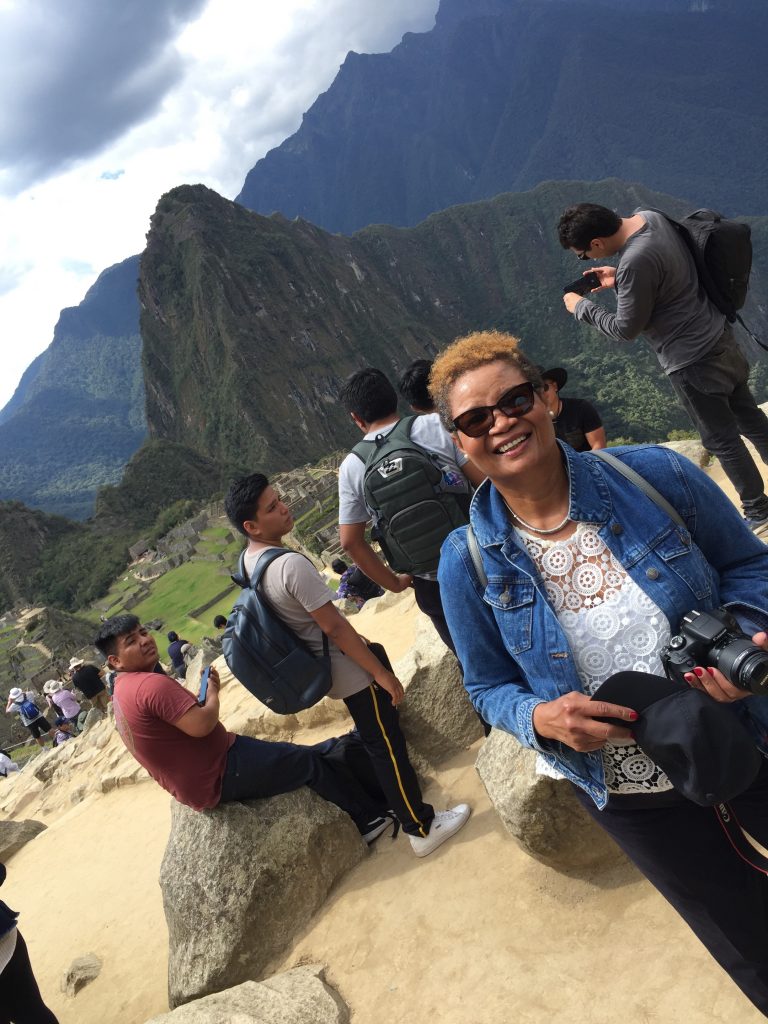
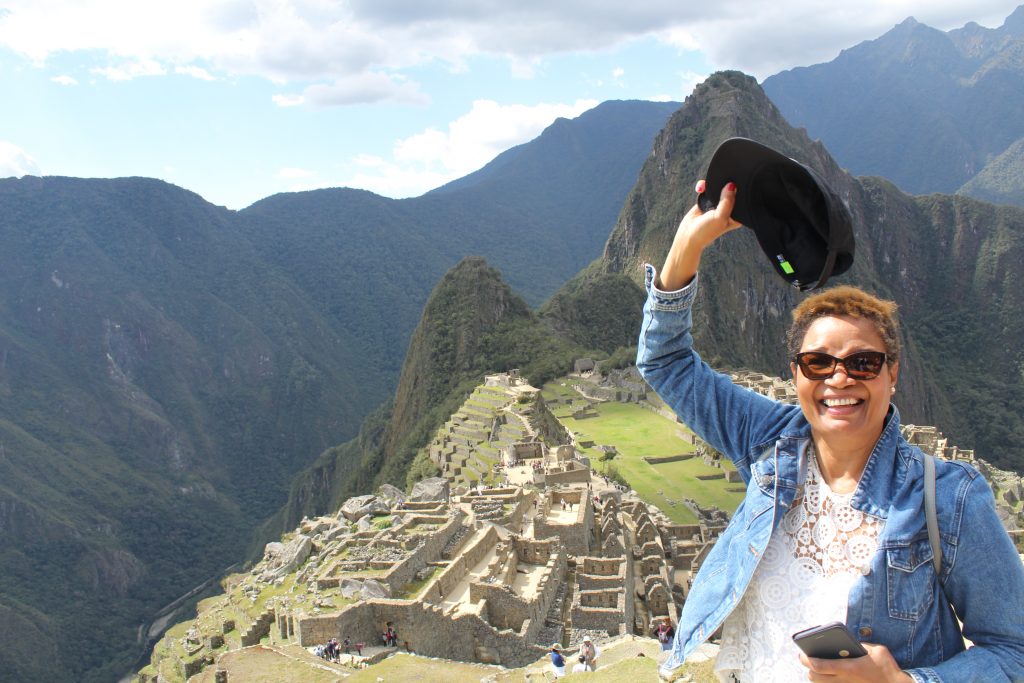
Mollywozhere photo from a terrace.
When I finally asked someone to take my photo, it seemed to me thatshe had taken it in a funny way that made me look like I was about to fall over.It must be the modern way of photography!
I salute you Machu Picchu and Pachamama (Mother Earth).
Practical tips:
Visitor numbers are strictly managed to protect the site. Book in advance.
You do not have to hike the four-day Inca Trail to experience it. I chose the train to Aguas Calientes followed by the short bus ride up.
Bring water. Wear proper shoes. Move slowly — altitude is not impressed by enthusiasm.
A knowledgeable local guide transforms the experience from sightseeing into storytelling.
I take my hat off to you Machu Picchu - amazing wonder of the world - Mollywozhere.
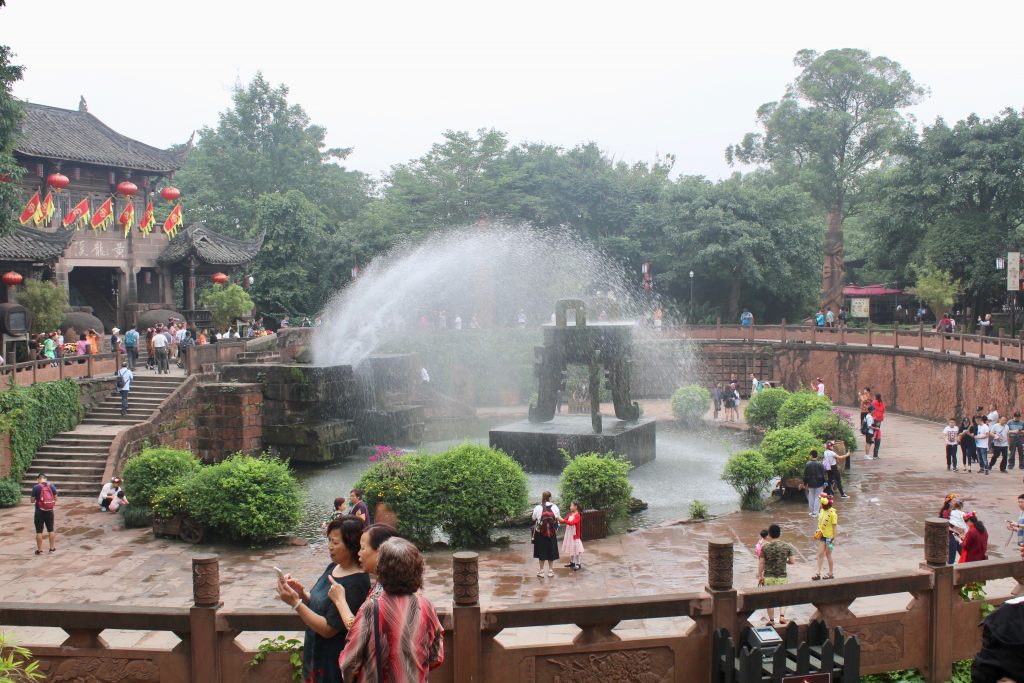
Away from China's headline attractions, Huanglongxi gave me a glimpse of everyday life — ancient streets, families playing in the water, local food, colourful traditions…
Thanks Tom. If you have the opportunity to visit, I’d strongly recommend Machu Picchu. You will be blown away like I was. It is worth visiting, trust me.




Amazing experience molly..Thanks for sharing
Thanks Modou, I am glad you enjoyed my blog. You will have your own adventures soon.
I just want to be there Molly. (Rather than lovely Carshalton where I’m heading now.) Fantastic post that brought it so alive.
Thanks Tom. If you have the opportunity to visit, I’d strongly recommend Machu Picchu. You will be blown away like I was. It is worth visiting, trust me.
What a great account, Molly. I agree with everything you said about the place and completely sympathise. Your photos are stunning.
Thanks Urszula. I am glad you enjoyed my blog. I took all the photos myself! I am getting better with selfies, not great but improving ,lol.
Wow what more can I say amazing adventures!!!!
Thanks Jane. When are you starting your own adventures? Go for it girl! I want to hear all about it.